THE ADVENTURE COLLECTIVE® · Independent discovery and booking for outdoor travel

Leave Marrakech behind for a day of terraced farms, argan cooperatives and river-fed cascades. This full-day Ourika Valley tour combines a market visit, village walks and short hikes to the famous Setti Fatma waterfalls—perfect for travelers who want accessible mountain scenery without technical climbing.
Leave Marrakech behind for a day of terraced farms, argan cooperatives and river-fed cascades. This full-day Ourika Valley tour combines a market visit, village walks and short hikes to the famous Setti Fatma waterfalls—perfect for travelers who want accessible mountain scenery without technical climbing.
A cooled wind from the High Atlas greets the road as the minivan peels away from Marrakech’s ochre walls and climbs toward the Ourika Valley. Olive trees lean toward the river; terraces step up the hillsides like pages of an old field journal. By midmorning the air smells of argan and wood smoke, and the river’s current seems to dare you to keep pace.
Verified experiences and guided adventures in the surrounding area.
Operated by UrbExcursions · Setti Fatma, Marrakech-Safi
A cooled wind from the High Atlas greets the road as the minivan peels away from Marrakech’s ochre walls and climbs toward the Ourika Valley. Olive trees lean toward the river; terraces step up the hillsides like pages of an old field journal. By midmorning the air smells of argan and wood smoke, and the river’s current seems to dare you to keep pace.
The valley has long been shaped by Berber families who carved terraced plots and stone houses from volcanic foothills. Geologically the corridor is a shallow incision of Miocene and Pliocene deposits, with granite and schist outcrops visible higher on the ridges. Culturally the area remains rooted in Amazigh (Berber) traditions—local markets in Tnine Ourika still sell handwoven cloth and goat cheeses, and cooperative-run argan presses preserve artisanal production.
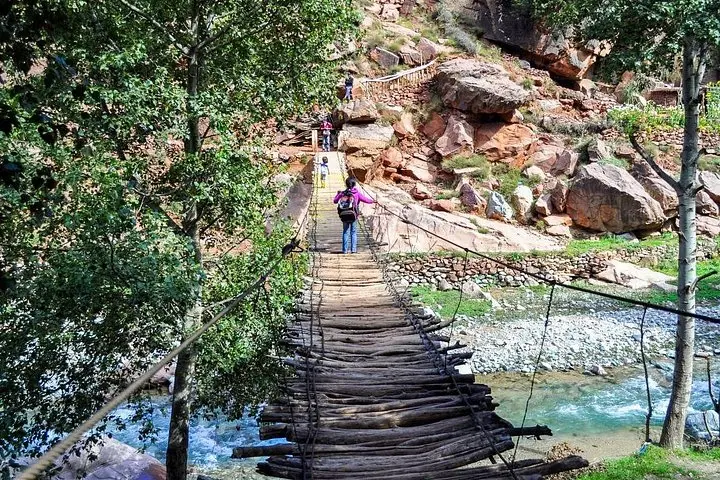
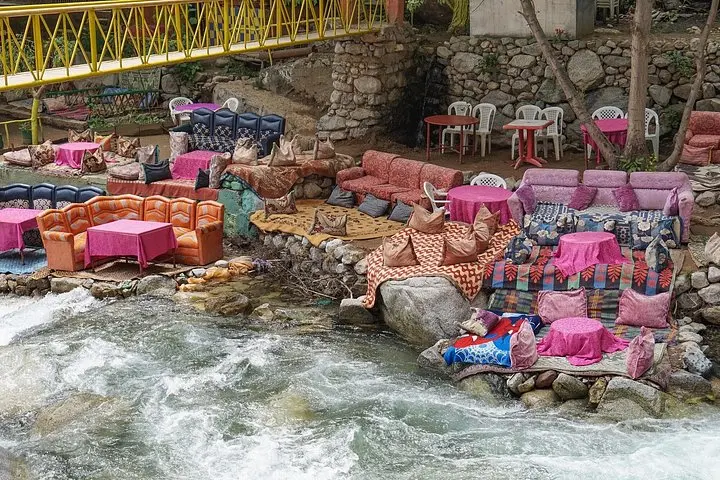
Setti Fatma marks where tarmac ends and footpaths begin; several short hikes lead to cascades that swell in spring and quiet to pools in late summer. Expect uneven limestone steps, river crossings on low bridges, and shaded riverbanks that push you into slow observation.
Practical guidance: aim to start early to avoid midday heat in summer and to catch strong spring flows. Carry cash for market stalls and lunch, wear sturdy shoes for slippery streams, and plan about eight hours for a round trip from Marrakech with short walks totalling two hours. Supporting local cooperatives and following Leave No Trace keeps this landscape working for residents and visitors alike.
The full experience is about eight hours round-trip, including market visits, village walks and time at Setti Fatma; pickup and drop-off in Marrakech are included in private options.
No technical skills are required; the waterfall path includes uneven rock and stream crossings—comfortable footwear is recommended.
Lunch is typically at a local restaurant in Setti Fatma and is not included; bring cash to pay for food and drinks.
Private tours offer customization (route and timing) while shared tours follow a fixed itinerary and are not customizable.
UrbExcursions operates guided outdoor trips and adventures with an emphasis on safety, stewardship, and memorable experiences.
A cooled wind from the High Atlas greets the road as the minivan peels away from Marrakech’s ochre walls and climbs toward the Ourika Valley. Olive trees lean toward the river; terraces step up the hillsides like pages of an old field journal. By midmorning the air smells of argan and wood smoke, and the river’s current seems to dare you to keep pace.
A cooled wind from the High Atlas greets the road as the minivan peels away from Marrakech’s ochre walls and climbs toward the Ourika Valley. Olive trees lean toward the river; terraces step up the hillsides like pages of an old field journal. By midmorning the air smells of argan and wood smoke, and the river’s current seems to dare you to keep pace.
The valley has long been shaped by Berber families who carved terraced plots and stone houses from volcanic foothills. Geologically the corridor is a shallow incision of Miocene and Pliocene deposits, with granite and schist outcrops visible higher on the ridges. Culturally the area remains rooted in Amazigh (Berber) traditions—local markets in Tnine Ourika still sell handwoven cloth and goat cheeses, and cooperative-run argan presses preserve artisanal production.
Setti Fatma marks where tarmac ends and footpaths begin; several short hikes lead to cascades that swell in spring and quiet to pools in late summer. Expect uneven limestone steps, river crossings on low bridges, and shaded riverbanks that push you into slow observation.
Practical guidance: aim to start early to avoid midday heat in summer and to catch strong spring flows. Carry cash for market stalls and lunch, wear sturdy shoes for slippery streams, and plan about eight hours for a round trip from Marrakech with short walks totalling two hours. Supporting local cooperatives and following Leave No Trace keeps this landscape working for residents and visitors alike.