THE ADVENTURE COLLECTIVE® · Independent discovery and booking for outdoor travel

Short drive from Marrakech, the Ourika Valley pairs accessible trails with cascading waterfalls and living Berber culture. This day trip offers riverside walks, village visits, and a traditional lunch overlooking the valley.
Short drive from Marrakech, the Ourika Valley pairs accessible trails with cascading waterfalls and living Berber culture. This day trip offers riverside walks, village visits, and a traditional lunch overlooking the valley.
A narrow river threads the valley floor as olive terraces rise and fall across the foothills of the High Atlas — that first view from the road sets the tone for the Ourika Valley. Start in the cool early morning and the air carries citrus and wood smoke; later, the river calls you toward stepped gardens and the series of seven cascades at Setti Fatma.
Verified experiences and guided adventures in the surrounding area.
Operated by The Moroccan Travel · Ourika Valley, Marrakech-Safi
A narrow river threads the valley floor as olive terraces rise and fall across the foothills of the High Atlas — that first view from the road sets the tone for the Ourika Valley. Start in the cool early morning and the air carries citrus and wood smoke; later, the river calls you toward stepped gardens and the series of seven cascades at Setti Fatma.
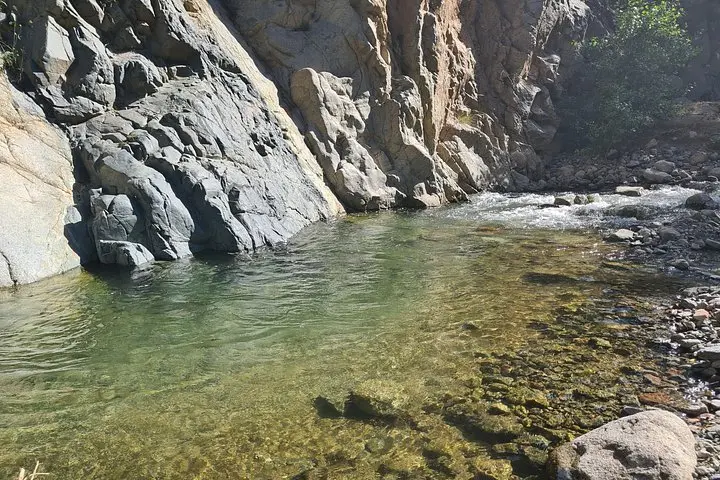
Geology here is straightforward: folded schist and limestone cut by the Ourika (Oued Ourika), creating shallow gorges, terraced slopes and seasonal cascades. Human history is visible in stone houses and mule tracks — Berber families have farmed these slopes for centuries and villages along the valley still follow traditional patterns of irrigation and crop rotation. Expect small markets, local craft stalls and opportunities to visit a family home for mint tea.
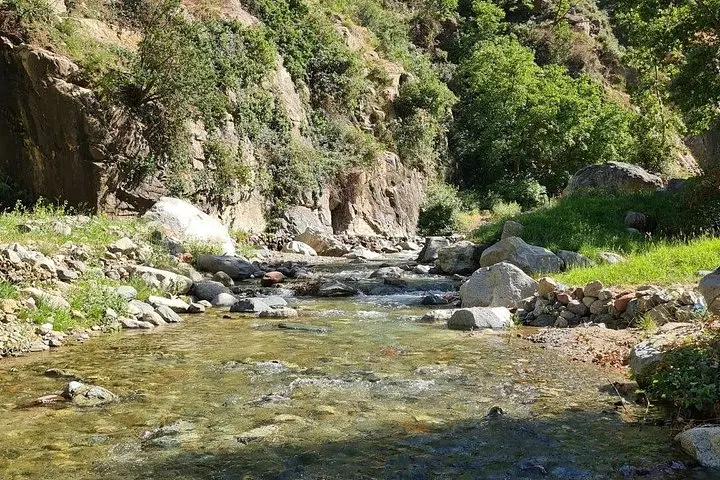
On-trail, the walking is mixed: compacted dirt tracks, riverbank stones and short steep pitches. A common outing to the main waterfall network is roughly 6–8 km round trip with about 200–400 m of cumulative ascent depending on how far you go. Sections can be slippery after rain, and summer sun is strong where shade drops away.
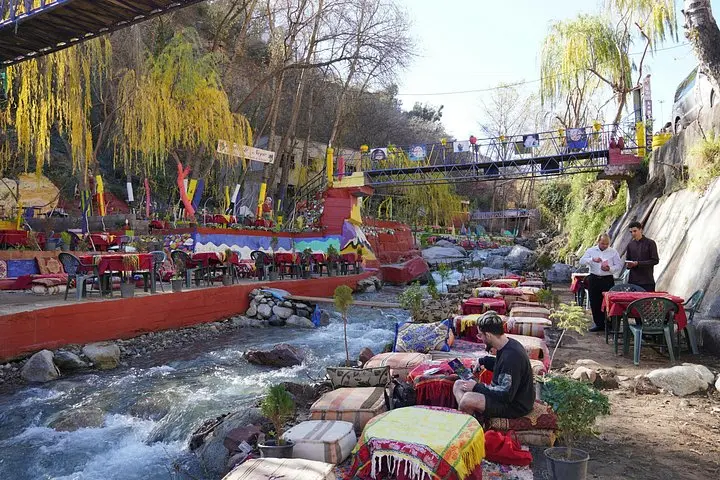
Practically: plan a half- to full-day, aim for morning starts to beat heat and crowds, wear sturdy shoes with grip, carry 1–2 liters of water and a light layer for changing temperatures. Lunch is frequently a tagine by the river — an authentic, low-key reward after the hike.
The valley is about 30–45 minutes by car from Marrakech depending on traffic and your exact pickup point.
Many families hike to the lower falls; however supervise children on steep or slippery sections and avoid higher cascades if unsure.
Yes — standard excursions often include a traditional Moroccan lunch by the river, usually a tagine and tea.
Yes, small guided tours commonly include a visit to a local home or village to learn about daily life and agriculture practices.
The Moroccan Travel operates guided outdoor trips and adventures with an emphasis on safety, stewardship, and memorable experiences.
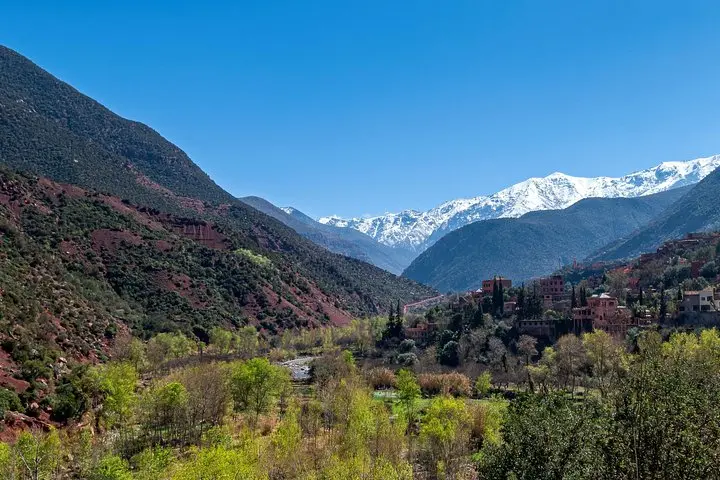
A narrow river threads the valley floor as olive terraces rise and fall across the foothills of the High Atlas — that first view from the road sets the tone for the Ourika Valley. Start in the cool early morning and the air carries citrus and wood smoke; later, the river calls you toward stepped gardens and the series of seven cascades at Setti Fatma.
A narrow river threads the valley floor as olive terraces rise and fall across the foothills of the High Atlas — that first view from the road sets the tone for the Ourika Valley. Start in the cool early morning and the air carries citrus and wood smoke; later, the river calls you toward stepped gardens and the series of seven cascades at Setti Fatma.
Geology here is straightforward: folded schist and limestone cut by the Ourika (Oued Ourika), creating shallow gorges, terraced slopes and seasonal cascades. Human history is visible in stone houses and mule tracks — Berber families have farmed these slopes for centuries and villages along the valley still follow traditional patterns of irrigation and crop rotation. Expect small markets, local craft stalls and opportunities to visit a family home for mint tea.
On-trail, the walking is mixed: compacted dirt tracks, riverbank stones and short steep pitches. A common outing to the main waterfall network is roughly 6–8 km round trip with about 200–400 m of cumulative ascent depending on how far you go. Sections can be slippery after rain, and summer sun is strong where shade drops away.
Practically: plan a half- to full-day, aim for morning starts to beat heat and crowds, wear sturdy shoes with grip, carry 1–2 liters of water and a light layer for changing temperatures. Lunch is frequently a tagine by the river — an authentic, low-key reward after the hike.