THE ADVENTURE COLLECTIVE® · Independent discovery and booking for outdoor travel

Escape Marrakech for a day and follow the Ourika River into the High Atlas to visit traditional Berber villages and the Setti Fatma waterfalls. This accessible 4–7 hour trip combines easy walks, riverfront lunches, and sweeping mountain views—ideal for travelers who want mountain scenery without overnight trekking.
Escape Marrakech for a day and follow the Ourika River into the High Atlas to visit traditional Berber villages and the Setti Fatma waterfalls. This accessible 4–7 hour trip combines easy walks, riverfront lunches, and sweeping mountain views—ideal for travelers who want mountain scenery without overnight trekking.
You step out of Marrakech traffic into a narrowing ribbon of road that climbs toward terraces and olive groves; the air sharpens, the atlas peaks pushing into sight. By late morning the Ourika River is a running presence, stones chattering under clear water as the valley peels open into orchards and the adobe houses of Berber hamlets.
Verified experiences and guided adventures in the surrounding area.
Operated by Transkech · Setti Fatma / Ourika Valley (tour departs Marrakech), Marrakech-Safi
You step out of Marrakech traffic into a narrowing ribbon of road that climbs toward terraces and olive groves; the air sharpens, the atlas peaks pushing into sight. By late morning the Ourika River is a running presence, stones chattering under clear water as the valley peels open into orchards and the adobe houses of Berber hamlets.
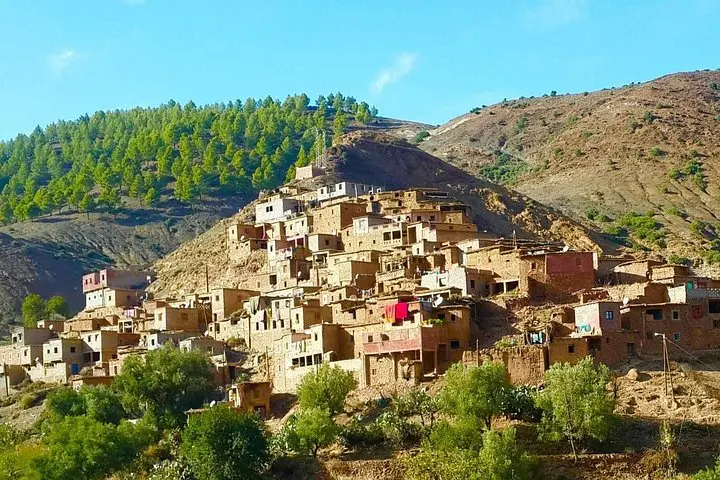
The day centers on village life and the Setti Fatma waterfalls: earth-built homes, flat roofs used for drying figs, and riverside cafés where tagines steam beside the current. Geologically, the High Atlas here is young and steep—folded sedimentary rock uplifted by the collision of the African and Eurasian plates—so expect abrupt ridgelines and terraced slopes carved by seasonal flows.
Culturally, the valley remains heavily influenced by Amazigh (Berber) traditions: local markets, woven textiles, and mountain agriculture that still follows irrigation channels cut generations ago. Lunch beside the creek is often a simple, fresh meal at a family-run restaurant; carry cash for small vendors and tips.
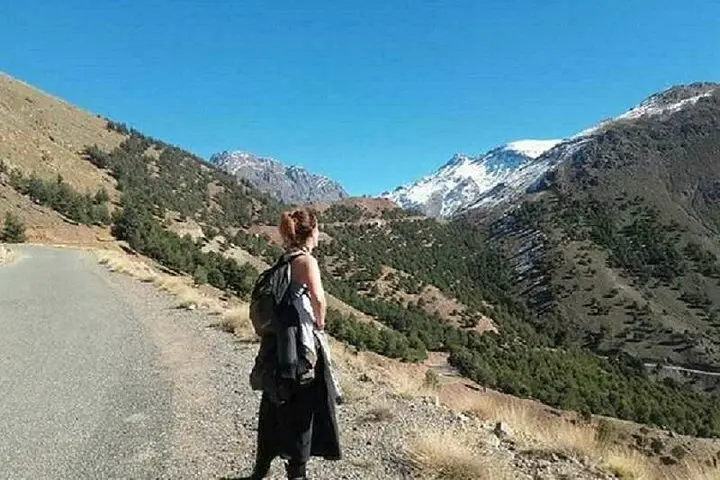
Practical guidance: the tour runs 4–7 hours with short, uneven walks to waterfall viewpoints—comfortable shoes and sun protection are essential. Temperatures can swing quickly between Marrakech and the higher valley; bring a light layer. Start early to avoid midday heat and to catch quieter trails. Respect private terraces and ask before photographing people. Vehicles are typically air-conditioned minivans or 4x4s with hotel pickup and drop-off from central Marrakech. With straightforward logistics and vivid scenery, this day trip is an accessible way to trade the city’s dust for river air and mountain views.
Typical excursions last 4–7 hours and include hotel pickup/drop-off, transport by air-conditioned minivan or 4x4, a driver/guide, and stops at Berber villages and Setti Fatma waterfalls; lunch is usually at your own expense.
No—walks are short but can be uneven and slippery; they’re suitable for most visitors who can manage basic footing and short stair sections.
Yes—children are welcome but must be accompanied by an adult; consider shorter walks and shaded stops for younger kids.
Tipping is customary in Morocco; small tips for the driver/guide and restaurant staff are appreciated and usually handled in cash.
Transkech operates guided outdoor trips and adventures with an emphasis on safety, stewardship, and memorable experiences.
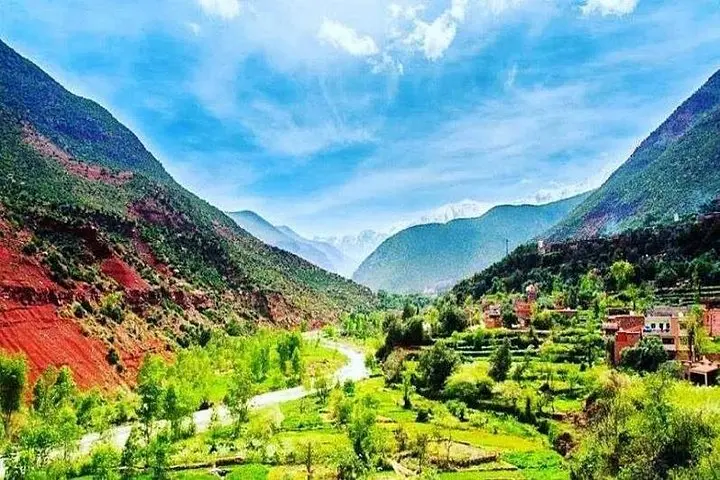
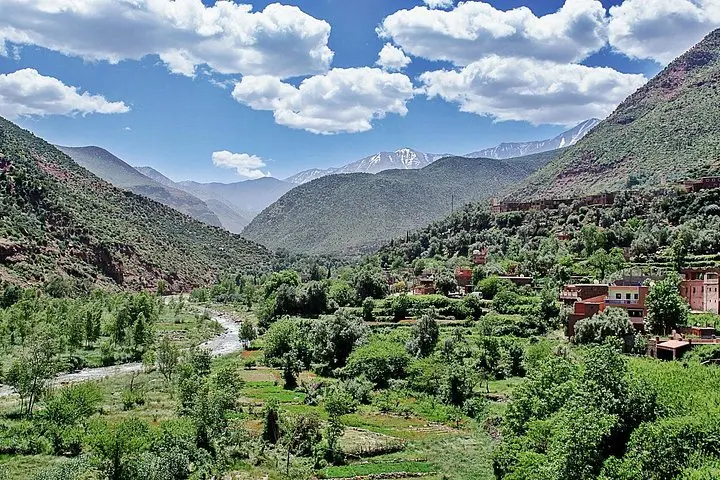
You step out of Marrakech traffic into a narrowing ribbon of road that climbs toward terraces and olive groves; the air sharpens, the atlas peaks pushing into sight. By late morning the Ourika River is a running presence, stones chattering under clear water as the valley peels open into orchards and the adobe houses of Berber hamlets.
You step out of Marrakech traffic into a narrowing ribbon of road that climbs toward terraces and olive groves; the air sharpens, the atlas peaks pushing into sight. By late morning the Ourika River is a running presence, stones chattering under clear water as the valley peels open into orchards and the adobe houses of Berber hamlets.
The day centers on village life and the Setti Fatma waterfalls: earth-built homes, flat roofs used for drying figs, and riverside cafés where tagines steam beside the current. Geologically, the High Atlas here is young and steep—folded sedimentary rock uplifted by the collision of the African and Eurasian plates—so expect abrupt ridgelines and terraced slopes carved by seasonal flows.
Culturally, the valley remains heavily influenced by Amazigh (Berber) traditions: local markets, woven textiles, and mountain agriculture that still follows irrigation channels cut generations ago. Lunch beside the creek is often a simple, fresh meal at a family-run restaurant; carry cash for small vendors and tips.
Practical guidance: the tour runs 4–7 hours with short, uneven walks to waterfall viewpoints—comfortable shoes and sun protection are essential. Temperatures can swing quickly between Marrakech and the higher valley; bring a light layer. Start early to avoid midday heat and to catch quieter trails. Respect private terraces and ask before photographing people. Vehicles are typically air-conditioned minivans or 4x4s with hotel pickup and drop-off from central Marrakech. With straightforward logistics and vivid scenery, this day trip is an accessible way to trade the city’s dust for river air and mountain views.