THE ADVENTURE COLLECTIVE® · Independent discovery and booking for outdoor travel

Spend a full day leaving Marrakech’s ochre streets for the Ourika Valley: two hours on a quad through Atlas foothills, a visit to argan cooperatives, and a guided walk to the Setti Fatma waterfalls. Expect cultural encounters, varied terrain, and a long but rewarding day trip.
Spend a full day leaving Marrakech’s ochre streets for the Ourika Valley: two hours on a quad through Atlas foothills, a visit to argan cooperatives, and a guided walk to the Setti Fatma waterfalls. Expect cultural encounters, varied terrain, and a long but rewarding day trip.
Morning light lifts off the red city and the road unspools toward the High Atlas; by the time the minibus drops you into the Ourika Valley, dry scrub gives way to irrigated terraces and a river that dares you closer with every bend. Riders mount quads for two hours of dust-and-adrift panoramas across arid foothills, then swap throttle for foot as the route descends toward Setti Fatma’s waterfalls.
Verified experiences and guided adventures in the surrounding area.
Operated by lifetour · Setti Fatma, Marrakesh-Safi
Morning light lifts off the red city and the road unspools toward the High Atlas; by the time the minibus drops you into the Ourika Valley, dry scrub gives way to irrigated terraces and a river that dares you closer with every bend. Riders mount quads for two hours of dust-and-adrift panoramas across arid foothills, then swap throttle for foot as the route descends toward Setti Fatma’s waterfalls.
The valley sits on the southern edge of the High Atlas, carved by seasonal streams that feed centuries of terrace agriculture. Berber villages along the road preserve a living rural craft—argan oil presses run by women’s cooperatives, stone houses that follow age-old patterns, and a food culture centered on tagine spices and shared mint tea. Geologically, the foothills are an interface between the folded Atlas ranges and Marrakech’s plain; rain and snow in the high country funnel into the valley’s springs, creating the cascades at Setti Fatma.
Practically: expect a long, full-day outing (9–10 hours) with three activity modes—guided drive, off-road quad, and a short guided walk to the falls. Wear closed-toe shoes for riding, bring layered clothing for temperature swings from Marrakech into the hills, and carry water and sunscreen. The tour includes lunch, a visit to an argan cooperative and a Berber house, and optional hiking near the waterfalls.
This experience balances speed and intimacy—two hours of engine noise followed by the close-up human scale of village life. For travelers seeking both motion and cultural connection, it’s a compact introduction to the Atlas foothills that’s straightforward to prepare for and hard to forget.
The quad bike section is approximately two hours and typically runs on off-road tracks in the valley foothills under guide supervision.
No prior experience is required; guides provide instruction and operate within safety limits, but riders should be comfortable on off-road terrain.
Yes, a Moroccan lunch is usually included, plus tea and pastry during cooperative or village stops as listed in the itinerary.
This tour is not recommended for pregnant travelers or anyone with significant back or heart problems; check age and safety restrictions for children with the operator.
lifetour operates guided outdoor trips and adventures with an emphasis on safety, stewardship, and memorable experiences.


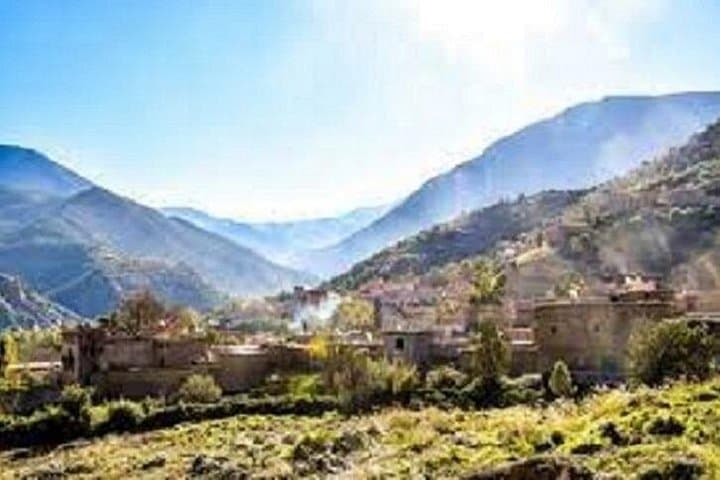

Morning light lifts off the red city and the road unspools toward the High Atlas; by the time the minibus drops you into the Ourika Valley, dry scrub gives way to irrigated terraces and a river that dares you closer with every bend. Riders mount quads for two hours of dust-and-adrift panoramas across arid foothills, then swap throttle for foot as the route descends toward Setti Fatma’s waterfalls.
Morning light lifts off the red city and the road unspools toward the High Atlas; by the time the minibus drops you into the Ourika Valley, dry scrub gives way to irrigated terraces and a river that dares you closer with every bend. Riders mount quads for two hours of dust-and-adrift panoramas across arid foothills, then swap throttle for foot as the route descends toward Setti Fatma’s waterfalls.
The valley sits on the southern edge of the High Atlas, carved by seasonal streams that feed centuries of terrace agriculture. Berber villages along the road preserve a living rural craft—argan oil presses run by women’s cooperatives, stone houses that follow age-old patterns, and a food culture centered on tagine spices and shared mint tea. Geologically, the foothills are an interface between the folded Atlas ranges and Marrakech’s plain; rain and snow in the high country funnel into the valley’s springs, creating the cascades at Setti Fatma.
Practically: expect a long, full-day outing (9–10 hours) with three activity modes—guided drive, off-road quad, and a short guided walk to the falls. Wear closed-toe shoes for riding, bring layered clothing for temperature swings from Marrakech into the hills, and carry water and sunscreen. The tour includes lunch, a visit to an argan cooperative and a Berber house, and optional hiking near the waterfalls.
This experience balances speed and intimacy—two hours of engine noise followed by the close-up human scale of village life. For travelers seeking both motion and cultural connection, it’s a compact introduction to the Atlas foothills that’s straightforward to prepare for and hard to forget.