THE ADVENTURE COLLECTIVE® · Independent discovery and booking for outdoor travel

A full-day guided hike from Marrakech into the Ourika Valley to visit Berber villages, saffron farms and the popular Seven Waterfalls. This practical day trip combines light mountain hiking with cultural stops and an included lunch.
A full-day guided hike from Marrakech into the Ourika Valley to visit Berber villages, saffron farms and the popular Seven Waterfalls. This practical day trip combines light mountain hiking with cultural stops and an included lunch.
You step out of an air-conditioned minivan into the cool breath of the High Atlas, the road dropping from Marrakech into a green cleft where terraces and fruit trees cling to steep slopes. The guide points toward Setti-Fadma; a ribbon of foaming stream and stone steps leads upward to waterfalls that roar like impatient guides.
Verified experiences and guided adventures in the surrounding area.
Operated by Historic Marrakech Tours · Ourika Valley (Setti-Fadma), Marrakesh-Safi
You step out of an air-conditioned minivan into the cool breath of the High Atlas, the road dropping from Marrakech into a green cleft where terraces and fruit trees cling to steep slopes. The guide points toward Setti-Fadma; a ribbon of foaming stream and stone steps leads upward to waterfalls that roar like impatient guides.
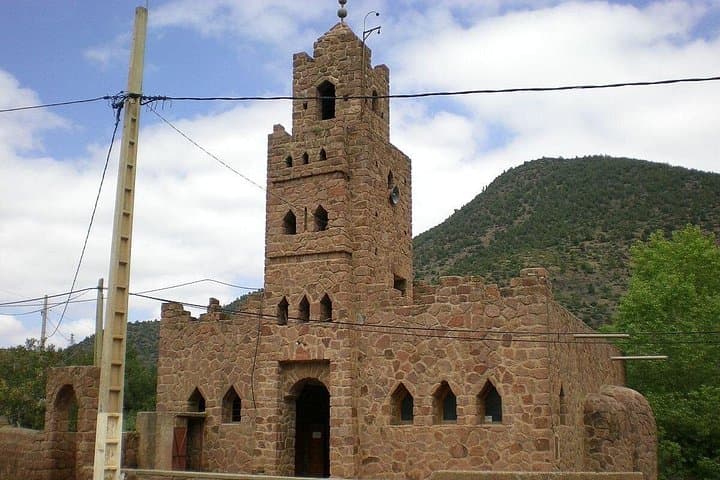
The Ourika Valley has long been a crossroads between Marrakech and mountain communities. Geologically, it’s carved from schist and limestone, with seasonal torrents cutting narrow gorges and leaving step-like terraces. Local Berber villages — Tnine Ourika, little souks and saffron farms — add a living cultural layer: you’ll see stone houses, small cooperatives making argan oil, and women selling saffron or woven goods.
The most popular route to the Seven Waterfalls is a mostly well-marked path following the stream: expect rocky trail, some steep switchbacks, and river crossings; round-trip distance on the most frequented sections is roughly 4–6 km with an elevation change of about 200–400 m, completed in 2–3 hours of hiking depending on pace.
Practical notes: arrive with sturdy footwear and water, start mid-morning to avoid the afternoon heat, and use a local guide for steeper upper sections. The full tour from Marrakech includes transport (about 40–60 minutes each way), a local lunch and short cultural stops at markets and cooperatives. Respect trail etiquette, carry out waste, and be prepared for slippery rocks near cascades — the landscape invites exploration but rewards caution.
The minivan ride is typically 40–60 minutes each way depending on traffic and the exact pickup point in Marrakech.
Short sections are family-friendly but expect uneven paths and some steep climbs; consider local guidance or shorter walks for less mobile travelers.
The tour normally includes local stops and lunch; small local access fees or tips for guides at the falls may be extra—confirm with the operator.
Yes, the lower waterfall trails are accessible independently, but a guide is helpful for upper reaches, navigation, and cultural context.
Historic Marrakech Tours operates guided outdoor trips and adventures with an emphasis on safety, stewardship, and memorable experiences.


You step out of an air-conditioned minivan into the cool breath of the High Atlas, the road dropping from Marrakech into a green cleft where terraces and fruit trees cling to steep slopes. The guide points toward Setti-Fadma; a ribbon of foaming stream and stone steps leads upward to waterfalls that roar like impatient guides.
You step out of an air-conditioned minivan into the cool breath of the High Atlas, the road dropping from Marrakech into a green cleft where terraces and fruit trees cling to steep slopes. The guide points toward Setti-Fadma; a ribbon of foaming stream and stone steps leads upward to waterfalls that roar like impatient guides.
The Ourika Valley has long been a crossroads between Marrakech and mountain communities. Geologically, it’s carved from schist and limestone, with seasonal torrents cutting narrow gorges and leaving step-like terraces. Local Berber villages — Tnine Ourika, little souks and saffron farms — add a living cultural layer: you’ll see stone houses, small cooperatives making argan oil, and women selling saffron or woven goods.
The most popular route to the Seven Waterfalls is a mostly well-marked path following the stream: expect rocky trail, some steep switchbacks, and river crossings; round-trip distance on the most frequented sections is roughly 4–6 km with an elevation change of about 200–400 m, completed in 2–3 hours of hiking depending on pace.
Practical notes: arrive with sturdy footwear and water, start mid-morning to avoid the afternoon heat, and use a local guide for steeper upper sections. The full tour from Marrakech includes transport (about 40–60 minutes each way), a local lunch and short cultural stops at markets and cooperatives. Respect trail etiquette, carry out waste, and be prepared for slippery rocks near cascades — the landscape invites exploration but rewards caution.