THE ADVENTURE COLLECTIVE® · Independent discovery and booking for outdoor travel

Experience the steady rush of an outrigger canoe as it rides Waikiki’s gentle swells. In a short, captain-led session from the Royal Hawaiian Hotel you’ll catch two to three waves—an efficient, family-friendly way to connect with Hawaiian canoeing tradition.
Experience the steady rush of an outrigger canoe as it rides Waikiki’s gentle swells. In a short, captain-led session from the Royal Hawaiian Hotel you’ll catch two to three waves—an efficient, family-friendly way to connect with Hawaiian canoeing tradition.
The ocean pushes and then pauses, and you feel the canoe answer—wood and vaka-style outrigger slicing into a Waikiki swell as Diamond Head watches from the east. On the pool deck of the Royal Hawaiian Hotel, a licensed captain checks the paddles and calls the crew; within minutes you’re on a low, long outrigger that feels impossibly steady and alive.
Verified experiences and guided adventures in the surrounding area.
Operated by Waikiki Beach Services · Honolulu, Hawaii
The ocean pushes and then pauses, and you feel the canoe answer—wood and vaka-style outrigger slicing into a Waikiki swell as Diamond Head watches from the east. On the pool deck of the Royal Hawaiian Hotel, a licensed captain checks the paddles and calls the crew; within minutes you’re on a low, long outrigger that feels impossibly steady and alive.
Canoe surfing in Hawaii traces to aliʻi (chiefly) traditions where rudderless canoes were both transport and ceremony. The nearshore reefs and gentle trade-wind swells that line Waikiki are a product of volcanic geology—the lava flows of Oʻahu’s southeast flank deflect waves into long, rider-friendly lines. Culturally, the canoe connects to hula and mele; captains often share quick notes on protocol and etiquette before launch.
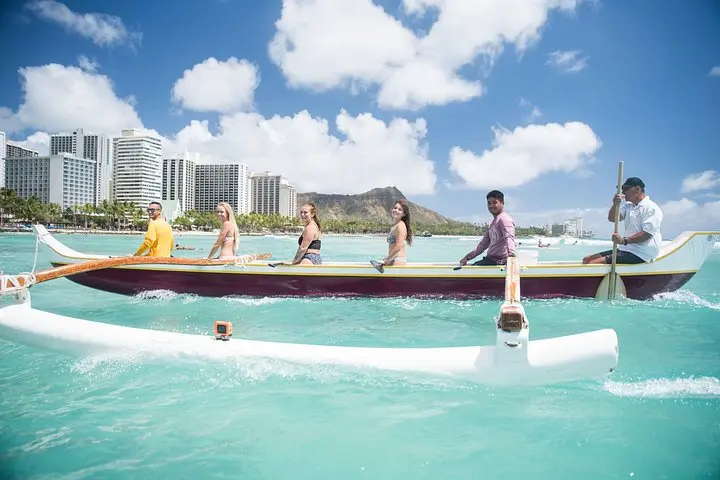
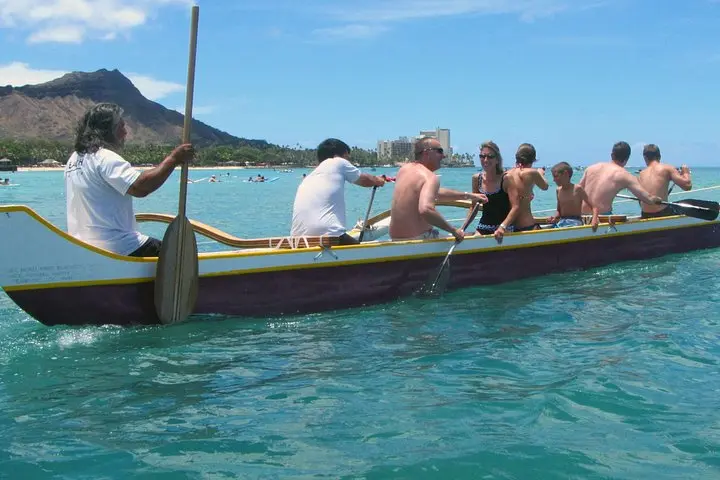
Practically, the outing is short and concentrated: expect two to three short wave rides in a roughly 20-minute session, led by an experienced captain. The craft seats four paddlers and two extra riders; children 5+ can ride (paddling typically limited to older kids). Non-swimmers are welcome and the canoe’s design provides high stability—local operators frequently run sessions without life jackets for riders.
Plan to check in 15 minutes early at the Royal Hawaiian service counter, bring sunscreen and a towel, sign a waiver, and be prepared for sun and spray. Conditions dictate wave count; when trade winds pick up or surf increases, captains alter plans for safety. For a quick, physical slice of Hawaiian watercraft culture, this is an efficient, exhilarating way to feel the ocean’s push while staying grounded by local expertise.
No—operators allow non-swimmers; the outrigger’s stability and captain-led sessions minimize risk, though minors require guardian approval.
Local practice on these canoes often does not require life jackets for riders because of the craft’s stability, but operators will advise based on conditions.
Typically two to three short rides per 20-minute session, though exact count depends on swell and wind conditions that day.
A minimum of three paid people is required to run a private booking; smaller parties can book by paying the three-person minimum.
Waikiki Beach Services operates guided outdoor trips and adventures with an emphasis on safety, stewardship, and memorable experiences.
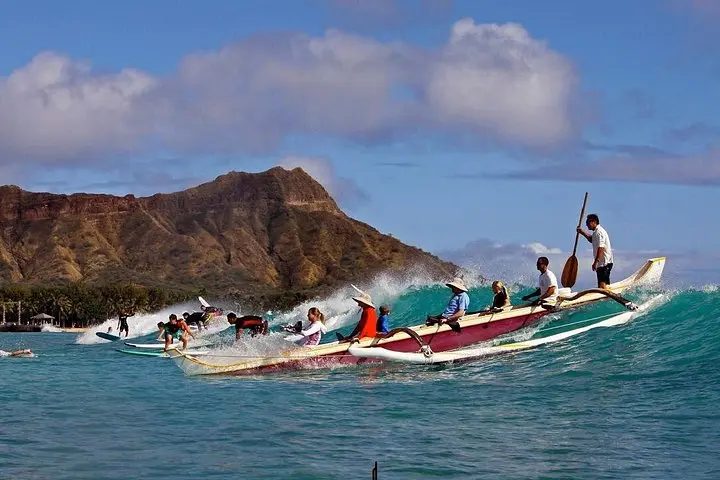
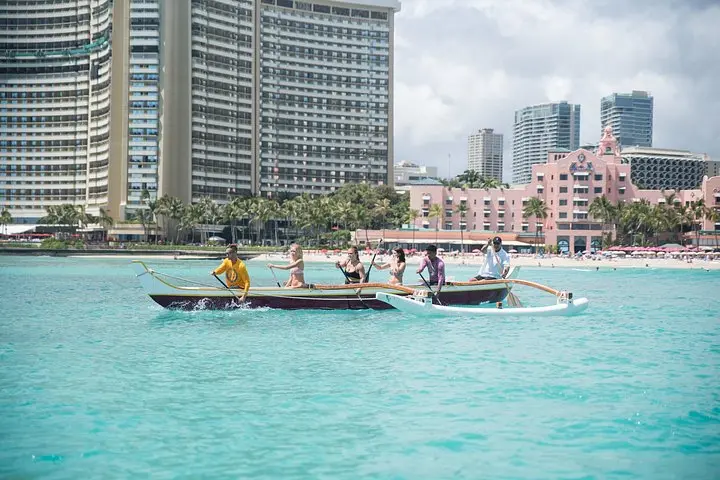
The ocean pushes and then pauses, and you feel the canoe answer—wood and vaka-style outrigger slicing into a Waikiki swell as Diamond Head watches from the east. On the pool deck of the Royal Hawaiian Hotel, a licensed captain checks the paddles and calls the crew; within minutes you’re on a low, long outrigger that feels impossibly steady and alive.
The ocean pushes and then pauses, and you feel the canoe answer—wood and vaka-style outrigger slicing into a Waikiki swell as Diamond Head watches from the east. On the pool deck of the Royal Hawaiian Hotel, a licensed captain checks the paddles and calls the crew; within minutes you’re on a low, long outrigger that feels impossibly steady and alive.
Canoe surfing in Hawaii traces to aliʻi (chiefly) traditions where rudderless canoes were both transport and ceremony. The nearshore reefs and gentle trade-wind swells that line Waikiki are a product of volcanic geology—the lava flows of Oʻahu’s southeast flank deflect waves into long, rider-friendly lines. Culturally, the canoe connects to hula and mele; captains often share quick notes on protocol and etiquette before launch.
Practically, the outing is short and concentrated: expect two to three short wave rides in a roughly 20-minute session, led by an experienced captain. The craft seats four paddlers and two extra riders; children 5+ can ride (paddling typically limited to older kids). Non-swimmers are welcome and the canoe’s design provides high stability—local operators frequently run sessions without life jackets for riders.
Plan to check in 15 minutes early at the Royal Hawaiian service counter, bring sunscreen and a towel, sign a waiver, and be prepared for sun and spray. Conditions dictate wave count; when trade winds pick up or surf increases, captains alter plans for safety. For a quick, physical slice of Hawaiian watercraft culture, this is an efficient, exhilarating way to feel the ocean’s push while staying grounded by local expertise.