THE ADVENTURE COLLECTIVE® · Independent discovery and booking for outdoor travel

A full-day escape from Marrakech to Ouzoud’s 360-foot cascades: a steep, scenic hike, a small boat ride in the plunge pool, close-up encounters with Barbary macaques, and a traditional Berber lunch overlooking the falls. Practical, photo-ready, and rich in local culture.
A full-day escape from Marrakech to Ouzoud’s 360-foot cascades: a steep, scenic hike, a small boat ride in the plunge pool, close-up encounters with Barbary macaques, and a traditional Berber lunch overlooking the falls. Practical, photo-ready, and rich in local culture.
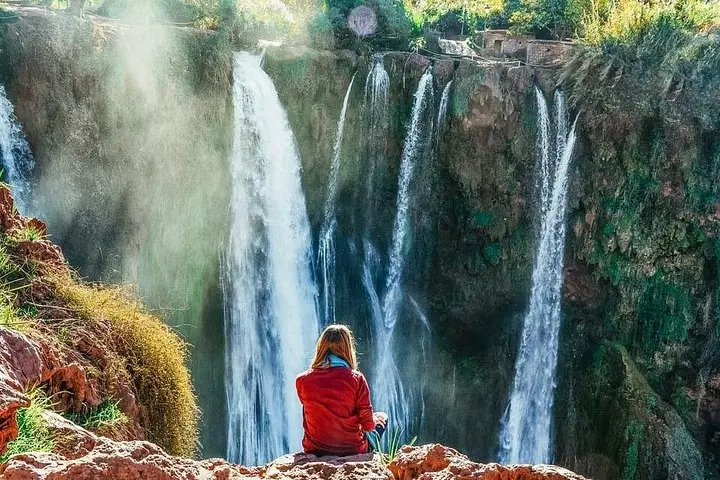
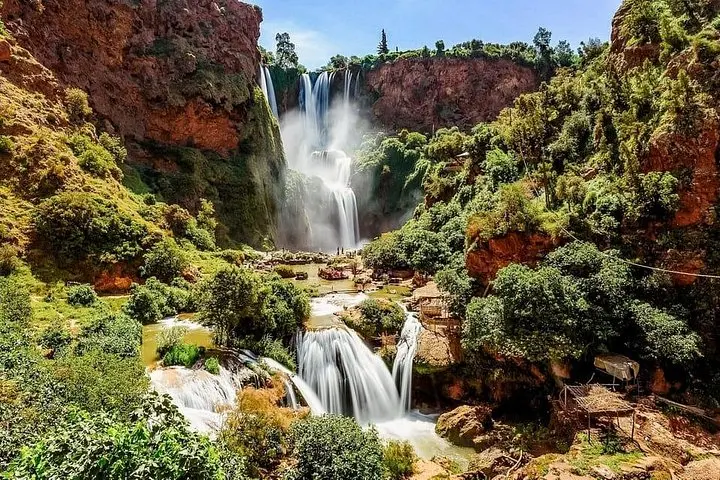
By midmorning the van pulls off a two-lane road and the landscape shifts: scrubby foothills give way to terraces of olive trees and flat-headed carob. You hear the falls before you see them — a steady roar that grows into a physical presence, the air cooling as spray pushes outward like a deliberate hand. At Ouzoud, water refuses to be polite; it throws itself over a 360-foot cliff in sheets, then breaks into fingers and cataracts that fan across stepped rock.
Verified experiences and guided adventures in the surrounding area.
Operated by Jawla · Ouzoud, Beni Mellal-Khenifra
By midmorning the van pulls off a two-lane road and the landscape shifts: scrubby foothills give way to terraces of olive trees and flat-headed carob. You hear the falls before you see them — a steady roar that grows into a physical presence, the air cooling as spray pushes outward like a deliberate hand. At Ouzoud, water refuses to be polite; it throws itself over a 360-foot cliff in sheets, then breaks into fingers and cataracts that fan across stepped rock.
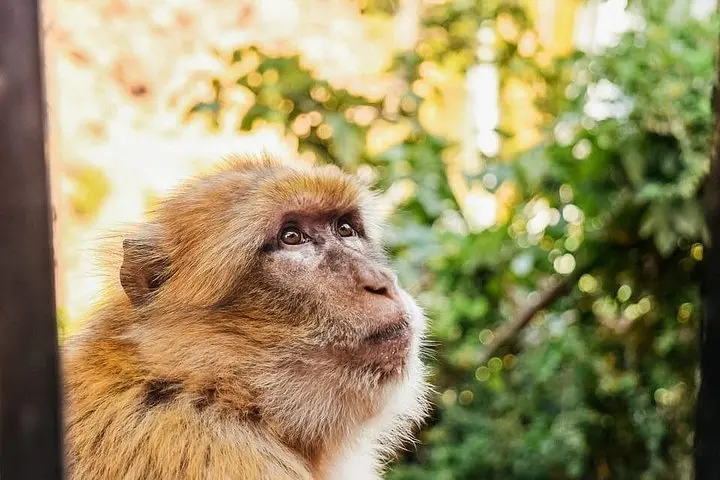
The falls sit on the El Abid valley, a folded edge of the Middle Atlas where limestone and schist fracture into dramatic ledges. Local Berber villages have farmed these slopes for centuries; your guide will point out millstones and press pits where olives and argan are still processed the old way. Monkeys — Barbary macaques — occupy the fig and olive trees around the falls, opportunistic and curious but not tame; rules against feeding them are enforced for their welfare and yours.
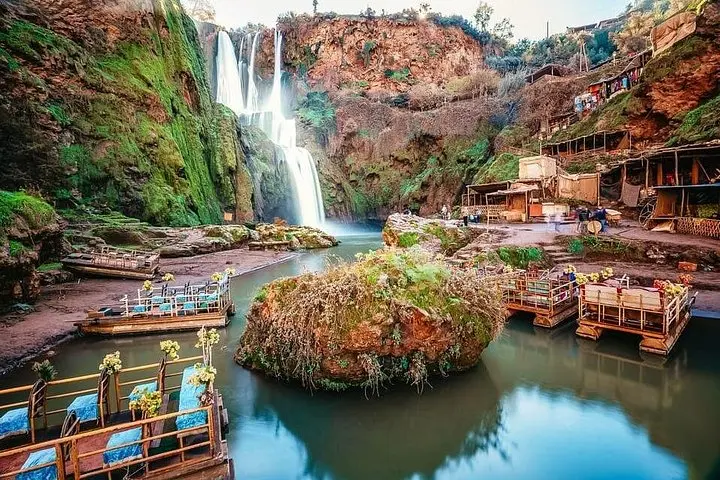
This full-day tour from Marrakech covers roughly 93 miles (150 km) each way, with about three hours of driving in each direction and four hours at the site for walks, a boat ride at the plunge pool, and lunch. The hike from the top to the base is steep and uneven; expect loose stone, narrow steps cut into the slope, and short, sharp descents that demand secure footwear.
Culturally the day is as much about people as place: stop-offs at an argan co-op or olive grove introduce cooperative economics and local craftsmanship, and a communal Berber lunch—tagine, fresh bread, and salad—often arrives with a balcony view of the falls.
Practicalities: the operator provides pickup in Marrakech and drop-off near Jemaa el-Fnaa or your riad. Bring layered clothing for the temperature change near the water, a waterproof cover for your camera, and cash for small purchases. Keep a respectful distance from the macaques and secure any loose food or gear; they are fast and adept at opening bags.
Timing matters: early departures reduce traffic and midafternoon light is best for shooting rainbows in the spray. If you’re sensitive to long drives, consider breaking the return with a stop in Azilal. The trail is accessible to most fitness levels but has technical stretches — children and those with mobility limits should take care or stay on upper viewpoints.
Ouzoud delivers a compact, multisensory day: driving through Morocco’s agricultural heart, a short but vivid hike, a nervy little boat ride at the base, and a plate of home-cooked food with the falls as punctuation. It’s a tour designed to show you both the geology and the living culture that depends on it.
Expect about three hours each way depending on traffic; the tour schedules three hours outbound with stops for comfort.
Older children who are steady on feet can handle the route, but very young kids should stay at upper viewpoints due to steep drops and uneven steps.
Barbary macaques are not typically aggressive but will steal food and loose items; keep distance and secure belongings.
Yes — a short traditional boat trip at the base of the falls is included as part of the experience.
Casual, modest clothing is appropriate; layers work best as temperatures drop near the water.
The tour provides a bilingual driver/guide so basic English and French guidance is usually available.
Jawla operates guided outdoor trips and adventures with an emphasis on safety, stewardship, and memorable experiences.
By midmorning the van pulls off a two-lane road and the landscape shifts: scrubby foothills give way to terraces of olive trees and flat-headed carob. You hear the falls before you see them — a steady roar that grows into a physical presence, the air cooling as spray pushes outward like a deliberate hand. At Ouzoud, water refuses to be polite; it throws itself over a 360-foot cliff in sheets, then breaks into fingers and cataracts that fan across stepped rock.
By midmorning the van pulls off a two-lane road and the landscape shifts: scrubby foothills give way to terraces of olive trees and flat-headed carob. You hear the falls before you see them — a steady roar that grows into a physical presence, the air cooling as spray pushes outward like a deliberate hand. At Ouzoud, water refuses to be polite; it throws itself over a 360-foot cliff in sheets, then breaks into fingers and cataracts that fan across stepped rock.
The falls sit on the El Abid valley, a folded edge of the Middle Atlas where limestone and schist fracture into dramatic ledges. Local Berber villages have farmed these slopes for centuries; your guide will point out millstones and press pits where olives and argan are still processed the old way. Monkeys — Barbary macaques — occupy the fig and olive trees around the falls, opportunistic and curious but not tame; rules against feeding them are enforced for their welfare and yours.
This full-day tour from Marrakech covers roughly 93 miles (150 km) each way, with about three hours of driving in each direction and four hours at the site for walks, a boat ride at the plunge pool, and lunch. The hike from the top to the base is steep and uneven; expect loose stone, narrow steps cut into the slope, and short, sharp descents that demand secure footwear.
Culturally the day is as much about people as place: stop-offs at an argan co-op or olive grove introduce cooperative economics and local craftsmanship, and a communal Berber lunch—tagine, fresh bread, and salad—often arrives with a balcony view of the falls.
Practicalities: the operator provides pickup in Marrakech and drop-off near Jemaa el-Fnaa or your riad. Bring layered clothing for the temperature change near the water, a waterproof cover for your camera, and cash for small purchases. Keep a respectful distance from the macaques and secure any loose food or gear; they are fast and adept at opening bags.
Timing matters: early departures reduce traffic and midafternoon light is best for shooting rainbows in the spray. If you’re sensitive to long drives, consider breaking the return with a stop in Azilal. The trail is accessible to most fitness levels but has technical stretches — children and those with mobility limits should take care or stay on upper viewpoints.
Ouzoud delivers a compact, multisensory day: driving through Morocco’s agricultural heart, a short but vivid hike, a nervy little boat ride at the base, and a plate of home-cooked food with the falls as punctuation. It’s a tour designed to show you both the geology and the living culture that depends on it.