THE ADVENTURE COLLECTIVE® · Independent discovery and booking for outdoor travel

Leave the bustle of Marrakech for a full-day escape to Ouzoud, where a 110m cascade drops through terraces, mills, and olive groves. This practical guide covers what you’ll see, how to prepare, and local tips for making the most of the day trip.
Leave the bustle of Marrakech for a full-day escape to Ouzoud, where a 110m cascade drops through terraces, mills, and olive groves. This practical guide covers what you’ll see, how to prepare, and local tips for making the most of the day trip.
Morning light slices through red-earth terraces as the minibus hums away from Marrakech, the Atlas foothills growing taller with every kilometer. By mid-morning the road narrows and olive groves open into a bowl of limestone cliffs; the first thunder of water arrives before you can see it, a distant promise that becomes a curtain of spray as you round the final bend.
Verified experiences and guided adventures in the surrounding area.
Operated by Come To Morocco · Ouzoud, Azilal Province
Morning light slices through red-earth terraces as the minibus hums away from Marrakech, the Atlas foothills growing taller with every kilometer. By mid-morning the road narrows and olive groves open into a bowl of limestone cliffs; the first thunder of water arrives before you can see it, a distant promise that becomes a curtain of spray as you round the final bend.
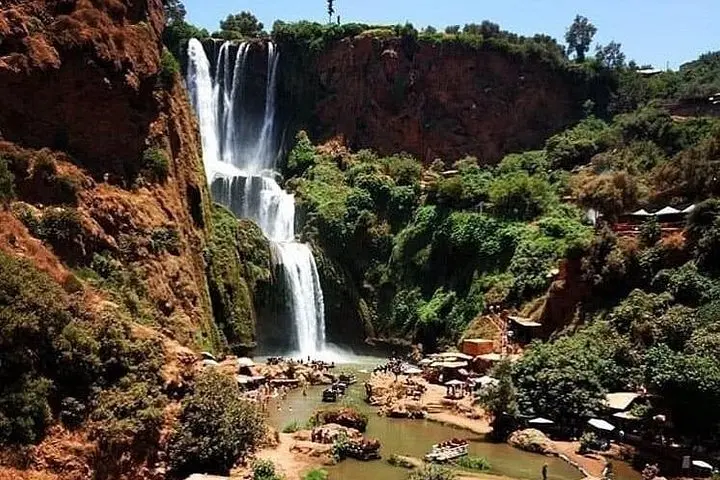
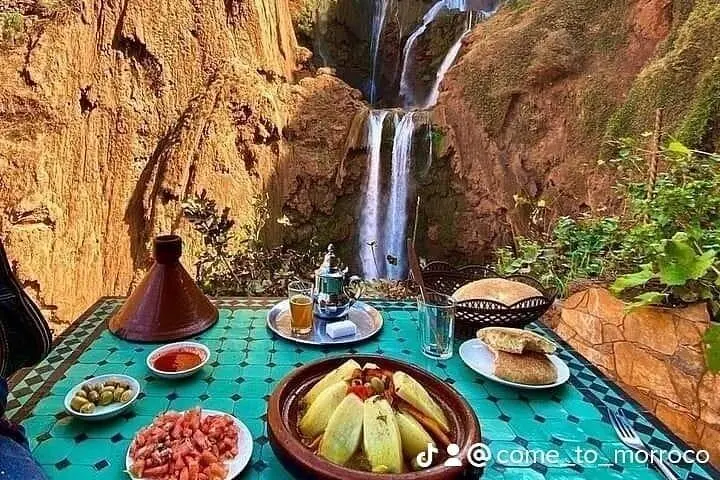
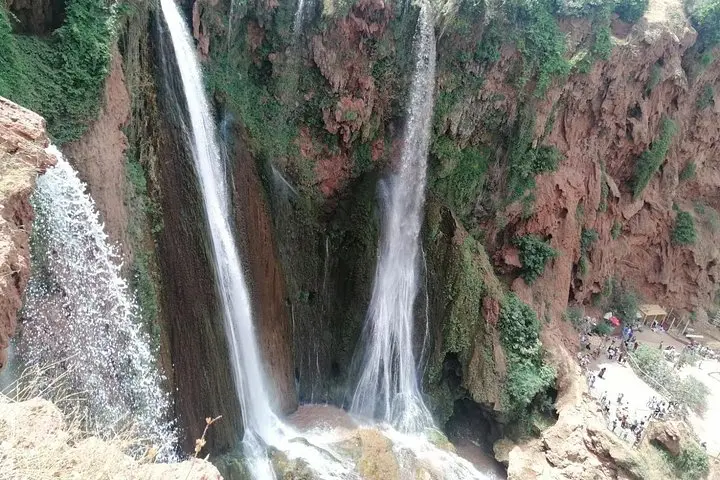
Ouzoud’s main drop plunges roughly 110 meters across multiple tiers, carved into Miocene limestone and shaped by centuries of human use—ancient watermills still cling to the riverbanks. The falls sit in a cultural landscape of small Berber settlements; local families run cafes and terraces offering mint tea with a front-row view. Geologically, the site is an active fluvial system where seasonal rains swell the river and sculpt new channels; expect changing flow depending on the season.
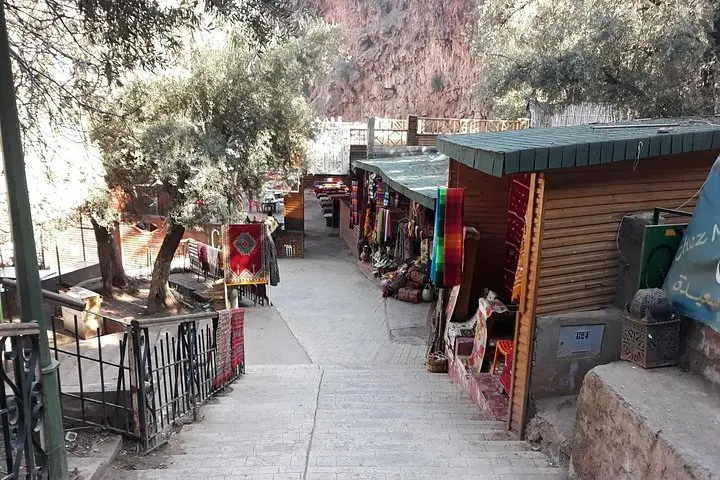
On the trail you’ll cross stone staircases, cross a narrow river by small boats, and pass olive groves where bulbous roots and terraced fields tell of traditional land use. Watch for wild Barbary macaques on the cliffs and raptors wheeling above the gorge.
Practical guidance: start early to avoid midday crowds and heat, wear non-slip shoes—paths are steep and slick—and bring cash for a simple lunch on a terrace. Water and sun protection are essential in summer; a light waterproof layer helps in shoulder seasons. The round-trip from Marrakech is a long day (expect 10–12 hours), but the payoff is a full day of hiking, culture, and one of Morocco’s most dramatic waterfalls.
Expect roughly 2.5–3 hours each way depending on traffic and stops; the full excursion is typically a long day of 10–12 hours.
The paths include steep stone stairs and uneven sections; children and seniors with good mobility can manage but should take it slow and avoid risky edges.
Short traditional boat crossings at the base of the falls are often optional and operated locally; bring cash for these small services.
Some pools below the falls are accessible for a quick dip when conditions are calm, but currents can be strong—exercise caution and follow local guidance.
Come To Morocco operates guided outdoor trips and adventures with an emphasis on safety, stewardship, and memorable experiences.
Morning light slices through red-earth terraces as the minibus hums away from Marrakech, the Atlas foothills growing taller with every kilometer. By mid-morning the road narrows and olive groves open into a bowl of limestone cliffs; the first thunder of water arrives before you can see it, a distant promise that becomes a curtain of spray as you round the final bend.
Morning light slices through red-earth terraces as the minibus hums away from Marrakech, the Atlas foothills growing taller with every kilometer. By mid-morning the road narrows and olive groves open into a bowl of limestone cliffs; the first thunder of water arrives before you can see it, a distant promise that becomes a curtain of spray as you round the final bend.
Ouzoud’s main drop plunges roughly 110 meters across multiple tiers, carved into Miocene limestone and shaped by centuries of human use—ancient watermills still cling to the riverbanks. The falls sit in a cultural landscape of small Berber settlements; local families run cafes and terraces offering mint tea with a front-row view. Geologically, the site is an active fluvial system where seasonal rains swell the river and sculpt new channels; expect changing flow depending on the season.
On the trail you’ll cross stone staircases, cross a narrow river by small boats, and pass olive groves where bulbous roots and terraced fields tell of traditional land use. Watch for wild Barbary macaques on the cliffs and raptors wheeling above the gorge.
Practical guidance: start early to avoid midday crowds and heat, wear non-slip shoes—paths are steep and slick—and bring cash for a simple lunch on a terrace. Water and sun protection are essential in summer; a light waterproof layer helps in shoulder seasons. The round-trip from Marrakech is a long day (expect 10–12 hours), but the payoff is a full day of hiking, culture, and one of Morocco’s most dramatic waterfalls.