THE ADVENTURE COLLECTIVE® · Independent discovery and booking for outdoor travel

A full-day escape from Marrakech, Ouzoud Waterfalls pairs a dramatic 110 m cascade with olive-terraced valleys, wild macaques and an optional boat crossing through rainbow-sprayed mist. This guide covers what to expect on the road, on the trail and at the base of one of North Africa’s most impressive falls.
A full-day escape from Marrakech, Ouzoud Waterfalls pairs a dramatic 110 m cascade with olive-terraced valleys, wild macaques and an optional boat crossing through rainbow-sprayed mist. This guide covers what to expect on the road, on the trail and at the base of one of North Africa’s most impressive falls.
The first time you round the last olive-scrubbed switchback and the valley opens, you feel the fall before you see it — a cool, spray-smelling draft that tugs at your shirt. Ouzoud drops in sheets here, a 110-meter curtain that throws mist into a natural amphitheater of red rock. Local guides steer small groups down stepped paths; the sound of the river turns from a distant murmur to a steady, reassuring roar as you descend.
Verified experiences and guided adventures in the surrounding area.
Operated by Sahara Travel Trips · Ouzoud, Marrakesh-Safi
The first time you round the last olive-scrubbed switchback and the valley opens, you feel the fall before you see it — a cool, spray-smelling draft that tugs at your shirt. Ouzoud drops in sheets here, a 110-meter curtain that throws mist into a natural amphitheater of red rock. Local guides steer small groups down stepped paths; the sound of the river turns from a distant murmur to a steady, reassuring roar as you descend.
Geology and human history are on show. The falls cut through Miocene-era sandstone stained a rust-red by iron, and downstream the El-Abid River has carved terraces where generations of farmers planted olives and fig trees. The valley sits on the northern edge of the High Atlas foothills — a landscape shaped by mountain uplift and seasonal floods that have fed local agriculture for centuries. Berber villages cling to the surrounding hills, and the day trip from Marrakech follows the same routes traders have used to cross these plains.
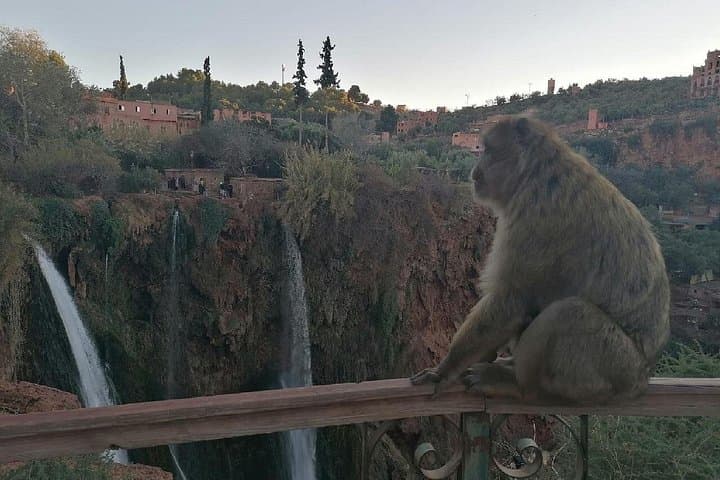
Wildlife here has an easy confidence. Barbary macaques move through the trees, eyeing picnickers and patrolling the footpath like neighborhood sentries. Water birds quarter the pools; kingfishers flash cobalt by the river. Vendors and family-run restaurants line the trail, offering tagines and mint tea — a practical pause where you trade your hike for a shaded table and a river view.
Practical notes: the excursion is a full day — expect roughly 150 km each way and a 2.5–3 hour drive from Marrakech through the Tadla plains and the lower Atlas passes. The walking itself is not technical but includes uneven stone steps, muddy patches after rain and a descent of several hundred vertical meters if you do the rim-to-base circuit. Bring cash for lunch and tips; many small eateries don’t take cards.
The boat crossing at the bottom is a brief, optional ride across a calmer stretch of river — an ideal vantage for rainbows in the mist and a close-up of the base of the cascades. Operators run boats when water levels permit; larger flows can cancel crossings for safety.
Timing is everything: arrive early to avoid midday coach crowds and catch the waterfalls under softer light. Mid-afternoon brings longer shadows and warmer tones on the rock; golden hour amplifies the spray into vivid rainbows.
Leave the monkeys to their foraging — don’t feed or hand them food — and stick to marked trails to protect fragile banks and native vegetation. With sturdy shoes, sun protection and respect for local customs, Ouzoud is a day packed with sensory contrast: mountain air, river spray, orchard scents and the steady, irresistible pull of falling water.
Expect about 150 km and roughly 2.5–3 hours each way depending on traffic and stops through the Atlas foothills.
The tour includes a boat ride option at the base of the falls, though rides operate only when water levels allow and may be run for a small additional fee.
There is commonly a modest local access fee or parking charge at viewpoints; the tour typically handles logistics but bring cash for any on-site charges.
Swimming is possible in some calm pools but depends on flow and safety; follow guides’ advice and avoid swimming directly under heavy flows.
Barbary macaques are wild and can bite if provoked or fed; observe from a distance and never feed or handle them.
Yes — many families do the trip. However, be prepared for steep steps and uneven sections; there are plenty of resting spots and restaurants along the path.
Sahara Travel Trips operates guided outdoor trips and adventures with an emphasis on safety, stewardship, and memorable experiences.
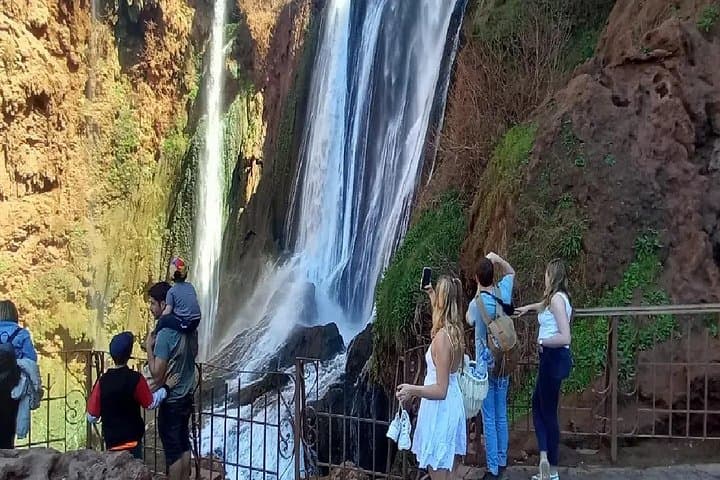


The first time you round the last olive-scrubbed switchback and the valley opens, you feel the fall before you see it — a cool, spray-smelling draft that tugs at your shirt. Ouzoud drops in sheets here, a 110-meter curtain that throws mist into a natural amphitheater of red rock. Local guides steer small groups down stepped paths; the sound of the river turns from a distant murmur to a steady, reassuring roar as you descend.
The first time you round the last olive-scrubbed switchback and the valley opens, you feel the fall before you see it — a cool, spray-smelling draft that tugs at your shirt. Ouzoud drops in sheets here, a 110-meter curtain that throws mist into a natural amphitheater of red rock. Local guides steer small groups down stepped paths; the sound of the river turns from a distant murmur to a steady, reassuring roar as you descend.
Geology and human history are on show. The falls cut through Miocene-era sandstone stained a rust-red by iron, and downstream the El-Abid River has carved terraces where generations of farmers planted olives and fig trees. The valley sits on the northern edge of the High Atlas foothills — a landscape shaped by mountain uplift and seasonal floods that have fed local agriculture for centuries. Berber villages cling to the surrounding hills, and the day trip from Marrakech follows the same routes traders have used to cross these plains.
Wildlife here has an easy confidence. Barbary macaques move through the trees, eyeing picnickers and patrolling the footpath like neighborhood sentries. Water birds quarter the pools; kingfishers flash cobalt by the river. Vendors and family-run restaurants line the trail, offering tagines and mint tea — a practical pause where you trade your hike for a shaded table and a river view.
Practical notes: the excursion is a full day — expect roughly 150 km each way and a 2.5–3 hour drive from Marrakech through the Tadla plains and the lower Atlas passes. The walking itself is not technical but includes uneven stone steps, muddy patches after rain and a descent of several hundred vertical meters if you do the rim-to-base circuit. Bring cash for lunch and tips; many small eateries don’t take cards.
The boat crossing at the bottom is a brief, optional ride across a calmer stretch of river — an ideal vantage for rainbows in the mist and a close-up of the base of the cascades. Operators run boats when water levels permit; larger flows can cancel crossings for safety.
Timing is everything: arrive early to avoid midday coach crowds and catch the waterfalls under softer light. Mid-afternoon brings longer shadows and warmer tones on the rock; golden hour amplifies the spray into vivid rainbows.
Leave the monkeys to their foraging — don’t feed or hand them food — and stick to marked trails to protect fragile banks and native vegetation. With sturdy shoes, sun protection and respect for local customs, Ouzoud is a day packed with sensory contrast: mountain air, river spray, orchard scents and the steady, irresistible pull of falling water.