THE ADVENTURE COLLECTIVE® · Independent discovery and booking for outdoor travel

Escape Marrakech for a full-day journey to Ouzoud, where 110 meters of cascading water, old grain mills and curious Barbary macaques await. This practical guide covers what to expect on the 10–11 hour trip, how to prepare, and the best times to explore.
Escape Marrakech for a full-day journey to Ouzoud, where 110 meters of cascading water, old grain mills and curious Barbary macaques await. This practical guide covers what to expect on the 10–11 hour trip, how to prepare, and the best times to explore.
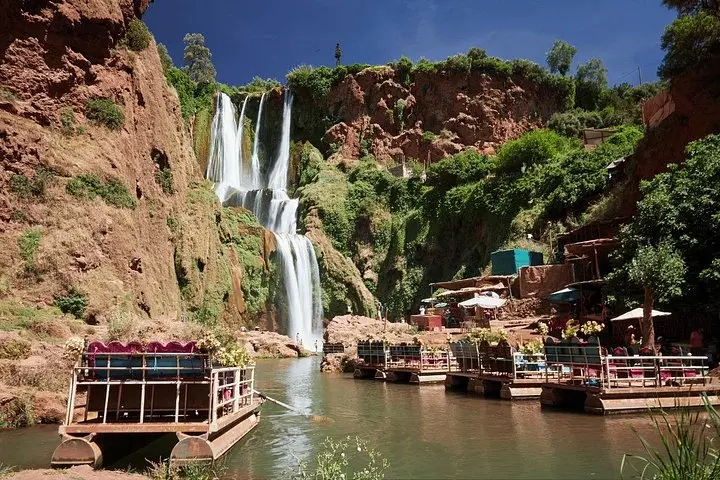
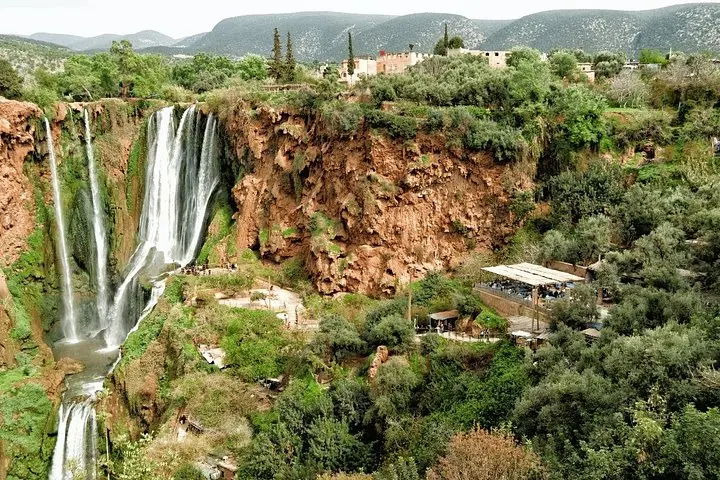
The bus slips out of Marrakech before the city heat fully wakes, and the Atlas foothills begin to draw a new horizon: red cliffs, olive terraces and a road that threads through traditional Berber villages. By midmorning the sound arrives first — a persistent, rising roar that promises more than a roadside view. The Ouzoud Waterfalls reveal themselves in a sheet of white falling into a green canyon, mist tearing ribbons of rainbow across the gorge.
Verified experiences and guided adventures in the surrounding area.
Operated by Marrakech Expérience · Ouzoud, Azilal Province
The bus slips out of Marrakech before the city heat fully wakes, and the Atlas foothills begin to draw a new horizon: red cliffs, olive terraces and a road that threads through traditional Berber villages. By midmorning the sound arrives first — a persistent, rising roar that promises more than a roadside view. The Ouzoud Waterfalls reveal themselves in a sheet of white falling into a green canyon, mist tearing ribbons of rainbow across the gorge.
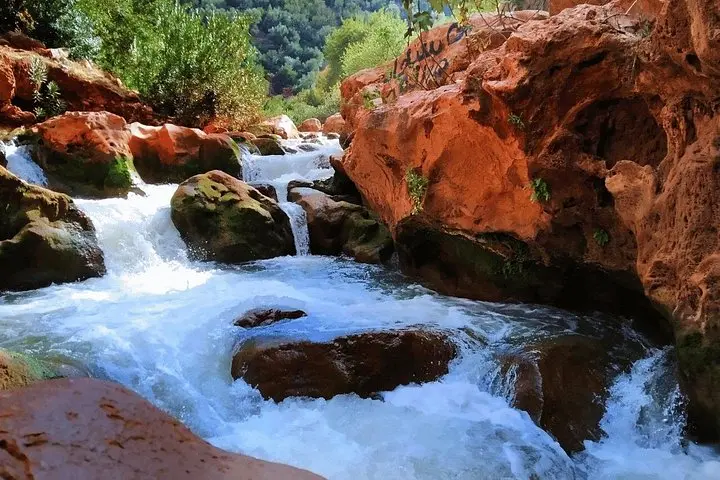
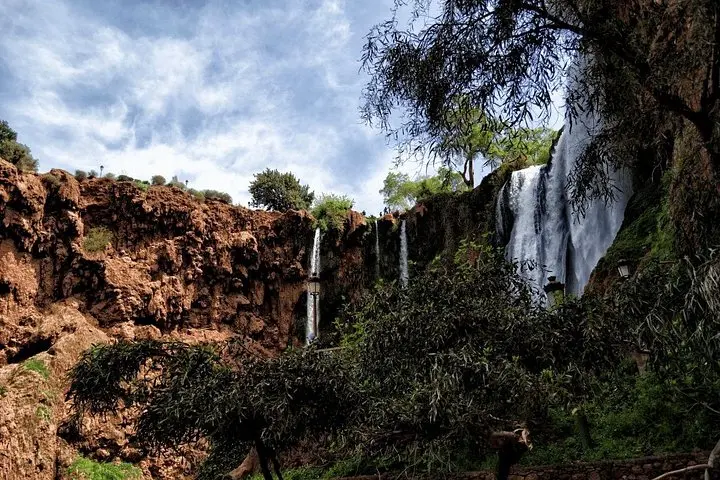
Geology and human history are written on these cliffs. The falls drop about 110 meters (360 feet) in multiple cataracts, scouring channels in Miocene-era rock and feeding a river that has long sustained olive groves and old grain mills. Ouzoud comes from a Berber root meaning the act of grinding grain; crumbling mill foundations and restored wooden wheels still sit by the stream, reminders that people have shaped and relied on this water for centuries.
Culture here is quietly present: cafés perch on cliff edges where locals serve tajine and mint tea with views that dare you to linger. Barbary macaques move like punctuation across ledges, curious and sometimes brazen. Guides and small boat operators offer short rides toward the base pools, while stone steps and irrigation paths invite exploration around the rim.
Practically, the trip is straightforward but not inert. From Marrakech it is roughly 150 km (about 93 miles) and the drive takes approximately 2.5–3 hours each way; the tour schedules around 10–11 hours total with about four hours at the site. Trails around the falls are well worn but uneven: expect stone steps, narrow walkways and slick patches where mist settles. The descent to the base involves roughly 100–120 meters of elevation change; allow 20–40 minutes each way depending on your pace and how many photos you stop for.
Bring sturdy footwear and a lightweight rain shell — the spray will cool and soak you from time to time. Carry cash for small cafes, boat rides and tips; many local vendors don’t accept cards. Morning arrivals are quieter for photography; afternoons draw day-trippers and can be louder but warmer for a swim in the lower pools.
Respect the wildlife and local customs: don’t feed the macaques, secure your belongings, and avoid climbing on fragile mill ruins. With a practical kit and a curious attitude, a day at Ouzoud rewards with dramatic views, hands-on cultural touches and a reminder that Morocco’s natural side is never far from its cities.
The drive is about 150 km (93 miles) and typically takes 2.5–3 hours each way depending on traffic and stops.
Yes — there are shallow pools at the base where people sometimes swim; conditions vary so check with local guides before entering the water.
Barbary macaques are commonly seen around the falls; they are wild animals so observe from a distance and do not feed them.
The tour is rated easy and suitable for most ages, but the descent involves many steps and may be challenging for those with mobility issues.
Most operators provide English- and French-speaking drivers and guides; local vendors often speak Arabic and Tamazight (Berber dialects).
Yes — there are several riverside cafés and stalls offering tajine, snacks and drinks; bring cash for purchases.
Marrakech Expérience operates guided outdoor trips and adventures with an emphasis on safety, stewardship, and memorable experiences.
The bus slips out of Marrakech before the city heat fully wakes, and the Atlas foothills begin to draw a new horizon: red cliffs, olive terraces and a road that threads through traditional Berber villages. By midmorning the sound arrives first — a persistent, rising roar that promises more than a roadside view. The Ouzoud Waterfalls reveal themselves in a sheet of white falling into a green canyon, mist tearing ribbons of rainbow across the gorge.
The bus slips out of Marrakech before the city heat fully wakes, and the Atlas foothills begin to draw a new horizon: red cliffs, olive terraces and a road that threads through traditional Berber villages. By midmorning the sound arrives first — a persistent, rising roar that promises more than a roadside view. The Ouzoud Waterfalls reveal themselves in a sheet of white falling into a green canyon, mist tearing ribbons of rainbow across the gorge.
Geology and human history are written on these cliffs. The falls drop about 110 meters (360 feet) in multiple cataracts, scouring channels in Miocene-era rock and feeding a river that has long sustained olive groves and old grain mills. Ouzoud comes from a Berber root meaning the act of grinding grain; crumbling mill foundations and restored wooden wheels still sit by the stream, reminders that people have shaped and relied on this water for centuries.
Culture here is quietly present: cafés perch on cliff edges where locals serve tajine and mint tea with views that dare you to linger. Barbary macaques move like punctuation across ledges, curious and sometimes brazen. Guides and small boat operators offer short rides toward the base pools, while stone steps and irrigation paths invite exploration around the rim.
Practically, the trip is straightforward but not inert. From Marrakech it is roughly 150 km (about 93 miles) and the drive takes approximately 2.5–3 hours each way; the tour schedules around 10–11 hours total with about four hours at the site. Trails around the falls are well worn but uneven: expect stone steps, narrow walkways and slick patches where mist settles. The descent to the base involves roughly 100–120 meters of elevation change; allow 20–40 minutes each way depending on your pace and how many photos you stop for.
Bring sturdy footwear and a lightweight rain shell — the spray will cool and soak you from time to time. Carry cash for small cafes, boat rides and tips; many local vendors don’t accept cards. Morning arrivals are quieter for photography; afternoons draw day-trippers and can be louder but warmer for a swim in the lower pools.
Respect the wildlife and local customs: don’t feed the macaques, secure your belongings, and avoid climbing on fragile mill ruins. With a practical kit and a curious attitude, a day at Ouzoud rewards with dramatic views, hands-on cultural touches and a reminder that Morocco’s natural side is never far from its cities.