THE ADVENTURE COLLECTIVE® · Independent discovery and booking for outdoor travel

Hear the falls before you see them: Ouzoud’s 110‑meter drop sends spray and sound through olive terraces and cliffside mills. This day‑trip from Marrakech pairs easy access with steep stair climbs, local culture, and close encounters with macaques.
Hear the falls before you see them: Ouzoud’s 110‑meter drop sends spray and sound through olive terraces and cliffside mills. This day‑trip from Marrakech pairs easy access with steep stair climbs, local culture, and close encounters with macaques.
You arrive to the sound before the sight: a distant rumble that grows teeth and voice as you descend olive-terraced slopes. The path narrows, the air cools, and then the canyon opens — water detonating off the cliff in curtains, droplets catching sunlight and throwing it like coins. Ouzoud’s main drop is a vertical proclamation, roughly 110 meters (360 feet), and standing at the rim the falls feel like a living thing, pushing air and sound into the valley below.
Verified experiences and guided adventures in the surrounding area.
Operated by Sundunes Experience · Ouzoud, Azilal Province
You arrive to the sound before the sight: a distant rumble that grows teeth and voice as you descend olive-terraced slopes. The path narrows, the air cools, and then the canyon opens — water detonating off the cliff in curtains, droplets catching sunlight and throwing it like coins. Ouzoud’s main drop is a vertical proclamation, roughly 110 meters (360 feet), and standing at the rim the falls feel like a living thing, pushing air and sound into the valley below.
Geology and human history are close here. The falls sit where the El Abid River cuts through hard limestone, carving steps and plunges over millennia. Around the cascades, traditional stone watermills and flat-roofed Berber houses speak to a rural life shaped by olive groves and flowing water; local families have tended terraces here for generations. The site has long been both a working landscape and a seasonal destination for Moroccan weekenders and international visitors alike.
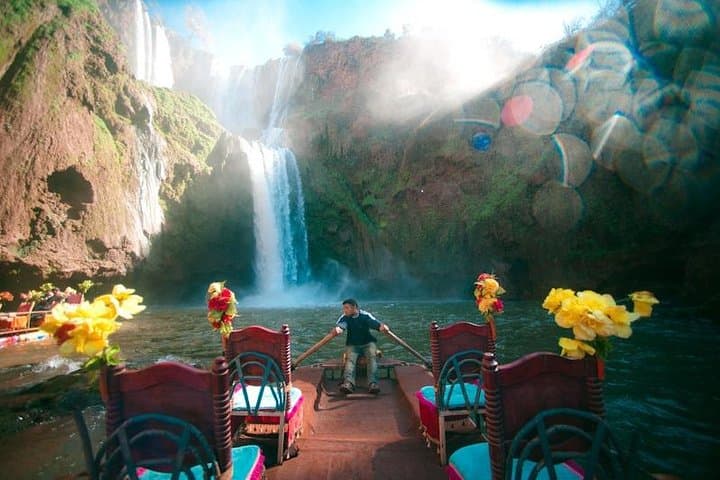
Culturally, Ouzoud is as much about people as it is about the falls. Vendors sell fresh orange juice and flat bread from shaded stalls, and guides offer short boat rides at the base. Barbary macaques patrol the rocks and sometimes the cliffs’ edge, adding unpredictable theater to an afternoon of walking and photography.
Practical route notes: most visitors follow a loop that weaves from the upper viewpoints down a paved and dirt stairway to the base and back up — roughly 3–5 km depending on side trips, with about 120–200 m of net elevation change. Terrain alternates between firm stone steps, slick rock near the spray, and packed dirt through the olive groves. Expect steep stairs both down and up; the ascent back to the rim is the day’s workout.
Timing matters. Arrive early to avoid busier midafternoon crowds and to catch better light on the falls; late afternoon brings softer hues and fewer people. Bring plenty of water, sun protection, and a sturdy pair of shoes with grip for wet sections. If you plan a boat ride or to picnic near the plunge pool, waterproof bags are useful — spray reaches farther than you think.
Logistics: day tours from Marrakech run about eight hours, usually by minibus with hotel pickup and a guide; the shared tours limit groups to about 17 people. Cancellation policies typically allow a full refund 24 hours ahead. Respect local rules: don’t feed wildlife, and be mindful of narrow paths shared with donkeys and locals.
Ouzoud delivers an easy-to-access taste of Atlas-country river wildness within a day’s reach of Marrakech — a place where geology, agriculture, and village life fold together around one of North Africa’s most dramatic falls.
By road it's roughly 150–170 km and typically 2.5–3 hours each way by minibus depending on traffic and stops.
The main path includes many paved steps and some steep sections; the descent is straightforward but return climbs require moderate effort.
Some visitors wade near the pool but swimming conditions vary; strong currents and cold water are possible — use caution and follow local advice.
Yes — most day tours from Marrakech include pickup, a local guide, transport by minibus, and time for lunch and photos.
Yes; flow varies with season — winter and spring typically have stronger flows after rains, while late summer can be reduced.
Families visit frequently; supervise children on steep sections and near viewpoints and avoid cliff edges and slippery rocks.
Sundunes Experience operates guided outdoor trips and adventures with an emphasis on safety, stewardship, and memorable experiences.

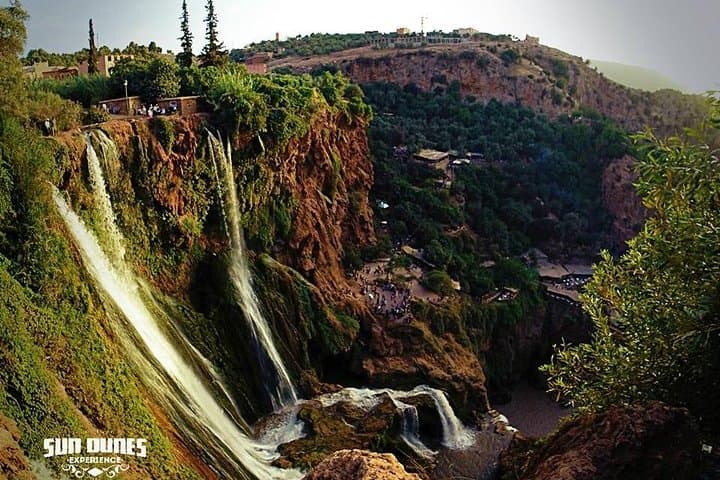

You arrive to the sound before the sight: a distant rumble that grows teeth and voice as you descend olive-terraced slopes. The path narrows, the air cools, and then the canyon opens — water detonating off the cliff in curtains, droplets catching sunlight and throwing it like coins. Ouzoud’s main drop is a vertical proclamation, roughly 110 meters (360 feet), and standing at the rim the falls feel like a living thing, pushing air and sound into the valley below.
You arrive to the sound before the sight: a distant rumble that grows teeth and voice as you descend olive-terraced slopes. The path narrows, the air cools, and then the canyon opens — water detonating off the cliff in curtains, droplets catching sunlight and throwing it like coins. Ouzoud’s main drop is a vertical proclamation, roughly 110 meters (360 feet), and standing at the rim the falls feel like a living thing, pushing air and sound into the valley below.
Geology and human history are close here. The falls sit where the El Abid River cuts through hard limestone, carving steps and plunges over millennia. Around the cascades, traditional stone watermills and flat-roofed Berber houses speak to a rural life shaped by olive groves and flowing water; local families have tended terraces here for generations. The site has long been both a working landscape and a seasonal destination for Moroccan weekenders and international visitors alike.
Culturally, Ouzoud is as much about people as it is about the falls. Vendors sell fresh orange juice and flat bread from shaded stalls, and guides offer short boat rides at the base. Barbary macaques patrol the rocks and sometimes the cliffs’ edge, adding unpredictable theater to an afternoon of walking and photography.
Practical route notes: most visitors follow a loop that weaves from the upper viewpoints down a paved and dirt stairway to the base and back up — roughly 3–5 km depending on side trips, with about 120–200 m of net elevation change. Terrain alternates between firm stone steps, slick rock near the spray, and packed dirt through the olive groves. Expect steep stairs both down and up; the ascent back to the rim is the day’s workout.
Timing matters. Arrive early to avoid busier midafternoon crowds and to catch better light on the falls; late afternoon brings softer hues and fewer people. Bring plenty of water, sun protection, and a sturdy pair of shoes with grip for wet sections. If you plan a boat ride or to picnic near the plunge pool, waterproof bags are useful — spray reaches farther than you think.
Logistics: day tours from Marrakech run about eight hours, usually by minibus with hotel pickup and a guide; the shared tours limit groups to about 17 people. Cancellation policies typically allow a full refund 24 hours ahead. Respect local rules: don’t feed wildlife, and be mindful of narrow paths shared with donkeys and locals.
Ouzoud delivers an easy-to-access taste of Atlas-country river wildness within a day’s reach of Marrakech — a place where geology, agriculture, and village life fold together around one of North Africa’s most dramatic falls.