THE ADVENTURE COLLECTIVE® · Independent discovery and booking for outdoor travel

A full-day escape from Marrakech, this guided trip delivers North Africa’s dramatic 110m Ouzoud Falls, olive terraces, riverside cafés and curious Barbary macaques. Read on for what to expect, when to go and how to make the most of the walkable trails and natural pools.
A full-day escape from Marrakech, this guided trip delivers North Africa’s dramatic 110m Ouzoud Falls, olive terraces, riverside cafés and curious Barbary macaques. Read on for what to expect, when to go and how to make the most of the walkable trails and natural pools.
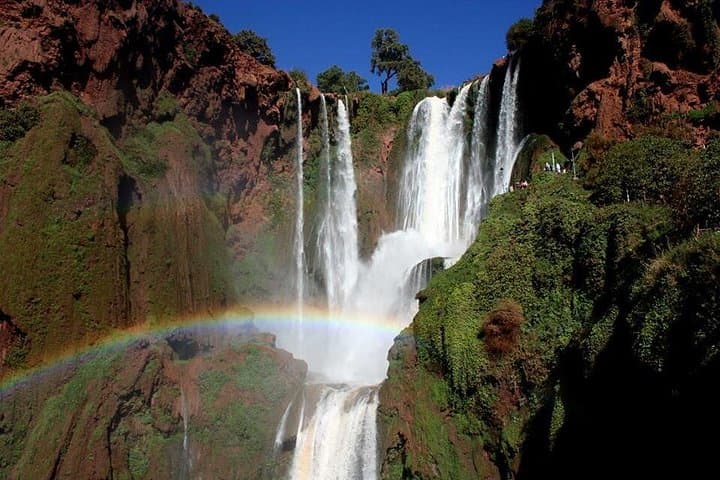
You leave Marrakech before the city fully wakes, the taxi weaving out along a ribbon of highway and the High Atlas rising like an oncoming wall. After roughly 2½ hours the air changes: olive groves roll past the bus window and the first white flashes of water appear, a distant ribbon cutting the ochre hills. By the time you step out onto the viewing terraces, the falls are no longer a photograph but a force—water dropping in tiers, mist stinging your face and the river below daring you to follow.
Verified experiences and guided adventures in the surrounding area.
Operated by Desert Family Tour · Tanaghmeilt (Ouzoud Falls), Azilal Province
You leave Marrakech before the city fully wakes, the taxi weaving out along a ribbon of highway and the High Atlas rising like an oncoming wall. After roughly 2½ hours the air changes: olive groves roll past the bus window and the first white flashes of water appear, a distant ribbon cutting the ochre hills. By the time you step out onto the viewing terraces, the falls are no longer a photograph but a force—water dropping in tiers, mist stinging your face and the river below daring you to follow.
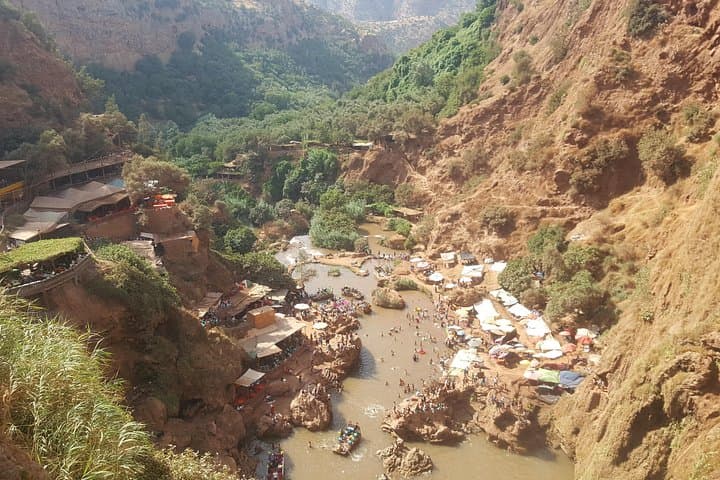
Ouzoud Falls stands at about 110 meters—one of North Africa’s highest cascades—and was carved by the El-Abid River through layers of relatively soft sedimentary rock. The area around Tanaghmeilt has been shaped by millennia of water and human cultivation: terraces of olives, stone walls, and small Berber hamlets that have tended these slopes for generations. The village cafés that line the stream offer tagines and mint tea with a view; their tables sit where shepherds once paused on longer transhumance routes.
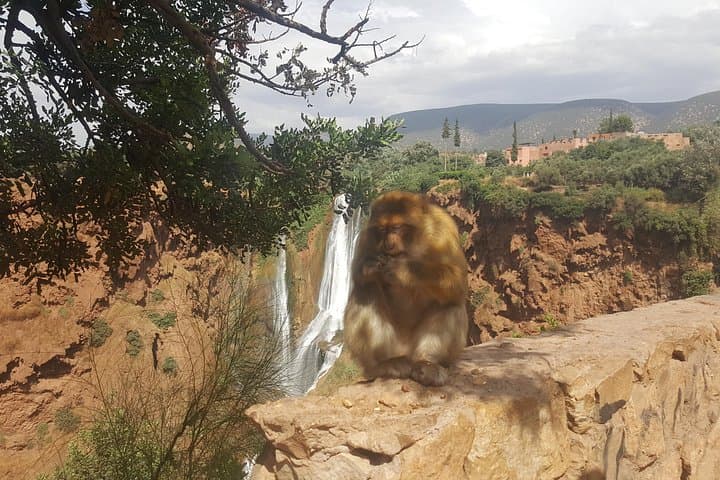
The walk around Ouzoud is generous: gravel tracks and stone steps lead up to panoramic ledges and down into quieter pools. Barbary macaques claim the trees—curious, quick, and occasionally bold—while kingfishers and other river birds patrol the plunge pools. Locals have long used the falls for irrigation and olive pressing; today tourism brings both income and impact, so you’ll notice signs urging responsible behavior.
Practical guidance matters here. The day trip is full-day (about nine hours from Marrakech including drive time), so plan for sun, spray and uneven terrain. Trails can be slippery near the water; good footwear and a lightweight waterproof layer are smart. There are safe swim spots in the smaller pools below the main drop on calmer days, but check local advice and wear water shoes. Cafés and restaurants near the falls serve lunch at mid-range prices—bring cash for smaller vendors and for tipping drivers and guides.
Timing helps shape the experience: early arrivals mean softer light, fewer crowds and better chances for clear photos of the fall’s full curtain. Late afternoon delivers golden backlight on the spray but busier picnic terraces. The operator typically provides hotel pick-up and drop-off in Marrakech; the drive is scenic but long, so bring snacks and a charged phone for longer stretches in the van.
Respect for the site keeps it wild: don’t feed wildlife, stay on paths, and use the bins. If you want to extend the day, ask your driver about a brief stop in a nearby olive cooperative to taste local oil and learn a little about the valley’s agricultural history. Ouzoud isn’t just a photo—it's a working landscape that still moves, smells and pushes back when you get close enough to listen.
Expect about 2–2.5 hours each way depending on traffic and your pickup point—plan for a nine-hour day including stops.
Yes—there are natural pools below the cascades where swimming is possible on calm days; always check local guidance and avoid the main plunge pool when currents are strong.
Lunch is not included; the itinerary includes time to eat at riverside cafés where you can order Moroccan dishes at your own expense.
The main viewpoints are accessible but some routes involve steep steps and uneven ground; assess mobility needs and consider staying near the upper terraces if stairs are an issue.
You’ll likely encounter Barbary macaques in the trees and various river birds; observe from a respectful distance and do not feed animals.
This product includes transport and a driver with an English-speaking driver; guided walks around specific trails may be available locally—ask your operator on the day.
Desert Family Tour operates guided outdoor trips and adventures with an emphasis on safety, stewardship, and memorable experiences.
You leave Marrakech before the city fully wakes, the taxi weaving out along a ribbon of highway and the High Atlas rising like an oncoming wall. After roughly 2½ hours the air changes: olive groves roll past the bus window and the first white flashes of water appear, a distant ribbon cutting the ochre hills. By the time you step out onto the viewing terraces, the falls are no longer a photograph but a force—water dropping in tiers, mist stinging your face and the river below daring you to follow.
You leave Marrakech before the city fully wakes, the taxi weaving out along a ribbon of highway and the High Atlas rising like an oncoming wall. After roughly 2½ hours the air changes: olive groves roll past the bus window and the first white flashes of water appear, a distant ribbon cutting the ochre hills. By the time you step out onto the viewing terraces, the falls are no longer a photograph but a force—water dropping in tiers, mist stinging your face and the river below daring you to follow.
Ouzoud Falls stands at about 110 meters—one of North Africa’s highest cascades—and was carved by the El-Abid River through layers of relatively soft sedimentary rock. The area around Tanaghmeilt has been shaped by millennia of water and human cultivation: terraces of olives, stone walls, and small Berber hamlets that have tended these slopes for generations. The village cafés that line the stream offer tagines and mint tea with a view; their tables sit where shepherds once paused on longer transhumance routes.
The walk around Ouzoud is generous: gravel tracks and stone steps lead up to panoramic ledges and down into quieter pools. Barbary macaques claim the trees—curious, quick, and occasionally bold—while kingfishers and other river birds patrol the plunge pools. Locals have long used the falls for irrigation and olive pressing; today tourism brings both income and impact, so you’ll notice signs urging responsible behavior.
Practical guidance matters here. The day trip is full-day (about nine hours from Marrakech including drive time), so plan for sun, spray and uneven terrain. Trails can be slippery near the water; good footwear and a lightweight waterproof layer are smart. There are safe swim spots in the smaller pools below the main drop on calmer days, but check local advice and wear water shoes. Cafés and restaurants near the falls serve lunch at mid-range prices—bring cash for smaller vendors and for tipping drivers and guides.
Timing helps shape the experience: early arrivals mean softer light, fewer crowds and better chances for clear photos of the fall’s full curtain. Late afternoon delivers golden backlight on the spray but busier picnic terraces. The operator typically provides hotel pick-up and drop-off in Marrakech; the drive is scenic but long, so bring snacks and a charged phone for longer stretches in the van.
Respect for the site keeps it wild: don’t feed wildlife, stay on paths, and use the bins. If you want to extend the day, ask your driver about a brief stop in a nearby olive cooperative to taste local oil and learn a little about the valley’s agricultural history. Ouzoud isn’t just a photo—it's a working landscape that still moves, smells and pushes back when you get close enough to listen.