THE ADVENTURE COLLECTIVE® · Independent discovery and booking for outdoor travel

A full-day escape from Marrakech to Ouzoud delivers thundering falls, olive-clad cliffs, cheeky Barbary macaques and an optional boat ride close to the spray. This guide covers what to expect, how to prepare and the best times to frame a perfect rainbow-lit shot.
A full-day escape from Marrakech to Ouzoud delivers thundering falls, olive-clad cliffs, cheeky Barbary macaques and an optional boat ride close to the spray. This guide covers what to expect, how to prepare and the best times to frame a perfect rainbow-lit shot.
The first thing that strikes you as the minivan climbs out of the ochre plain is the sound: a distant, steady thunder that cuts through the dry Moroccan air. Ten thousand droplets announce themselves before the falls come into view — a vertical white seam tearing down the green flank of the Atlas foothills. At Ouzoud, water doesn’t politely trickle; it insists.
Verified experiences and guided adventures in the surrounding area.
Operated by amazigh voyage · Azilal, Béni Mellal-Khénifra
The first thing that strikes you as the minivan climbs out of the ochre plain is the sound: a distant, steady thunder that cuts through the dry Moroccan air. Ten thousand droplets announce themselves before the falls come into view — a vertical white seam tearing down the green flank of the Atlas foothills. At Ouzoud, water doesn’t politely trickle; it insists.
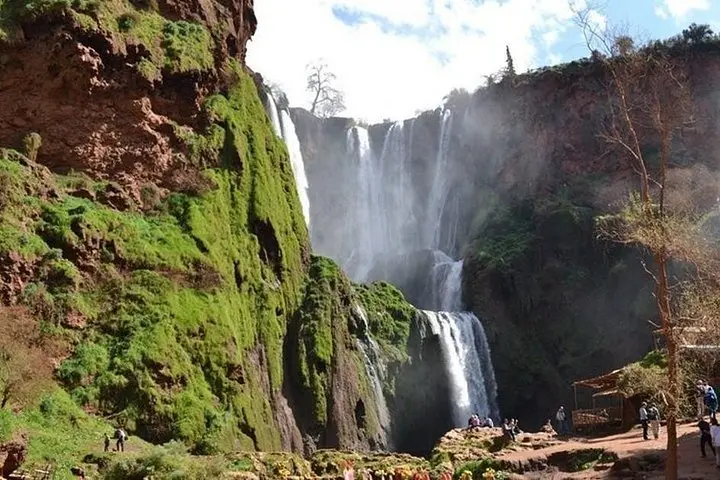
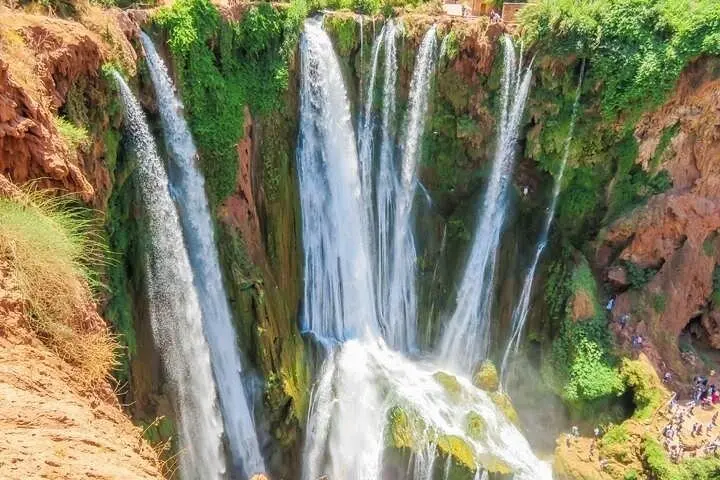
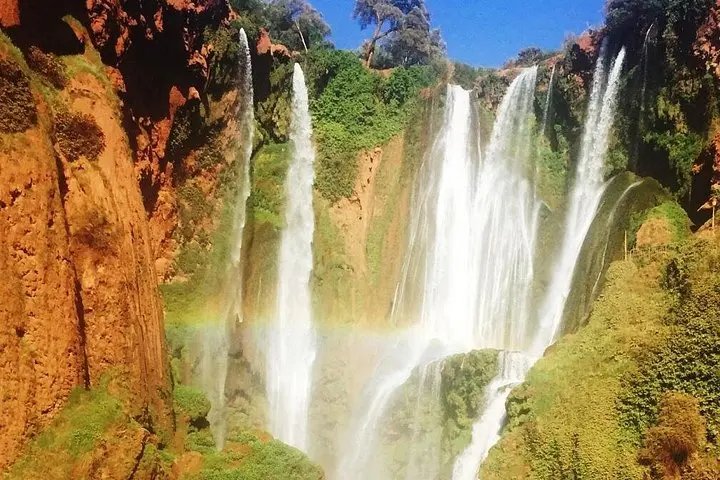
You’ll spend a full day here. The route follows rocky tracks, steps carved into the cliff by generations of visitors and shepherds, and shaded paths under olive and fig trees. From the upper viewpoint the falls spill in terraces, each ledge slicing sunlight into a thin rainbow on clear days. Below, a narrow river gathers and eddies around boulders before threading downstream.
Geologically Ouzoud is an expression of Morocco’s folding and erosion — a river exploiting weaknesses in layered limestone and red marl. The result is multiple cascades dropping roughly 110 meters in total, framed by terraces where local olive farmers have shaped the land for centuries. Culturally the site has long been a local gathering place; small cafés and family-run restaurants perch on the rim, serving tagine and mint tea while watching the torrent.
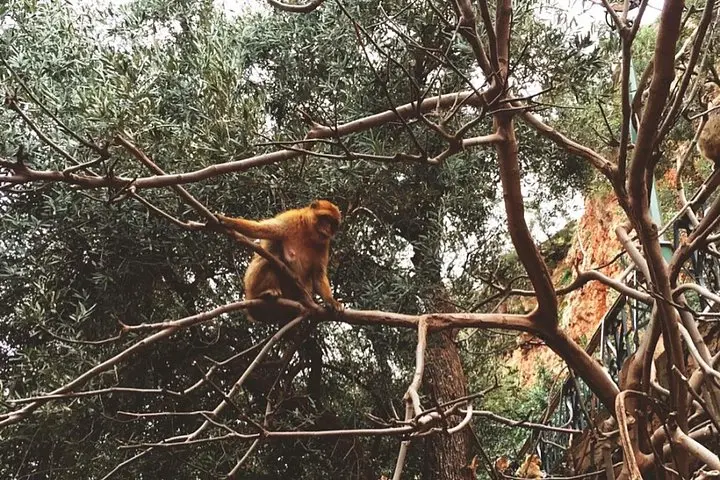
Monkeys — Barbary macaques — are part of the scene, bold and curious. They patrol picnic tables and cliff edges, looking for scraps and interaction. Treat them as wildlife: observe, don’t feed, and keep phones and bags closed; they will test any lapse in vigilance.
Practicalities are straightforward. Tours depart Marrakech early and return in the evening, the drive taking about 2.5–3 hours each way depending on traffic. The guided walking loop to the top and rim viewpoints is roughly an hour for casual hikers; expect uneven stone steps, short steep sections and occasional muddy patches after rain. There’s an optional short boat ride near the base that brings you close to the lower cascade — it’s wet, fun, and weather-dependent.
Plan for sun and spray. Bring a refillable water bottle, close-toed shoes with grip, and a light waterproof layer for the boat or mist. If you want photographs, aim for late afternoon when the sun drops and rainbows intensify; mornings are cooler and less crowded.
Families and moderately fit travelers will find this a rewarding day: nature that still feels raw, layers of local life on the cliffside, and a satisfying sense of motion as river meets gravity. The best trips leave Marrakech at first light and give you ample time to walk, eat, and watch the falls change with weather before the long slow drive home.
Expect about 2.5–3 hours each way depending on traffic and road conditions; tours typically leave early morning and return in the evening.
Boat rides are usually offered on-site and may be included on some tour packages; availability depends on water levels and weather.
The main trails have many steps and uneven surfaces; not suitable for strollers — families should use carriers or be prepared for short carries.
Swimming is not generally recommended due to strong currents, slippery rocks and changing depth; stick to designated safe areas and follow guide advice.
Yes — small cafés and family-run restaurants offer tagine, mint tea, and simple local dishes near the viewpoints and parking area.
Barbary macaques are wild and can be bold; avoid feeding them, keep belongings secured and follow your guide’s instructions to reduce conflicts.
amazigh voyage operates guided outdoor trips and adventures with an emphasis on safety, stewardship, and memorable experiences.
The first thing that strikes you as the minivan climbs out of the ochre plain is the sound: a distant, steady thunder that cuts through the dry Moroccan air. Ten thousand droplets announce themselves before the falls come into view — a vertical white seam tearing down the green flank of the Atlas foothills. At Ouzoud, water doesn’t politely trickle; it insists.
The first thing that strikes you as the minivan climbs out of the ochre plain is the sound: a distant, steady thunder that cuts through the dry Moroccan air. Ten thousand droplets announce themselves before the falls come into view — a vertical white seam tearing down the green flank of the Atlas foothills. At Ouzoud, water doesn’t politely trickle; it insists.
You’ll spend a full day here. The route follows rocky tracks, steps carved into the cliff by generations of visitors and shepherds, and shaded paths under olive and fig trees. From the upper viewpoint the falls spill in terraces, each ledge slicing sunlight into a thin rainbow on clear days. Below, a narrow river gathers and eddies around boulders before threading downstream.
Geologically Ouzoud is an expression of Morocco’s folding and erosion — a river exploiting weaknesses in layered limestone and red marl. The result is multiple cascades dropping roughly 110 meters in total, framed by terraces where local olive farmers have shaped the land for centuries. Culturally the site has long been a local gathering place; small cafés and family-run restaurants perch on the rim, serving tagine and mint tea while watching the torrent.
Monkeys — Barbary macaques — are part of the scene, bold and curious. They patrol picnic tables and cliff edges, looking for scraps and interaction. Treat them as wildlife: observe, don’t feed, and keep phones and bags closed; they will test any lapse in vigilance.
Practicalities are straightforward. Tours depart Marrakech early and return in the evening, the drive taking about 2.5–3 hours each way depending on traffic. The guided walking loop to the top and rim viewpoints is roughly an hour for casual hikers; expect uneven stone steps, short steep sections and occasional muddy patches after rain. There’s an optional short boat ride near the base that brings you close to the lower cascade — it’s wet, fun, and weather-dependent.
Plan for sun and spray. Bring a refillable water bottle, close-toed shoes with grip, and a light waterproof layer for the boat or mist. If you want photographs, aim for late afternoon when the sun drops and rainbows intensify; mornings are cooler and less crowded.
Families and moderately fit travelers will find this a rewarding day: nature that still feels raw, layers of local life on the cliffside, and a satisfying sense of motion as river meets gravity. The best trips leave Marrakech at first light and give you ample time to walk, eat, and watch the falls change with weather before the long slow drive home.