THE ADVENTURE COLLECTIVE® · Independent discovery and booking for outdoor travel

Drive the Atlas, follow a local guide and stand where a river drops more than 100 meters through terraces and olive groves. This full-day trip from Marrakech pairs a hike, a close-up boat ride and a riverside lunch with Berber flavors and Barbary macaques on the path.
Drive the Atlas, follow a local guide and stand where a river drops more than 100 meters through terraces and olive groves. This full-day trip from Marrakech pairs a hike, a close-up boat ride and a riverside lunch with Berber flavors and Barbary macaques on the path.
The road leaves Marrakech in a slow unravel — ochre kasbahs give way to scrubby plains, then the ramped shoulders of the High Atlas appear like a distant gray spine. By midmorning the bus threads olive groves and Berber villages, and the soundscape shifts from urban horns to birds and the steady drum of distant water. At the trailhead the guide points the way; below, Ouzoud unfurls in tiers — water pulling itself over rock in sheets and curtains, dropping a total of roughly 110 meters through stair-stepped basins.
Verified experiences and guided adventures in the surrounding area.
Operated by Itinerance Plus Agence de Voyage Marrakech · Ouzoud, Azilal Province
The road leaves Marrakech in a slow unravel — ochre kasbahs give way to scrubby plains, then the ramped shoulders of the High Atlas appear like a distant gray spine. By midmorning the bus threads olive groves and Berber villages, and the soundscape shifts from urban horns to birds and the steady drum of distant water. At the trailhead the guide points the way; below, Ouzoud unfurls in tiers — water pulling itself over rock in sheets and curtains, dropping a total of roughly 110 meters through stair-stepped basins.
Ouzoud is a geological peel: the falls trace an incision where the El Abid River meets resistant bedrock, carving amphitheaters and plunge pools across volcanic and sedimentary layers. Human history at Ouzoud is equally textured. Small Berber communities have farmed the terraces and run olive mills here for generations; names carved into millstones and the slow, patient terraces speak to an agricultural rhythm older than the national borders.
Culture arrives in the details — menus that read tagines thick with local olives, guide stories about seasonal harvests, and the region’s tame but mischievous Barbary macaques who patrol the paths like small, furry customs officers. On this full-day trip from Marrakech (about 150 km, roughly three hours each way), your guide leads a two-hour circuit of viewpoints, explains the local ecology, and points out family-run restaurants perched on the rim where lunch is served with broad waterfall views.
The day is anchored by a short boat ride at the base of the falls — a 20-minute, spray-splashed close encounter that gives an intimate sense of the falls’ force. There’s also free time for a dip in quieter pools if conditions and local rules allow.
Practical notes: expect a 10–12 hour day door-to-door. Trails are uneven: rocky steps, narrow paths and slick rock near the water demand sturdy footwear and steady footing. Bring at least 2 liters of water, sun protection, a lightweight waterproof layer for spray, and cash for small restaurants and tips. Monkeys are wild; do not feed them — it stresses animals and encourages dependence.
Best timed for spring and autumn when flow is strong and temperatures are moderate; summer can be busy and hot, winter cooler and wetter. Travel with a guide for the most efficient route, local insights and access to viewpoints most visitors miss. The falls are an immediate physical reward — a place where geology, culture and the plain insistence of running water meet, daring you to stand close enough to feel the mist.
The trip is about 150 km and typically takes roughly three hours each way depending on traffic and stops.
Swimming is possible in some natural pools near the base but conditions and safety vary—follow your guide’s advice and local signage.
Yes, Barbary macaques are common around the falls; keep distance and don’t feed or tease them.
Yes—the excursion includes a 20-minute boat ride at the foot of the falls; expect spray and close-up views of the cascades.
Lunch at a local restaurant is included in the itinerary; special dietary needs may be difficult to accommodate—notify at booking.
Stroller access is noted for some areas, but the terrain around viewpoints and near pools includes steps and narrow paths—mobility limitations may make parts of the site difficult.
Itinerance Plus Agence de Voyage Marrakech operates guided outdoor trips and adventures with an emphasis on safety, stewardship, and memorable experiences.
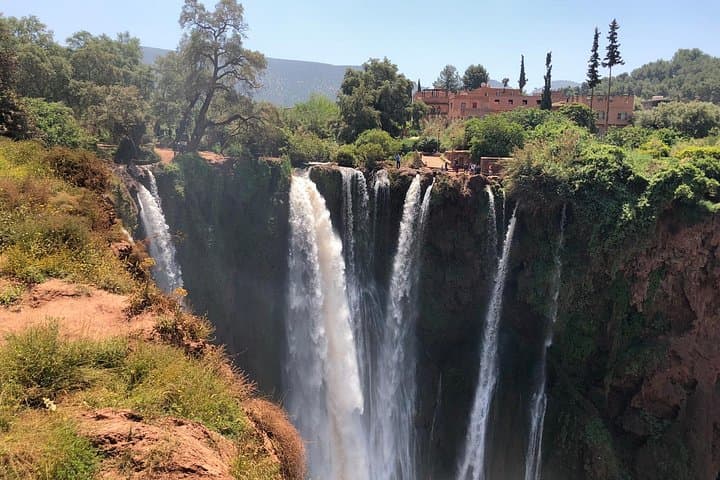
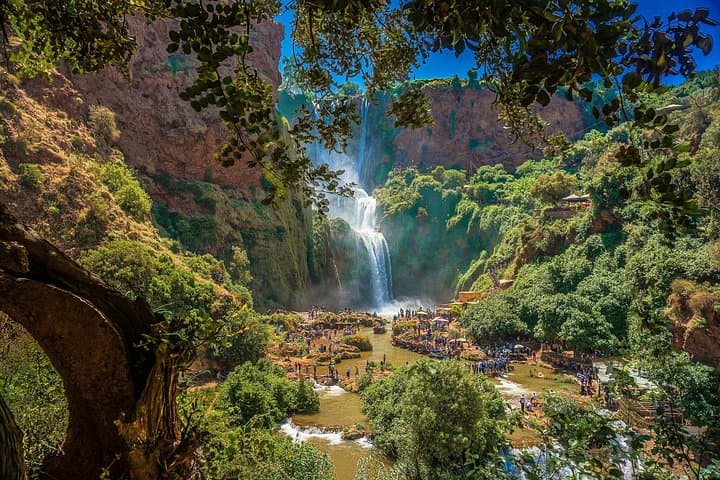
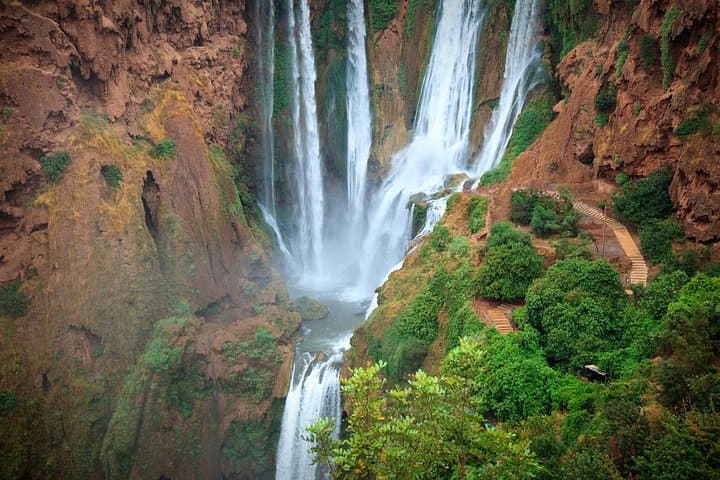
The road leaves Marrakech in a slow unravel — ochre kasbahs give way to scrubby plains, then the ramped shoulders of the High Atlas appear like a distant gray spine. By midmorning the bus threads olive groves and Berber villages, and the soundscape shifts from urban horns to birds and the steady drum of distant water. At the trailhead the guide points the way; below, Ouzoud unfurls in tiers — water pulling itself over rock in sheets and curtains, dropping a total of roughly 110 meters through stair-stepped basins.
The road leaves Marrakech in a slow unravel — ochre kasbahs give way to scrubby plains, then the ramped shoulders of the High Atlas appear like a distant gray spine. By midmorning the bus threads olive groves and Berber villages, and the soundscape shifts from urban horns to birds and the steady drum of distant water. At the trailhead the guide points the way; below, Ouzoud unfurls in tiers — water pulling itself over rock in sheets and curtains, dropping a total of roughly 110 meters through stair-stepped basins.
Ouzoud is a geological peel: the falls trace an incision where the El Abid River meets resistant bedrock, carving amphitheaters and plunge pools across volcanic and sedimentary layers. Human history at Ouzoud is equally textured. Small Berber communities have farmed the terraces and run olive mills here for generations; names carved into millstones and the slow, patient terraces speak to an agricultural rhythm older than the national borders.
Culture arrives in the details — menus that read tagines thick with local olives, guide stories about seasonal harvests, and the region’s tame but mischievous Barbary macaques who patrol the paths like small, furry customs officers. On this full-day trip from Marrakech (about 150 km, roughly three hours each way), your guide leads a two-hour circuit of viewpoints, explains the local ecology, and points out family-run restaurants perched on the rim where lunch is served with broad waterfall views.
The day is anchored by a short boat ride at the base of the falls — a 20-minute, spray-splashed close encounter that gives an intimate sense of the falls’ force. There’s also free time for a dip in quieter pools if conditions and local rules allow.
Practical notes: expect a 10–12 hour day door-to-door. Trails are uneven: rocky steps, narrow paths and slick rock near the water demand sturdy footwear and steady footing. Bring at least 2 liters of water, sun protection, a lightweight waterproof layer for spray, and cash for small restaurants and tips. Monkeys are wild; do not feed them — it stresses animals and encourages dependence.
Best timed for spring and autumn when flow is strong and temperatures are moderate; summer can be busy and hot, winter cooler and wetter. Travel with a guide for the most efficient route, local insights and access to viewpoints most visitors miss. The falls are an immediate physical reward — a place where geology, culture and the plain insistence of running water meet, daring you to stand close enough to feel the mist.