THE ADVENTURE COLLECTIVE® · Independent discovery and booking for outdoor travel

A full-day escape from Marrakech to the thunder and spray of Ouzoud Falls. Expect hikes along cliffside trails, lunch with a falls view, a short boat ride beneath the cascades, and visits to olive-scented Berber villages.
A full-day escape from Marrakech to the thunder and spray of Ouzoud Falls. Expect hikes along cliffside trails, lunch with a falls view, a short boat ride beneath the cascades, and visits to olive-scented Berber villages.
The van eases off the highway and the air shifts — dust and diesel give way to olive-bright freshness. Before the canyon opens up you see a line of terraces, the white caps of the falls teasing through trees, and the steady rumble that tells you the river is doing what rivers do best: moving you forward.
Verified experiences and guided adventures in the surrounding area.
Operated by Trips desert Marrakech · Ouzoud, Azilal Province
The van eases off the highway and the air shifts — dust and diesel give way to olive-bright freshness. Before the canyon opens up you see a line of terraces, the white caps of the falls teasing through trees, and the steady rumble that tells you the river is doing what rivers do best: moving you forward.
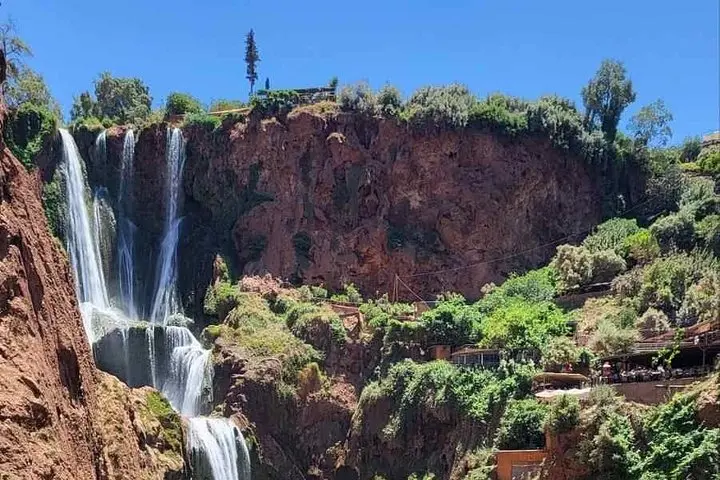
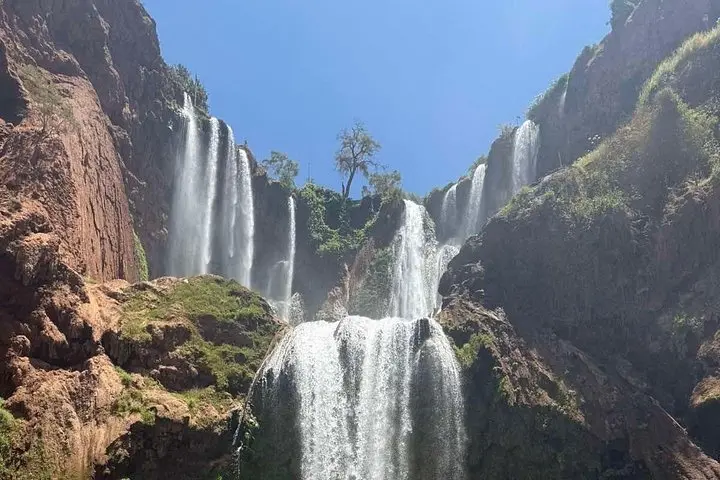
At Ouzoud, Morocco’s highest set of stepped cascades, the experience is kinetic: water carving red cliff, sunlight refracting through spray, and trails that run close enough for the mist to touch your face. The falls drop in multiple tiers over travertine shelves, fed by the El-Abid river as it negotiates the High Atlas foothills. Geologically this is a river working against soft sedimentary rock, carving plunge pools and ledges that local olive farmers have long used as natural irrigation points.
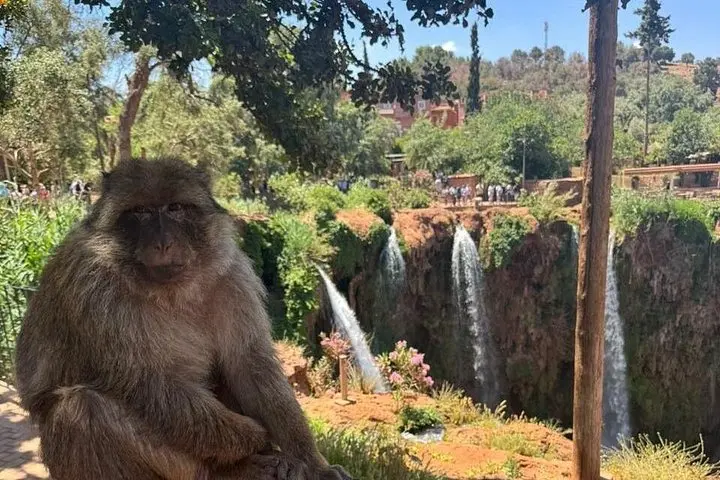
Human history is part of the scene. Berber villages ring the ravine — stone houses, terraced olive groves, and a small footprint of rural commerce. Local guides often point out ancient milling sites where olives were pressed, and you can still hear the low, steady calls of vendors selling mint tea and tajine plates near lookout points. Wildlife adds a playful note: Barbary macaques hop near the overlooks and kingfishers flash over calmer pools.
The tour is practical and well-paced. After a 2.5–3 hour drive from Marrakech you get two hours of guided walking, a leisurely lunch with river or falls views, optional short swims, and a small boat ride that takes you beneath the lower curtain of water. Paths wind from hard-packed dirt to stone steps; expect short steep sections and panoramic lookout platforms where the falls expand into a broad white curtain.
For planning: wear supportive shoes with grip, bring a light rain shell for the spray, and pack a quick-dry towel if you intend to swim. The best photos are early midday and late afternoon when the sun slants through the spray; for golden light arrive at the top viewpoints. Food is simple, local, and generous — classic Moroccan dishes served at family-run restaurants.
Timing matters: the site is busiest mid-day and on weekends. If you want solitude, ask for an early pickup from Marrakech or plan the walk first, lunch later. The walk is accessible for most fit travelers but includes uneven steps; it’s not recommended for those with serious back or heart conditions. Leave no trace: the area is fragile, and trash and unsupervised trekking can damage olive terraces and waterways.
Overall the Ouzoud day trip is an active introduction to Morocco beyond the medina — it combines scenic power, a touch of rural culture, and an easy dose of outdoor adventure that’s doable in a single, satisfying day from Marrakech.
The transfer is about 2.5–3 hours each way (roughly 160 km) depending on traffic and stops.
Yes — there are calm pools suitable for swimming in summer, but currents near the base can be unpredictable; follow your guide’s advice.
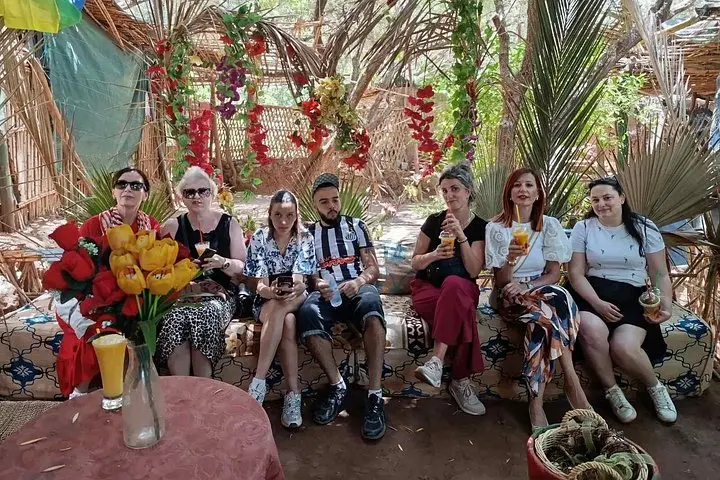
Lunch is provided at a local restaurant with regional dishes like tajine; confirm dietary needs when booking.
The path is family-friendly for older children and reasonably fit seniors, but steep steps and slippery areas may be challenging.
Barbary macaques are commonly seen around the falls; they are wild and can be bold — do not feed or approach them.
Pickup is available from many Marrakech hotels; confirm your pickup point when completing booking questions.
Trips desert Marrakech operates guided outdoor trips and adventures with an emphasis on safety, stewardship, and memorable experiences.
The van eases off the highway and the air shifts — dust and diesel give way to olive-bright freshness. Before the canyon opens up you see a line of terraces, the white caps of the falls teasing through trees, and the steady rumble that tells you the river is doing what rivers do best: moving you forward.
The van eases off the highway and the air shifts — dust and diesel give way to olive-bright freshness. Before the canyon opens up you see a line of terraces, the white caps of the falls teasing through trees, and the steady rumble that tells you the river is doing what rivers do best: moving you forward.
At Ouzoud, Morocco’s highest set of stepped cascades, the experience is kinetic: water carving red cliff, sunlight refracting through spray, and trails that run close enough for the mist to touch your face. The falls drop in multiple tiers over travertine shelves, fed by the El-Abid river as it negotiates the High Atlas foothills. Geologically this is a river working against soft sedimentary rock, carving plunge pools and ledges that local olive farmers have long used as natural irrigation points.
Human history is part of the scene. Berber villages ring the ravine — stone houses, terraced olive groves, and a small footprint of rural commerce. Local guides often point out ancient milling sites where olives were pressed, and you can still hear the low, steady calls of vendors selling mint tea and tajine plates near lookout points. Wildlife adds a playful note: Barbary macaques hop near the overlooks and kingfishers flash over calmer pools.
The tour is practical and well-paced. After a 2.5–3 hour drive from Marrakech you get two hours of guided walking, a leisurely lunch with river or falls views, optional short swims, and a small boat ride that takes you beneath the lower curtain of water. Paths wind from hard-packed dirt to stone steps; expect short steep sections and panoramic lookout platforms where the falls expand into a broad white curtain.
For planning: wear supportive shoes with grip, bring a light rain shell for the spray, and pack a quick-dry towel if you intend to swim. The best photos are early midday and late afternoon when the sun slants through the spray; for golden light arrive at the top viewpoints. Food is simple, local, and generous — classic Moroccan dishes served at family-run restaurants.
Timing matters: the site is busiest mid-day and on weekends. If you want solitude, ask for an early pickup from Marrakech or plan the walk first, lunch later. The walk is accessible for most fit travelers but includes uneven steps; it’s not recommended for those with serious back or heart conditions. Leave no trace: the area is fragile, and trash and unsupervised trekking can damage olive terraces and waterways.
Overall the Ouzoud day trip is an active introduction to Morocco beyond the medina — it combines scenic power, a touch of rural culture, and an easy dose of outdoor adventure that’s doable in a single, satisfying day from Marrakech.