THE ADVENTURE COLLECTIVE® · Independent discovery and booking for outdoor travel

A day trip from Marrakech that pairs a 3‑hour countryside drive with a steep, scenic walk to North Africa’s highest cascades. Expect olive groves, curious macaques, and tagine lunch beside the river.
A day trip from Marrakech that pairs a 3‑hour countryside drive with a steep, scenic walk to North Africa’s highest cascades. Expect olive groves, curious macaques, and tagine lunch beside the river.
The first time the falls come into view you feel the landscape inhale: a long sheet of water tearing through the red-brown rock, throwing up a fine spray that smells faintly of olive and riverweed. From the roadside parking you can hear the cascade before you see it — a distant, relentless shushing that grows into a roar as you follow the switchback track down through terraces of olive trees.
Verified experiences and guided adventures in the surrounding area.
Operated by morocco private trips · Ouzoud, Marrakesh-Safi
The first time the falls come into view you feel the landscape inhale: a long sheet of water tearing through the red-brown rock, throwing up a fine spray that smells faintly of olive and riverweed. From the roadside parking you can hear the cascade before you see it — a distant, relentless shushing that grows into a roar as you follow the switchback track down through terraces of olive trees.
Ouzoud is not a single drop but a tiered fall — roughly 110 meters in total — that spills over layered limestone, carving narrow plunge pools and green ledges. The falls mark a seam in the Middle Atlas where erosion met an uplifted plateau centuries ago; seasonal floods widen channels, while dry months reveal mineral bands and sheltered caves. The surrounding village keeps a practical, rural pace: stone houses, small cafes, and footpaths that double as social arteries.
Local history here is quiet but tangible. Olive cultivation traces back generations; many terraces you pass were planted by families who still press oil in the village. The Barbary macaques — the magots — have made the cliffs their playground, hopping the same groves that shepherds walk. Cultural exchange is inevitable and relaxed: guides point out the best lookout, cafe owners invite you to share a tagine, and children practice English lines learned from seasonal visitors.
The excursion from Marrakech is a full day: expect roughly a 3-hour drive each way (about 150 km), plus 3–4 hours on site. The hike from the top viewpoint to the base is short but steep — under 2 km each way on uneven, sometimes slippery stone and dirt paths — and requires moderate fitness. At the bottom you can sit at a riverside cafe, watch the water and the monkeys, and eat hot tagine beside the stream.
Practical guidance: start early to avoid midday crowds and heat. Wear grippy footwear; sections of the descent are wet and require stable footing. Bring a water bottle and a lightweight rain or wind layer—spray from the falls can chill you even on warm days. Respect wildlife: don’t feed the macaques and keep belongings secured; they are curious and fast.
Guides are useful for navigation and local lore; they know shortcuts, the best photo angles, and which cafes prepare the most authentic lunch. If you want quieter vantage points, walk further along the river upstream where fewer day-trippers go.
This day trip balances a gentle hike with vivid river scenery and local hospitality, making it a compact but satisfying escape from Marrakech’s urban bustle.
The transfer is about 2.5–3 hours each way (roughly 150 km) depending on traffic and stops.
Local mountain guides are available and usually included with organized excursions; they help with route selection and wildlife etiquette.
There are shallow pools at the base, but swimming is not always safe due to currents and slippery rocks—ask your guide before entering the water.
Yes, Barbary macaques are common and often approach visitors; keep a respectful distance and do not feed them.
Most day-trip itineraries include a riverside stop for lunch, but confirm with the operator whether a meal is part of your booking.
No—the descent includes steep, uneven steps and narrow paths; the site is best accessed on foot for those able to negotiate rough terrain.
morocco private trips operates guided outdoor trips and adventures with an emphasis on safety, stewardship, and memorable experiences.
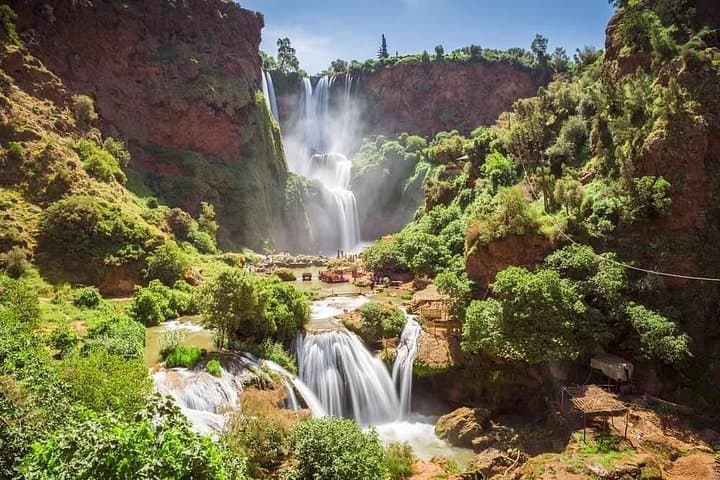


The first time the falls come into view you feel the landscape inhale: a long sheet of water tearing through the red-brown rock, throwing up a fine spray that smells faintly of olive and riverweed. From the roadside parking you can hear the cascade before you see it — a distant, relentless shushing that grows into a roar as you follow the switchback track down through terraces of olive trees.
The first time the falls come into view you feel the landscape inhale: a long sheet of water tearing through the red-brown rock, throwing up a fine spray that smells faintly of olive and riverweed. From the roadside parking you can hear the cascade before you see it — a distant, relentless shushing that grows into a roar as you follow the switchback track down through terraces of olive trees.
Ouzoud is not a single drop but a tiered fall — roughly 110 meters in total — that spills over layered limestone, carving narrow plunge pools and green ledges. The falls mark a seam in the Middle Atlas where erosion met an uplifted plateau centuries ago; seasonal floods widen channels, while dry months reveal mineral bands and sheltered caves. The surrounding village keeps a practical, rural pace: stone houses, small cafes, and footpaths that double as social arteries.
Local history here is quiet but tangible. Olive cultivation traces back generations; many terraces you pass were planted by families who still press oil in the village. The Barbary macaques — the magots — have made the cliffs their playground, hopping the same groves that shepherds walk. Cultural exchange is inevitable and relaxed: guides point out the best lookout, cafe owners invite you to share a tagine, and children practice English lines learned from seasonal visitors.
The excursion from Marrakech is a full day: expect roughly a 3-hour drive each way (about 150 km), plus 3–4 hours on site. The hike from the top viewpoint to the base is short but steep — under 2 km each way on uneven, sometimes slippery stone and dirt paths — and requires moderate fitness. At the bottom you can sit at a riverside cafe, watch the water and the monkeys, and eat hot tagine beside the stream.
Practical guidance: start early to avoid midday crowds and heat. Wear grippy footwear; sections of the descent are wet and require stable footing. Bring a water bottle and a lightweight rain or wind layer—spray from the falls can chill you even on warm days. Respect wildlife: don’t feed the macaques and keep belongings secured; they are curious and fast.
Guides are useful for navigation and local lore; they know shortcuts, the best photo angles, and which cafes prepare the most authentic lunch. If you want quieter vantage points, walk further along the river upstream where fewer day-trippers go.
This day trip balances a gentle hike with vivid river scenery and local hospitality, making it a compact but satisfying escape from Marrakech’s urban bustle.