THE ADVENTURE COLLECTIVE® · Independent discovery and booking for outdoor travel

A day trip from Marrakech that drops you into olive groves, old water mills and a thunderous 110m waterfall. Hike marked paths, watch Barbary macaques and cool off in river pools while learning local stories of oil and water.
A day trip from Marrakech that drops you into olive groves, old water mills and a thunderous 110m waterfall. Hike marked paths, watch Barbary macaques and cool off in river pools while learning local stories of oil and water.
You step off the minivan onto sun-warmed flagstones and the first thing you hear is water — not a distant promise but the steady, impatient roar of a river that has somewhere to be. The air at Ouzoud carries wet stone and crushed olive leaves; touffed Barbary macaques watch from branches and a wooden sign creaks over a path that leads down toward the brink. By the time you reach the top rim the falls reveal themselves in pieces: a curtain of white, then a plunge, then terraces of spray catching the light.
Verified experiences and guided adventures in the surrounding area.
Operated by Authentic Sahara Tours · Ouzoud, Béni Mellal-Khénifra
You step off the minivan onto sun-warmed flagstones and the first thing you hear is water — not a distant promise but the steady, impatient roar of a river that has somewhere to be. The air at Ouzoud carries wet stone and crushed olive leaves; touffed Barbary macaques watch from branches and a wooden sign creaks over a path that leads down toward the brink. By the time you reach the top rim the falls reveal themselves in pieces: a curtain of white, then a plunge, then terraces of spray catching the light.
Ouzoud (from the Berber for "olive") sits on a volcanic plateau above a canyon carved by the El-Abid River. At roughly 110 meters high the falls are among North Africa’s tallest, fed by springlines and seasonal runoff that have shaped the gorge and the hand-built stone mills below for centuries. The mills — some still turning — are relics of local agrarian life; olive oil production and small-scale wheat milling tied communities to the river long before tourists arrived.
Culturally this is a working landscape: terraces of olives, low stone walls and villages where tagine smoke hangs like a promise. Guides and boatmen who operate here are often local; many families have run the small restaurants and boat crossings for generations. You’ll also see Imi-n-Ifri, a collapsed-cave natural bridge where the Méhasseur River threads between vertical cliffs — a geological doorway that draws photographers and canyon walkers alike.
Practical guide: the trip runs about 7–8 hours from Marrakech with a roughly 2.5-hour drive each way. Trails are informal; expect packed-earth paths, loose scree and stone steps with short, steep sections. Elevation change on the main descent/ascent is a few hundred meters, so plan for steady climbs on the return. There’s a network of viewpoints: the rim for broad panoramas, the mid-level platforms for close-up torrents, and the river level where boats cross and you can cool off.
Bring sturdy, grippy shoes for slippery rocks, a light rain shell for spray, and a refillable water bottle — local vendors are available but cash is easiest. If you want to swim, stick to the designated shallow pools at the base; currents can be strong beyond those spots. Respect the macaques: they’re curious and quick—don’t feed them and keep cameras and snacks secured.
Timing matters. Arrive early to catch cooler light and fewer crowds; late afternoon softens the spray into gold. Consider hiring a local guide for mill visits and a short trek to the springs — these earn you perspective on both landscape and livelihood. When you return, the minivan hums and the river’s noise seems to follow, a reminder that the landscape here keeps moving — and invites you to move with it.
Plan on roughly 2.5 hours each way depending on traffic and stops — the operator typically includes a short coffee stop en route.
Yes, there are shallow pools at the base where visitors commonly swim, but avoid strong currents and follow local guidance.
Yes — there are small restaurants near the viewpoints and vendors; facilities are basic so bring tissues and change.
The paths include steep steps and uneven terrain; children should be supervised and travelers with mobility issues may find the descent/ascent challenging.
This tour’s standard inclusions note local guide, transport and taxes; small fees for optional activities like boat crossings or guided treks are usually paid locally.
Yes, pickup from Marrakech hotels is typically offered; the operator provides pickup details at booking and may arrange a nearby meeting point if necessary.
Authentic Sahara Tours operates guided outdoor trips and adventures with an emphasis on safety, stewardship, and memorable experiences.

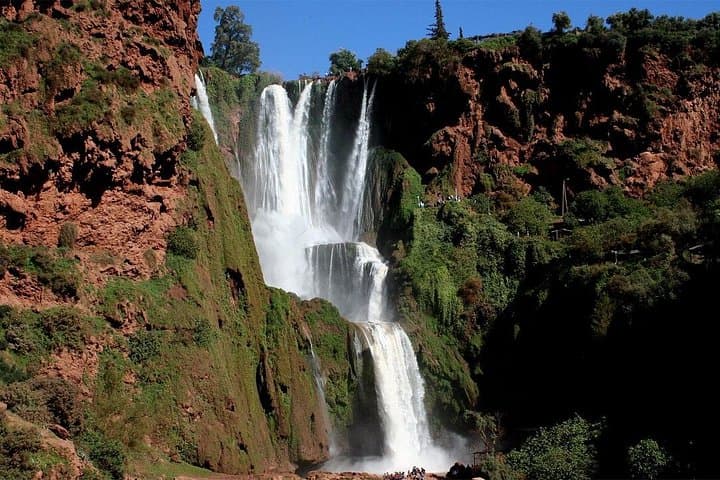
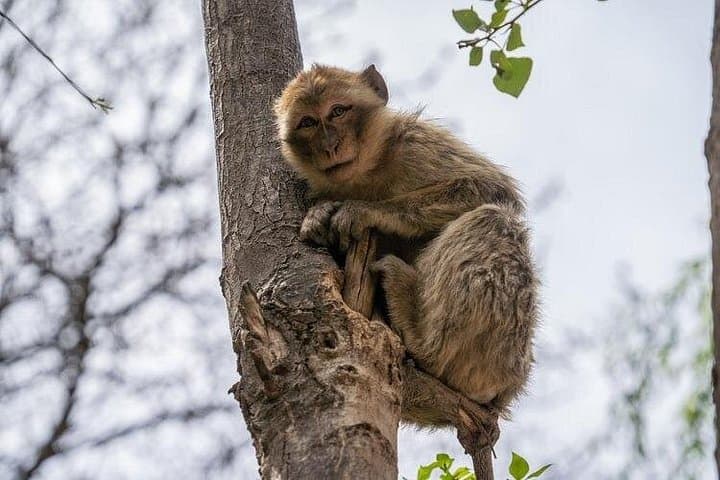

You step off the minivan onto sun-warmed flagstones and the first thing you hear is water — not a distant promise but the steady, impatient roar of a river that has somewhere to be. The air at Ouzoud carries wet stone and crushed olive leaves; touffed Barbary macaques watch from branches and a wooden sign creaks over a path that leads down toward the brink. By the time you reach the top rim the falls reveal themselves in pieces: a curtain of white, then a plunge, then terraces of spray catching the light.
You step off the minivan onto sun-warmed flagstones and the first thing you hear is water — not a distant promise but the steady, impatient roar of a river that has somewhere to be. The air at Ouzoud carries wet stone and crushed olive leaves; touffed Barbary macaques watch from branches and a wooden sign creaks over a path that leads down toward the brink. By the time you reach the top rim the falls reveal themselves in pieces: a curtain of white, then a plunge, then terraces of spray catching the light.
Ouzoud (from the Berber for "olive") sits on a volcanic plateau above a canyon carved by the El-Abid River. At roughly 110 meters high the falls are among North Africa’s tallest, fed by springlines and seasonal runoff that have shaped the gorge and the hand-built stone mills below for centuries. The mills — some still turning — are relics of local agrarian life; olive oil production and small-scale wheat milling tied communities to the river long before tourists arrived.
Culturally this is a working landscape: terraces of olives, low stone walls and villages where tagine smoke hangs like a promise. Guides and boatmen who operate here are often local; many families have run the small restaurants and boat crossings for generations. You’ll also see Imi-n-Ifri, a collapsed-cave natural bridge where the Méhasseur River threads between vertical cliffs — a geological doorway that draws photographers and canyon walkers alike.
Practical guide: the trip runs about 7–8 hours from Marrakech with a roughly 2.5-hour drive each way. Trails are informal; expect packed-earth paths, loose scree and stone steps with short, steep sections. Elevation change on the main descent/ascent is a few hundred meters, so plan for steady climbs on the return. There’s a network of viewpoints: the rim for broad panoramas, the mid-level platforms for close-up torrents, and the river level where boats cross and you can cool off.
Bring sturdy, grippy shoes for slippery rocks, a light rain shell for spray, and a refillable water bottle — local vendors are available but cash is easiest. If you want to swim, stick to the designated shallow pools at the base; currents can be strong beyond those spots. Respect the macaques: they’re curious and quick—don’t feed them and keep cameras and snacks secured.
Timing matters. Arrive early to catch cooler light and fewer crowds; late afternoon softens the spray into gold. Consider hiring a local guide for mill visits and a short trek to the springs — these earn you perspective on both landscape and livelihood. When you return, the minivan hums and the river’s noise seems to follow, a reminder that the landscape here keeps moving — and invites you to move with it.