THE ADVENTURE COLLECTIVE® · Independent discovery and booking for outdoor travel

A day trip from Marrakech to Ouzoud drops you into a landscape of olive groves, ancient mills and a multi-tiered waterfall that invites hikes, swims and close encounters with wild macaques. This guide covers what to expect on the trail, local history and practical tips to make the most of the visit.
A day trip from Marrakech to Ouzoud drops you into a landscape of olive groves, ancient mills and a multi-tiered waterfall that invites hikes, swims and close encounters with wild macaques. This guide covers what to expect on the trail, local history and practical tips to make the most of the visit.
The minivan peels away from Marrakech at first light, the city’s ochre walls shrinking as the Atlas foothills slide into view. Two and a half hours later the road breathes out into a bowl of olive groves and red-earth tracks, and the first spray of Ouzoud appears—a silver ribbon breaking off cliffs and throwing itself into a bright, palm-fringed pool below.
Verified experiences and guided adventures in the surrounding area.
Operated by Morocco Authentic journey · Ouzoud, Béni Mellal-Khénifra
The minivan peels away from Marrakech at first light, the city’s ochre walls shrinking as the Atlas foothills slide into view. Two and a half hours later the road breathes out into a bowl of olive groves and red-earth tracks, and the first spray of Ouzoud appears—a silver ribbon breaking off cliffs and throwing itself into a bright, palm-fringed pool below.
Ouzoud is not one single cliff but a stair of cascades that together drop roughly 110 metres, carved over millennia by the El-Abid River. The falls sit where the high plains meet older folded rock, and small stone mills—remnants of a farming economy tied to Berber villages—still line the ravine. The name Ouzoud (Izid in some Berber dialects) hints at that agricultural past: it means the act of grinding grain.
Approach along the carved stone stairway and you’ll pass teahouses and lookout cafés where locals pour strong mint tea while tourists snap frames. Take the steeper side path through olive groves if your knees and boots are up for it; it’s rougher but rewards with close-up views, shaded switchbacks, and more chances to see the region’s tame macaque population in their native habitat. The monkeys have learned the rhythms of people—curious, sometimes bold—so keep pockets empty and cameras ready.
At the base the pool dares you to cool off; small boats bob in and out, their captains offering brief crossings or photo angles, but most visitors prefer to wade or swim when the flow is gentle. Rivers here can surge after heavy rains, so guides and locals read the water like weather. Lunch is a relaxed affair: grilled river trout and salads served on terraces that face the cascade, where the sound of water provides the only soundtrack.
Practical side: the trip is a long day but straightforward. Expect 4–6 hours on-site including travel; the itinerary typically allows about three hours at the falls. Paths include stone steps, uneven dirt trails, and occasional muddy sections after rain. Bring sturdy footwear, a swimsuit, sunscreen, and cash for local cafes and tips. If you want quieter light and softer crowds, arrive early—late morning brings buses and louder crowds.
Culturally, Ouzoud sits in a landscape where Berber farming traditions meet small-scale tourism. Be respectful at private terraces and patronize local eateries when you can; these visits help sustain the valley’s mills and guides. Environmentally, stick to paths, avoid feeding wildlife, and pack out non-biodegradable waste—the pools and groves recover quickly when visitors tread lightly.
By late afternoon the minivan hums back toward Marrakech, the falls shrinking to a white thread. You’ll return smelling of river stones and olive oil, already planning the next hour you’d spend on that rim, watching water insistently find the next drop.
Expect about 2.5 to 3 hours each way depending on traffic and stops—drivers usually schedule a short coffee break en route.
Yes, when flow is moderate the plunge pool is swimmable, but obey local guidance and avoid swimming after heavy rains when currents strengthen.
Yes—there are stone stairways and an optional steeper trail through olive groves; good footwear and basic mobility are recommended.
Yes—Barbary macaques often roam near the falls; keep distance, avoid feeding, and secure loose items.
Families can manage the site, but note the stairs and occasional drop-offs; supervise kids near the water and edges.
You can visit independently, but many visitors prefer guided or transport-inclusive day trips from Marrakech for convenience and local insight.
Morocco Authentic journey operates guided outdoor trips and adventures with an emphasis on safety, stewardship, and memorable experiences.
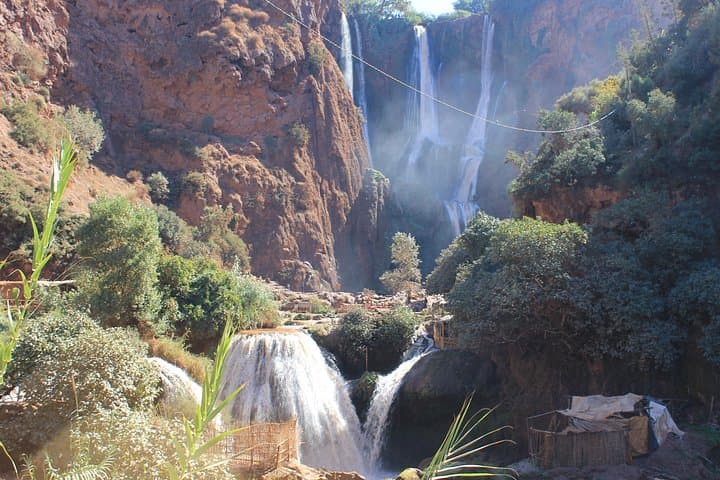
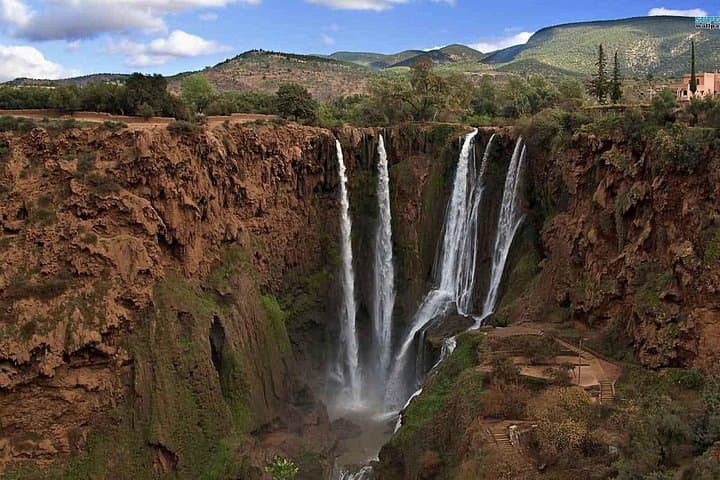

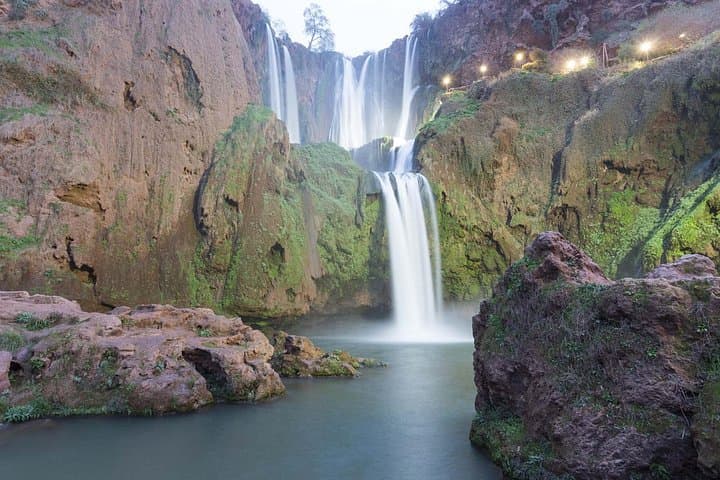
The minivan peels away from Marrakech at first light, the city’s ochre walls shrinking as the Atlas foothills slide into view. Two and a half hours later the road breathes out into a bowl of olive groves and red-earth tracks, and the first spray of Ouzoud appears—a silver ribbon breaking off cliffs and throwing itself into a bright, palm-fringed pool below.
The minivan peels away from Marrakech at first light, the city’s ochre walls shrinking as the Atlas foothills slide into view. Two and a half hours later the road breathes out into a bowl of olive groves and red-earth tracks, and the first spray of Ouzoud appears—a silver ribbon breaking off cliffs and throwing itself into a bright, palm-fringed pool below.
Ouzoud is not one single cliff but a stair of cascades that together drop roughly 110 metres, carved over millennia by the El-Abid River. The falls sit where the high plains meet older folded rock, and small stone mills—remnants of a farming economy tied to Berber villages—still line the ravine. The name Ouzoud (Izid in some Berber dialects) hints at that agricultural past: it means the act of grinding grain.
Approach along the carved stone stairway and you’ll pass teahouses and lookout cafés where locals pour strong mint tea while tourists snap frames. Take the steeper side path through olive groves if your knees and boots are up for it; it’s rougher but rewards with close-up views, shaded switchbacks, and more chances to see the region’s tame macaque population in their native habitat. The monkeys have learned the rhythms of people—curious, sometimes bold—so keep pockets empty and cameras ready.
At the base the pool dares you to cool off; small boats bob in and out, their captains offering brief crossings or photo angles, but most visitors prefer to wade or swim when the flow is gentle. Rivers here can surge after heavy rains, so guides and locals read the water like weather. Lunch is a relaxed affair: grilled river trout and salads served on terraces that face the cascade, where the sound of water provides the only soundtrack.
Practical side: the trip is a long day but straightforward. Expect 4–6 hours on-site including travel; the itinerary typically allows about three hours at the falls. Paths include stone steps, uneven dirt trails, and occasional muddy sections after rain. Bring sturdy footwear, a swimsuit, sunscreen, and cash for local cafes and tips. If you want quieter light and softer crowds, arrive early—late morning brings buses and louder crowds.
Culturally, Ouzoud sits in a landscape where Berber farming traditions meet small-scale tourism. Be respectful at private terraces and patronize local eateries when you can; these visits help sustain the valley’s mills and guides. Environmentally, stick to paths, avoid feeding wildlife, and pack out non-biodegradable waste—the pools and groves recover quickly when visitors tread lightly.
By late afternoon the minivan hums back toward Marrakech, the falls shrinking to a white thread. You’ll return smelling of river stones and olive oil, already planning the next hour you’d spend on that rim, watching water insistently find the next drop.