THE ADVENTURE COLLECTIVE® · Independent discovery and booking for outdoor travel

A full-day escape from Marrakech that pairs a scenic mountain drive with multi-tiered cascades, resident Barbary macaques and village-side Berber cuisine. Practical tips on trails, timing and what to bring for a safe, memorable visit.
A full-day escape from Marrakech that pairs a scenic mountain drive with multi-tiered cascades, resident Barbary macaques and village-side Berber cuisine. Practical tips on trails, timing and what to bring for a safe, memorable visit.
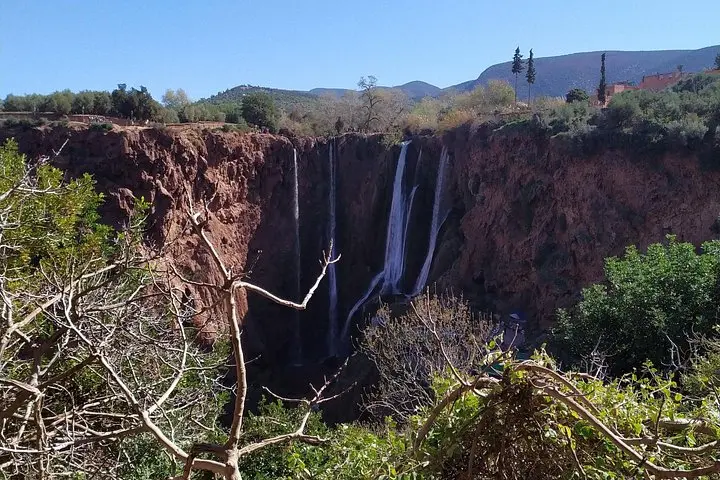
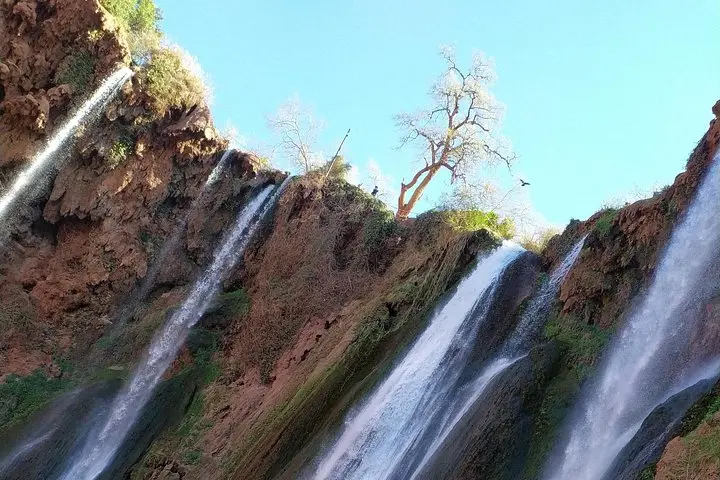
You arrive before the crowd — or at least early enough to hear the falls before the chatter. The road from Marrakech slides through knobbly olive groves and terraced fields; the air changes from city heat to a cooler, damp note. Then, through a tight bend, the Taghia River announces itself. Spray hangs in the air like a grey veil and the three-tiered drops of Ouzoud suddenly appear, white ribbons cutting a red-rock amphitheater. Tourists cluster on stone viewpoints, but the sound — a steady, patient roar — is the real landmark, daring you to come closer.
Verified experiences and guided adventures in the surrounding area.
Operated by marrakech easy transport · Azilal, Béni Mellal-Khénifra
You arrive before the crowd — or at least early enough to hear the falls before the chatter. The road from Marrakech slides through knobbly olive groves and terraced fields; the air changes from city heat to a cooler, damp note. Then, through a tight bend, the Taghia River announces itself. Spray hangs in the air like a grey veil and the three-tiered drops of Ouzoud suddenly appear, white ribbons cutting a red-rock amphitheater. Tourists cluster on stone viewpoints, but the sound — a steady, patient roar — is the real landmark, daring you to come closer.
Ouzoud sits on the northern edge of the High Atlas foothills, where Miocene-era sandstone and conglomerate have been carved by water over millennia. The falls themselves are not alpine giants; they are an act of slow geology and persistent flow, splitting into ledges where the river hits harder strata. The area has long been inhabited by Berber communities whose villages line the valley; local terraces and irrigation channels speak to a centuries-old relationship with scarce mountain water.
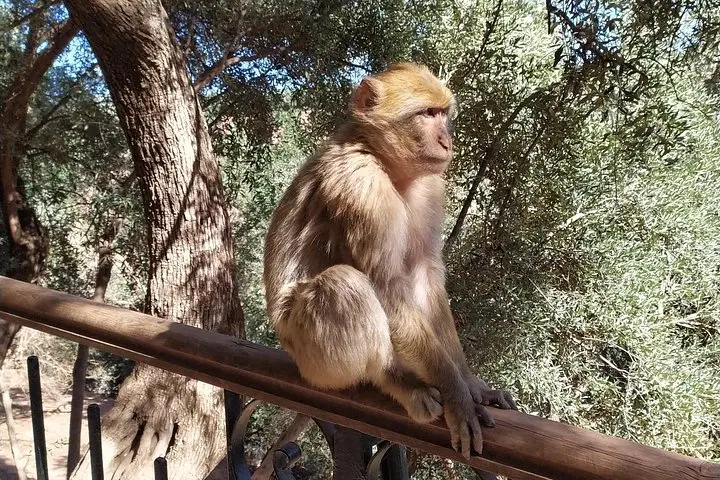
Culture here is practical and open. Café terraces on the rim offer mint tea and tagine; guides and small family-run restaurants invite you to rest and taste Berber-style couscous. The resident Barbary macaques patrol the rocks and olive trees — curious, sometimes bold — and watching them is as much a part of an Ouzoud visit as the cascades. Responsible behavior matters: these are wild animals conditioned to human presence, and feeding or crowding them changes behavior.
For travelers, the day trip from Marrakech is straightforward: a 3–4 hour drive each way (roughly 150 km), a guided or self-guided walk around viewpoints and down to the pool, and time for lunch. Trails are a mix of paved viewpoints, stone steps and narrow dirt paths with some steep sections — expect uneven surfaces and short stretches of elevation change as you descend toward the river.
Practical advice: arrive early to avoid midday crowds and heat, bring sturdy shoes for the steps, and carry a refillable water bottle — there are taps and small vendors but bring supplies for the walk. If you plan to swim, scope the pools first; water levels vary seasonally and currents can be stronger than they look.
Photography-wise, late afternoon produces soft side-light on the falls and warms the red rock; sunrise is quieter but requires an earlier start. Respect local customs at village restaurants, tip guides and drivers fairly, and leave no trace: Ouzoud’s appeal depends on both the flow of water and the simple stewardship of the people who live here.
Expect roughly 2.5–3.5 hours each way depending on traffic; the route crosses olive groves and small towns.
Swimming is possible in calm areas but water depth and currents change seasonally — check with a guide or local vendors before entering.
Barbary macaques are wild and can be bold; they may snatch food or bags, so keep distance, secure belongings and do not feed them.
Most day-trip options include a stop at a local restaurant where you can order Berber dishes; check the supplier’s inclusions for specifics.
Yes, the tour is often listed as suitable for all fitness levels, but note the steps down to the river and supervise children around cliffs and water.
Yes — you can drive or use public transport, but private tours provide door-to-door pickup, air-conditioned vehicles and local guidance that streamline the day.
marrakech easy transport operates guided outdoor trips and adventures with an emphasis on safety, stewardship, and memorable experiences.
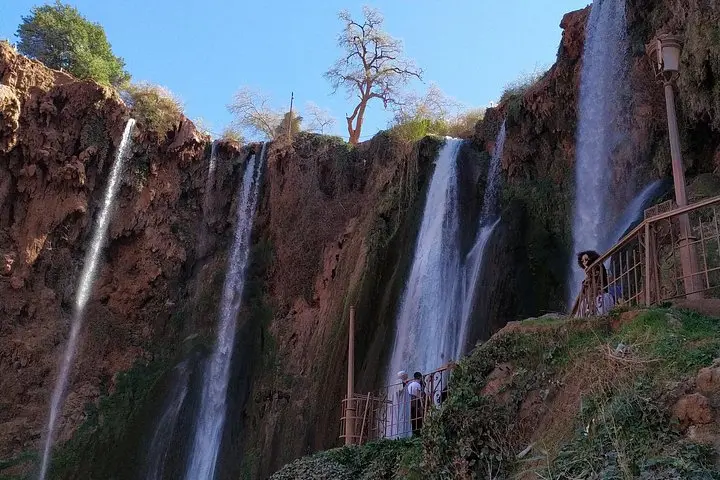
You arrive before the crowd — or at least early enough to hear the falls before the chatter. The road from Marrakech slides through knobbly olive groves and terraced fields; the air changes from city heat to a cooler, damp note. Then, through a tight bend, the Taghia River announces itself. Spray hangs in the air like a grey veil and the three-tiered drops of Ouzoud suddenly appear, white ribbons cutting a red-rock amphitheater. Tourists cluster on stone viewpoints, but the sound — a steady, patient roar — is the real landmark, daring you to come closer.
You arrive before the crowd — or at least early enough to hear the falls before the chatter. The road from Marrakech slides through knobbly olive groves and terraced fields; the air changes from city heat to a cooler, damp note. Then, through a tight bend, the Taghia River announces itself. Spray hangs in the air like a grey veil and the three-tiered drops of Ouzoud suddenly appear, white ribbons cutting a red-rock amphitheater. Tourists cluster on stone viewpoints, but the sound — a steady, patient roar — is the real landmark, daring you to come closer.
Ouzoud sits on the northern edge of the High Atlas foothills, where Miocene-era sandstone and conglomerate have been carved by water over millennia. The falls themselves are not alpine giants; they are an act of slow geology and persistent flow, splitting into ledges where the river hits harder strata. The area has long been inhabited by Berber communities whose villages line the valley; local terraces and irrigation channels speak to a centuries-old relationship with scarce mountain water.
Culture here is practical and open. Café terraces on the rim offer mint tea and tagine; guides and small family-run restaurants invite you to rest and taste Berber-style couscous. The resident Barbary macaques patrol the rocks and olive trees — curious, sometimes bold — and watching them is as much a part of an Ouzoud visit as the cascades. Responsible behavior matters: these are wild animals conditioned to human presence, and feeding or crowding them changes behavior.
For travelers, the day trip from Marrakech is straightforward: a 3–4 hour drive each way (roughly 150 km), a guided or self-guided walk around viewpoints and down to the pool, and time for lunch. Trails are a mix of paved viewpoints, stone steps and narrow dirt paths with some steep sections — expect uneven surfaces and short stretches of elevation change as you descend toward the river.
Practical advice: arrive early to avoid midday crowds and heat, bring sturdy shoes for the steps, and carry a refillable water bottle — there are taps and small vendors but bring supplies for the walk. If you plan to swim, scope the pools first; water levels vary seasonally and currents can be stronger than they look.
Photography-wise, late afternoon produces soft side-light on the falls and warms the red rock; sunrise is quieter but requires an earlier start. Respect local customs at village restaurants, tip guides and drivers fairly, and leave no trace: Ouzoud’s appeal depends on both the flow of water and the simple stewardship of the people who live here.