THE ADVENTURE COLLECTIVE® · Independent discovery and booking for outdoor travel

Leave Marrakech for a full-day escape to Ouzoud Falls: a 150 km drive into the Atlas foothills, tiered cascades, riverboat options and a traditional tajine lunch. This small-group tour pairs viewpoints and short walks with local guides and wildlife encounters.
Leave Marrakech for a full-day escape to Ouzoud Falls: a 150 km drive into the Atlas foothills, tiered cascades, riverboat options and a traditional tajine lunch. This small-group tour pairs viewpoints and short walks with local guides and wildlife encounters.
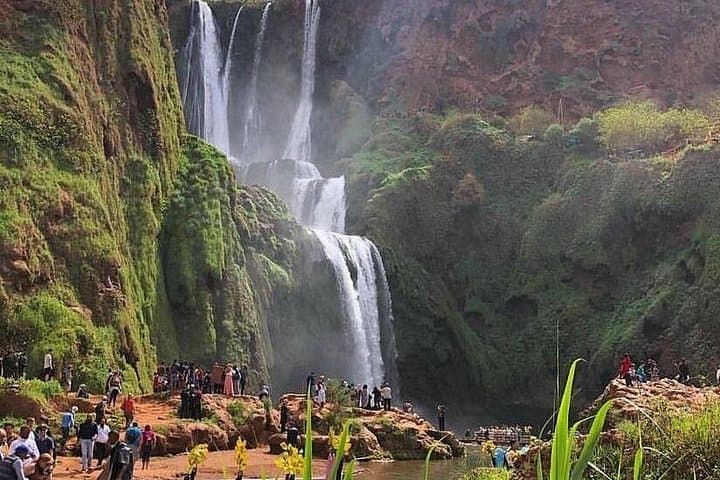
You arrive before noon and the air has changed—cooler, damp, threaded with the mineral tang of falling water. From the overlook a tiered curtain of green and white drops into a basin where foam furls like smoke. Guides call this place Ouzoud, and for a day it rearranges the rhythm of Marrakech: the city’s heat and honk replaced by the steady pulse of the cascade and the chatter of birds.
Verified experiences and guided adventures in the surrounding area.
Operated by Morocco Travel · Ouzoud, Marrakech-Safi
You arrive before noon and the air has changed—cooler, damp, threaded with the mineral tang of falling water. From the overlook a tiered curtain of green and white drops into a basin where foam furls like smoke. Guides call this place Ouzoud, and for a day it rearranges the rhythm of Marrakech: the city’s heat and honk replaced by the steady pulse of the cascade and the chatter of birds.
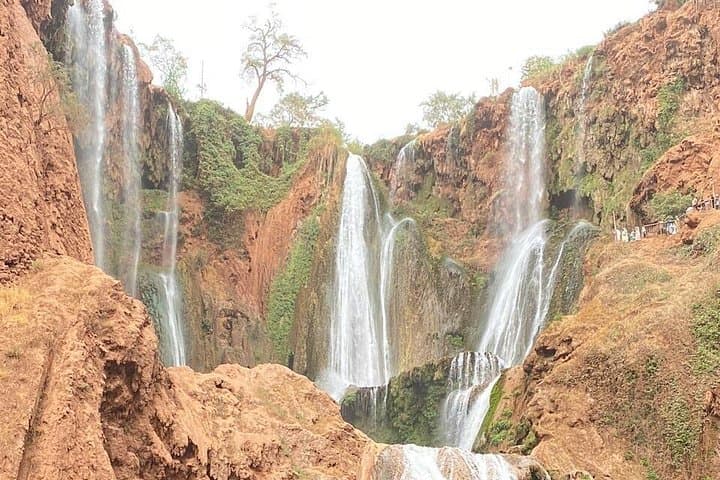
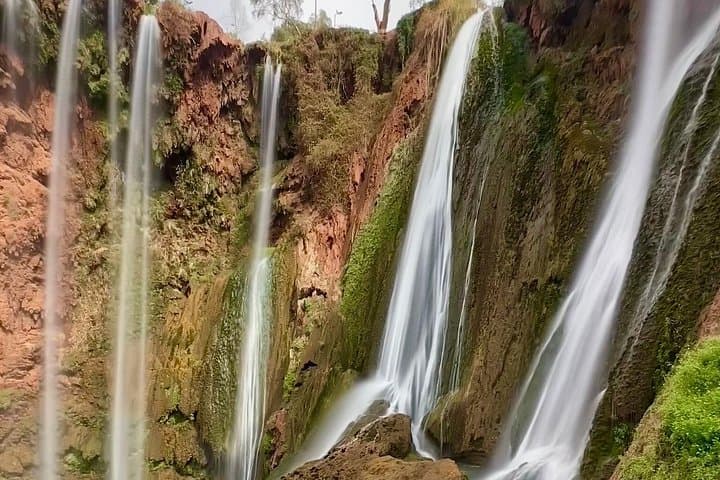
The route from Marrakech is part of the story. The drive is roughly 150 km and takes about three hours, skirting olive groves, ochre villages and limestone ridges that betray the Atlas foothills. Geologically, Ouzoud is the product of rivers cutting into Miocene and Pliocene sedimentary rock; the falls tumble over a hard caprock that resists erosion, creating steps where water can gather and roar.
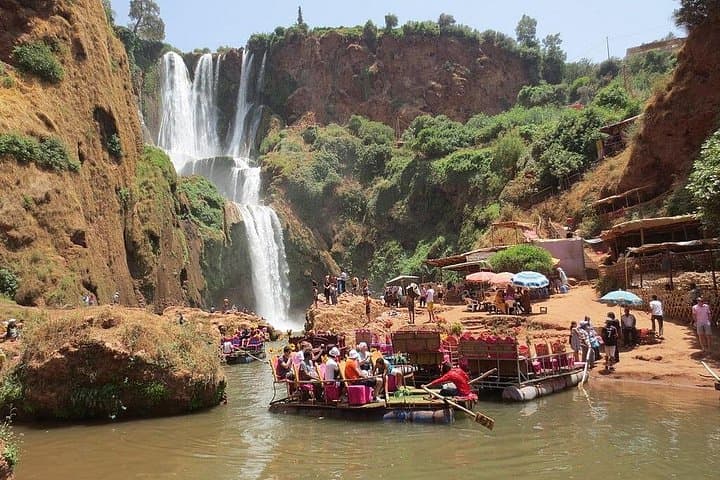
Locally the falls have long been a gathering place. Traditional restaurants perch on the cliffs; tables face the drop and tagines steam in clay pots while conversation drifts between Amazigh (Berber) dialects and Moroccan Arabic. Wild Barbary macaques frequent the tree fringes—curious, sometimes insistent—while kingfishers and herons patrol quieter pools.
The guided itinerary balances easy exploration with local color. After the motorway the tour offers roughly four hours at the site: viewpoints above the main plunge, a network of stone steps that lead to lower tiers, and an optional short boat ride into the spray when river levels permit. The small-group format keeps the pace manageable and gives time for a tajine lunch at a family-run restaurant—a practical way to sample regional cooking and support local vendors.
Practicalities matter. The walking around the falls is uneven: stone steps, muddy patches and occasional streams crossing the trail. Good, grippy footwear and a light rain shell are smart choices. Bring cash for small vendors and a waterproof pocket for cameras; even handheld phones fog with spray. If you're prone to vertigo, stay on the upper viewpoint platforms and avoid leaning over unguarded ledges.
Timing the visit is part logistics and part weather sense: spring and autumn provide cooler temperatures and fuller falls, summer offers a swim-friendly swim at calmer pools, and winter gives dramatic flows but chillier air. The operator’s pickup options cover many Marrakech hotels and the tour returns late evening, so plan for a long but satisfying day.
For travelers seeking a straightforward, sensory outing outside the city, the Ouzoud day trip delivers landscape, wildlife and a meal steeped in place—an accessible mountain escape that still feels like discovery.
Expect about a 2.5–3 hour drive each way (roughly 150 km), depending on traffic and stops en route.
Boat rides are offered as an option when river conditions allow; confirm with the operator when booking whether it’s included for your departure date.
Yes—children are welcome; infant seats and stroller access are noted, though some trails include stairs and uneven ground.
Yes—multiple family-run restaurants serve tajine and local dishes; the tour usually includes time for a restaurant lunch but drinks and extras may be paid on site.
Walks involve stone steps and short inclines; not overly strenuous but requires sure footing and basic mobility—those with serious back or heart conditions should take caution.
Look for Barbary macaques around the trees and a variety of birds like kingfishers and herons near calmer pools.
Morocco Travel operates guided outdoor trips and adventures with an emphasis on safety, stewardship, and memorable experiences.
You arrive before noon and the air has changed—cooler, damp, threaded with the mineral tang of falling water. From the overlook a tiered curtain of green and white drops into a basin where foam furls like smoke. Guides call this place Ouzoud, and for a day it rearranges the rhythm of Marrakech: the city’s heat and honk replaced by the steady pulse of the cascade and the chatter of birds.
You arrive before noon and the air has changed—cooler, damp, threaded with the mineral tang of falling water. From the overlook a tiered curtain of green and white drops into a basin where foam furls like smoke. Guides call this place Ouzoud, and for a day it rearranges the rhythm of Marrakech: the city’s heat and honk replaced by the steady pulse of the cascade and the chatter of birds.
The route from Marrakech is part of the story. The drive is roughly 150 km and takes about three hours, skirting olive groves, ochre villages and limestone ridges that betray the Atlas foothills. Geologically, Ouzoud is the product of rivers cutting into Miocene and Pliocene sedimentary rock; the falls tumble over a hard caprock that resists erosion, creating steps where water can gather and roar.
Locally the falls have long been a gathering place. Traditional restaurants perch on the cliffs; tables face the drop and tagines steam in clay pots while conversation drifts between Amazigh (Berber) dialects and Moroccan Arabic. Wild Barbary macaques frequent the tree fringes—curious, sometimes insistent—while kingfishers and herons patrol quieter pools.
The guided itinerary balances easy exploration with local color. After the motorway the tour offers roughly four hours at the site: viewpoints above the main plunge, a network of stone steps that lead to lower tiers, and an optional short boat ride into the spray when river levels permit. The small-group format keeps the pace manageable and gives time for a tajine lunch at a family-run restaurant—a practical way to sample regional cooking and support local vendors.
Practicalities matter. The walking around the falls is uneven: stone steps, muddy patches and occasional streams crossing the trail. Good, grippy footwear and a light rain shell are smart choices. Bring cash for small vendors and a waterproof pocket for cameras; even handheld phones fog with spray. If you're prone to vertigo, stay on the upper viewpoint platforms and avoid leaning over unguarded ledges.
Timing the visit is part logistics and part weather sense: spring and autumn provide cooler temperatures and fuller falls, summer offers a swim-friendly swim at calmer pools, and winter gives dramatic flows but chillier air. The operator’s pickup options cover many Marrakech hotels and the tour returns late evening, so plan for a long but satisfying day.
For travelers seeking a straightforward, sensory outing outside the city, the Ouzoud day trip delivers landscape, wildlife and a meal steeped in place—an accessible mountain escape that still feels like discovery.