THE ADVENTURE COLLECTIVE® · Independent discovery and booking for outdoor travel

A long overnight bus from La Paz delivers you to the vast mirror of Salar de Uyuni, with photo stops at the train cemetery, salt workshops and Incahuasi. Expect long travel times, dramatic light for photography, and variable routes in the rainy season.
A long overnight bus from La Paz delivers you to the vast mirror of Salar de Uyuni, with photo stops at the train cemetery, salt workshops and Incahuasi. Expect long travel times, dramatic light for photography, and variable routes in the rainy season.
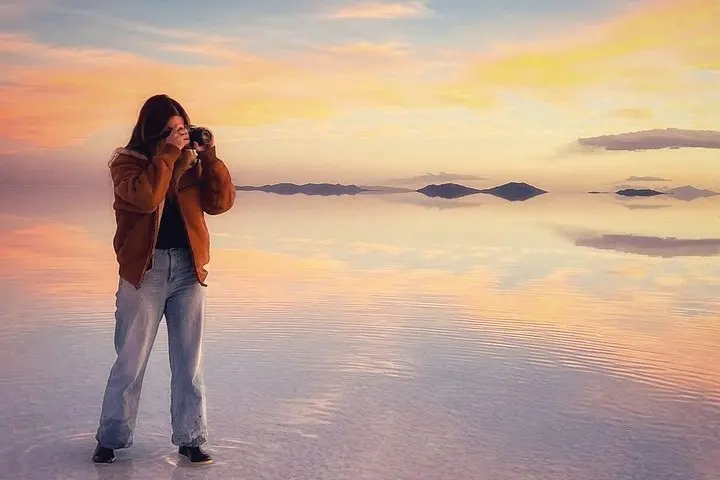
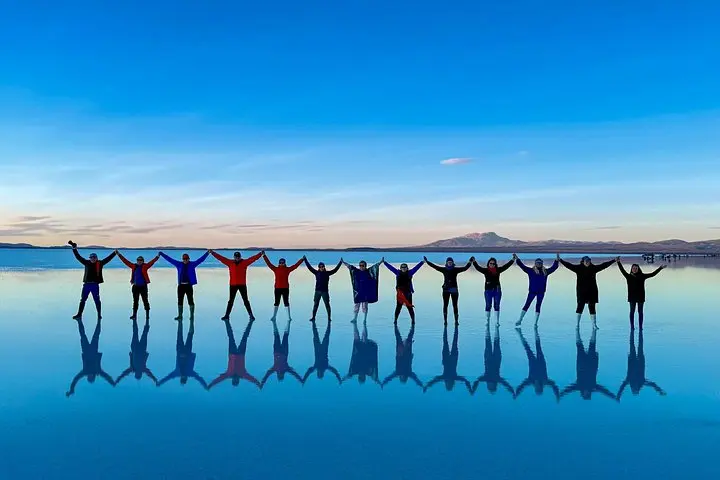
You leave La Paz after dark, the bus easing onto the altiplano while stars hang low and cold over the road. By dawn the high desert flattens into a white horizon: the Salar de Uyuni, an ocean of crystalline salt that throws back the sky.
Verified experiences and guided adventures in the surrounding area.
Operated by Joker Expedition, Bolivia. · Uyuni, Potosí
You leave La Paz after dark, the bus easing onto the altiplano while stars hang low and cold over the road. By dawn the high desert flattens into a white horizon: the Salar de Uyuni, an ocean of crystalline salt that throws back the sky.
The salt plain sits atop an ancient lakebed left behind by prehistoric lakes; around it rise the Tunupa volcano and islands of volcanic rock like Incahuasi, where towering cacti crown wind-scraped ridges. Between Uyuni town and the salar you'll pass the rusted relics of the train cemetery and the salt workshops of Colchani—small, working sights that speak to regional industry and Andean life.
Cultural threads run through the route: salt has been harvested here for centuries and local Aymara communities still sell hand-cut salt and crafts. Geology and folklore meet at Coquesa, where cave burials and legends of the volcano Tunupa add human history to the landscape.
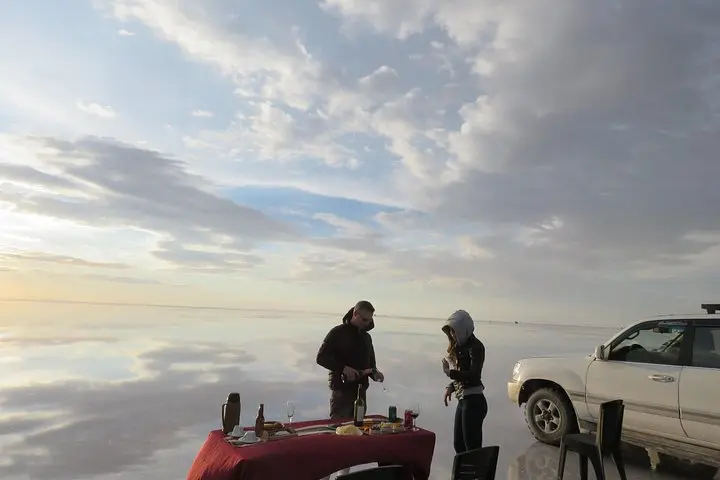
Practical side: this is an overnight round trip—expect ~8 hours each way by tourist bus and a full day on-site with 4WD transfers. Dress in warm layers for early mornings and cold evenings; bring sun protection for the harsh midday glare. The rainy season (Dec–Mar) can produce the famous mirror effect but may alter the route; the dry months (Apr–Nov) give wide, solid crust for walking.
Plan for simple facilities, photo stops, and occasional dusty roads. Hydrate, pace yourself at altitude, and respect the fragile salt crust—take only photos and leave the salt where it lies.
The tourist bus covers roughly 8 hours each way; overnight on the outbound journey and arrival in Uyuni early morning for the day tour.
The reflection occurs during the rainy season (roughly December–March) after recent rains; access and some stops may be modified that time.
Yes—La Paz, Uyuni and the salar sit above 3,600 m; acclimatize beforehand, move slowly, and seek medical advice if you have cardiovascular or respiratory issues.
Basic facilities exist in Uyuni and at selected stops; some rural stops have limited or no facilities—your itinerary includes a breakfast stop with shower option in Uyuni.
Joker Expedition, Bolivia. operates guided outdoor trips and adventures with an emphasis on safety, stewardship, and memorable experiences.

You leave La Paz after dark, the bus easing onto the altiplano while stars hang low and cold over the road. By dawn the high desert flattens into a white horizon: the Salar de Uyuni, an ocean of crystalline salt that throws back the sky.
You leave La Paz after dark, the bus easing onto the altiplano while stars hang low and cold over the road. By dawn the high desert flattens into a white horizon: the Salar de Uyuni, an ocean of crystalline salt that throws back the sky.
The salt plain sits atop an ancient lakebed left behind by prehistoric lakes; around it rise the Tunupa volcano and islands of volcanic rock like Incahuasi, where towering cacti crown wind-scraped ridges. Between Uyuni town and the salar you'll pass the rusted relics of the train cemetery and the salt workshops of Colchani—small, working sights that speak to regional industry and Andean life.
Cultural threads run through the route: salt has been harvested here for centuries and local Aymara communities still sell hand-cut salt and crafts. Geology and folklore meet at Coquesa, where cave burials and legends of the volcano Tunupa add human history to the landscape.
Practical side: this is an overnight round trip—expect ~8 hours each way by tourist bus and a full day on-site with 4WD transfers. Dress in warm layers for early mornings and cold evenings; bring sun protection for the harsh midday glare. The rainy season (Dec–Mar) can produce the famous mirror effect but may alter the route; the dry months (Apr–Nov) give wide, solid crust for walking.
Plan for simple facilities, photo stops, and occasional dusty roads. Hydrate, pace yourself at altitude, and respect the fragile salt crust—take only photos and leave the salt where it lies.