THE ADVENTURE COLLECTIVE® · Independent discovery and booking for outdoor travel

Ride into the Thar Desert from Pushkar, watch a reddened sunset from the back of a camel, then sleep under a canopy of stars with Rajasthani song and dinner. This overnight safari pairs gentle riding with cultural exchange and basic desert camping.
Ride into the Thar Desert from Pushkar, watch a reddened sunset from the back of a camel, then sleep under a canopy of stars with Rajasthani song and dinner. This overnight safari pairs gentle riding with cultural exchange and basic desert camping.
The sun tilts low and the Thar's sand changes color like a slow drumbeat; riders sway gently as camels file toward a ridge of wind-sculpted dunes. The overnight camel safari out of Pushkar begins with a short transfer from town and settles into this unhurried rhythm: sunset on the back of a camel, then a lantern-lit campsite where music and spice heat the night.
Verified experiences and guided adventures in the surrounding area.
Operated by Sand Dunes Safari · Pushkar, Rajasthan
The sun tilts low and the Thar's sand changes color like a slow drumbeat; riders sway gently as camels file toward a ridge of wind-sculpted dunes. The overnight camel safari out of Pushkar begins with a short transfer from town and settles into this unhurried rhythm: sunset on the back of a camel, then a lantern-lit campsite where music and spice heat the night.
This corner of Rajasthan sits on the edge of the Great Indian Desert. Geologically young dunes and hardpan plains reveal an arid landscape shaped by wind more than water; culturally, Pushkar has been a crossroads for traders, pilgrims and pastoralists for centuries, its market and Brahma temple anchoring a living desert economy.
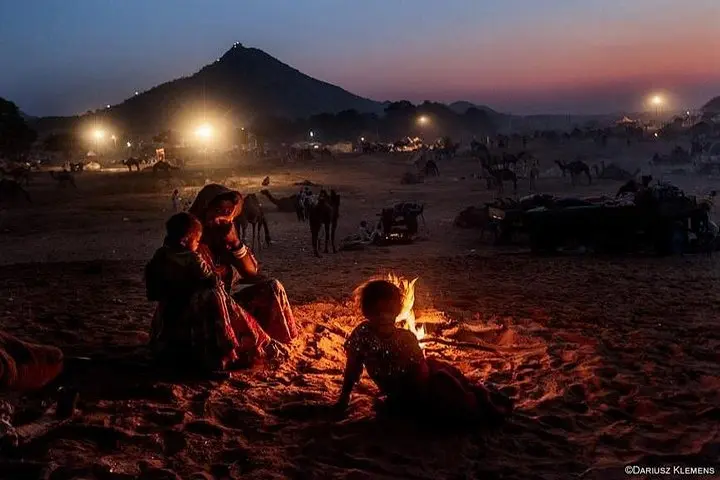
Guests can expect a traditional camel trek at dusk, a modest camp with sleeping arrangements on cots or mattresses, a Rajasthani dinner of local breads and curries, and folk music around a bonfire. The experience emphasizes hospitality: songs, simple storytelling and the steady cadence of camels that seem to keep time with the stars.
Practical guidance: bring layered clothing for temperature swings, carry at least 2 liters of water, and choose closed-toe shoes for walking the compacted sand. Respect local customs—ask before photographing people—and pack out all non-biodegradable waste. Expect an easy-paced ride suitable for most travelers, limited phone signal, and basic camping facilities. The trip rewards patience: quiet dunes, big sky, and a night that feels measured by rhythm and flame rather than the clock.
Typical inclusions are hotel pickup, transfer to the dunes, a sunset camel ride, dinner, folk music performance and overnight camp accommodation; confirm specifics with the operator.
Yes—rides are generally gentle and suitable for most ages, but mounting a camel requires basic mobility and the provider may have weight or health restrictions.
Camps usually provide mattresses or cots and simple blankets; facilities are basic and focused on authenticity rather than luxury.
Signal is often limited on the dunes; camps may have minimal electricity for lighting but charging options can be scarce—bring backup power if needed.
Sand Dunes Safari operates guided outdoor trips and adventures with an emphasis on safety, stewardship, and memorable experiences.
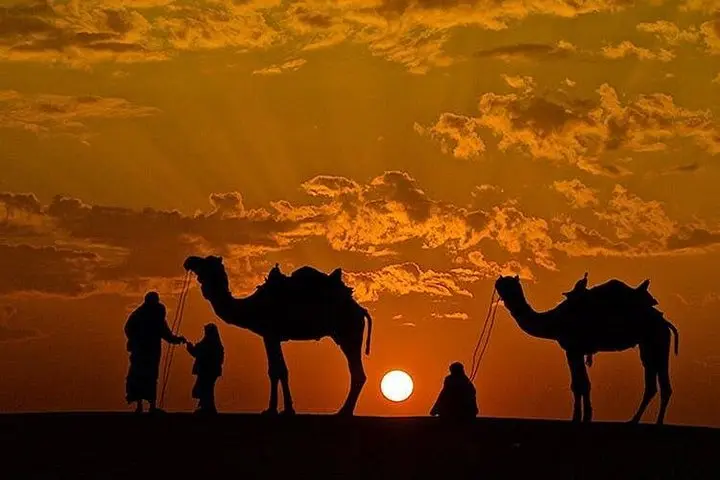
The sun tilts low and the Thar's sand changes color like a slow drumbeat; riders sway gently as camels file toward a ridge of wind-sculpted dunes. The overnight camel safari out of Pushkar begins with a short transfer from town and settles into this unhurried rhythm: sunset on the back of a camel, then a lantern-lit campsite where music and spice heat the night.
The sun tilts low and the Thar's sand changes color like a slow drumbeat; riders sway gently as camels file toward a ridge of wind-sculpted dunes. The overnight camel safari out of Pushkar begins with a short transfer from town and settles into this unhurried rhythm: sunset on the back of a camel, then a lantern-lit campsite where music and spice heat the night.
This corner of Rajasthan sits on the edge of the Great Indian Desert. Geologically young dunes and hardpan plains reveal an arid landscape shaped by wind more than water; culturally, Pushkar has been a crossroads for traders, pilgrims and pastoralists for centuries, its market and Brahma temple anchoring a living desert economy.
Guests can expect a traditional camel trek at dusk, a modest camp with sleeping arrangements on cots or mattresses, a Rajasthani dinner of local breads and curries, and folk music around a bonfire. The experience emphasizes hospitality: songs, simple storytelling and the steady cadence of camels that seem to keep time with the stars.
Practical guidance: bring layered clothing for temperature swings, carry at least 2 liters of water, and choose closed-toe shoes for walking the compacted sand. Respect local customs—ask before photographing people—and pack out all non-biodegradable waste. Expect an easy-paced ride suitable for most travelers, limited phone signal, and basic camping facilities. The trip rewards patience: quiet dunes, big sky, and a night that feels measured by rhythm and flame rather than the clock.