THE ADVENTURE COLLECTIVE® · Independent discovery and booking for outdoor travel

Ride into the dunes at sunset, sleep in a Berber camp under a fierce carpet of stars, and wake for an unforgettable sunrise over Erg Chebbi. This overnight camel trek pairs easy travel with deep desert atmosphere.
Ride into the dunes at sunset, sleep in a Berber camp under a fierce carpet of stars, and wake for an unforgettable sunrise over Erg Chebbi. This overnight camel trek pairs easy travel with deep desert atmosphere.
Late afternoon light pours across Erg Chebbi and the dunes seem to lean toward the horizon, daring you to climb. You arrive on camelback, the animals' steady gait setting a slow cadence as the tallest ridges pass by like rolling waves. By sunset the sand takes on ochre and gold; the camp sits beyond the last dune, a cluster of canvas lit by a cooking fire and the glow of coals.
Verified experiences and guided adventures in the surrounding area.
Operated by Morocco Trippers & Tours · Merzouga, Drâa-Tafilalet
Late afternoon light pours across Erg Chebbi and the dunes seem to lean toward the horizon, daring you to climb. You arrive on camelback, the animals' steady gait setting a slow cadence as the tallest ridges pass by like rolling waves. By sunset the sand takes on ochre and gold; the camp sits beyond the last dune, a cluster of canvas lit by a cooking fire and the glow of coals.
This route follows centuries-old caravan corridors on the edge of the Sahara. Geologically, Erg Chebbi is a sea of wind-sculpted dunes formed from fluvial deposits and persistent northerly winds; the shapes shift with each season and even overnight. Culturally, the experience is anchored in Berber hospitality: mint tea poured ceremonially, drum circles that keep old rhythms alive, and tents furnished with thick bedding for cold desert nights.
Expect an easy physical day—the camel does most of the work—but bring respect for fragile dune ecology and local customs. Nights drop sharply in temperature; the sky here is a dark ocean of stars with minimal light pollution, excellent for stargazing. Sunrise is the quieter highlight: the desert warms and the sands burn bright again.
Practical guidance: wear closed-toe shoes for sand and short walks, carry sunscreen and 1–2 liters of water, and layer for temperature swings. Photography is best at golden hour; keep valuables secure during camel rides. Camps are basic-to-luxury depending on operator—confirm bedding and toilet arrangements when you book.
The camel transfer to the camp typically takes 1–2 hours depending on the pace and the route, timed to arrive before sunset.
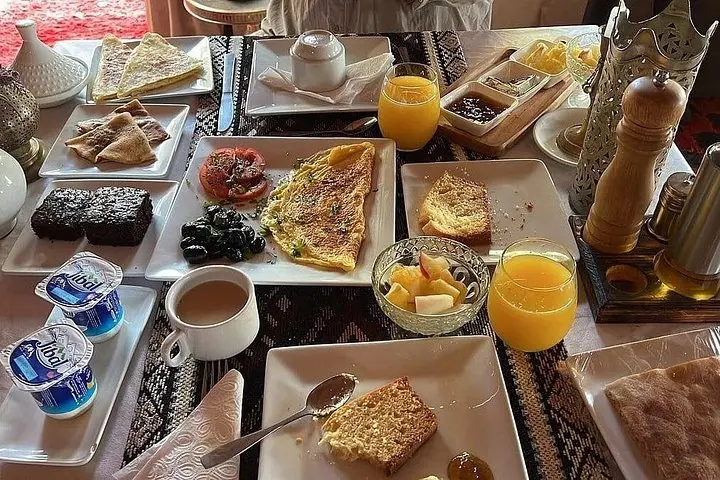
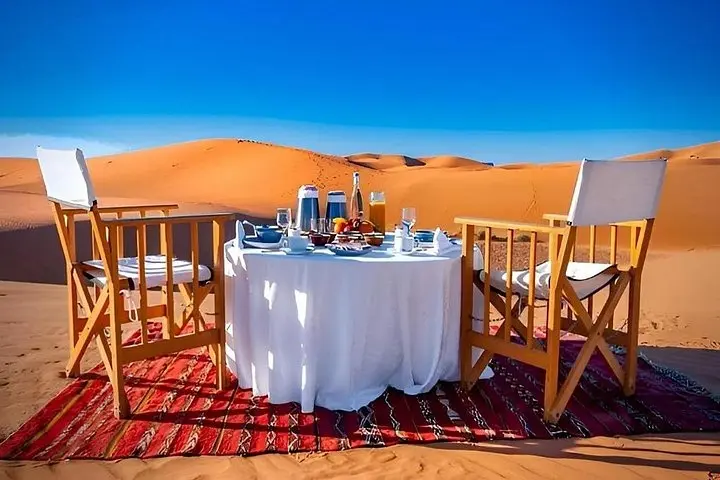
Options vary—many operators offer private tent upgrades, but standard packages often place guests in separate tents with shared dining and lounge areas.
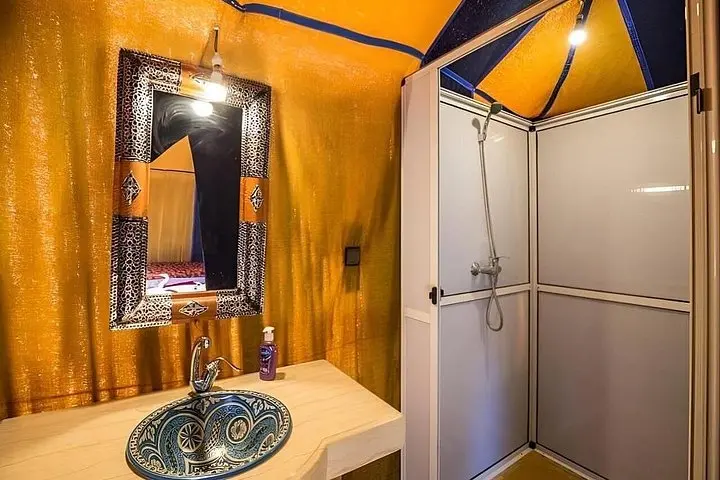
Most camps provide bedding, meals, and basic toilet facilities; luxury camps may include private bathrooms and extra amenities—confirm when booking.
The trek is low impact and generally suitable for families and older travelers, but camel rides and sand can be uncomfortable for those with mobility issues or serious heart conditions.
Morocco Trippers & Tours operates guided outdoor trips and adventures with an emphasis on safety, stewardship, and memorable experiences.
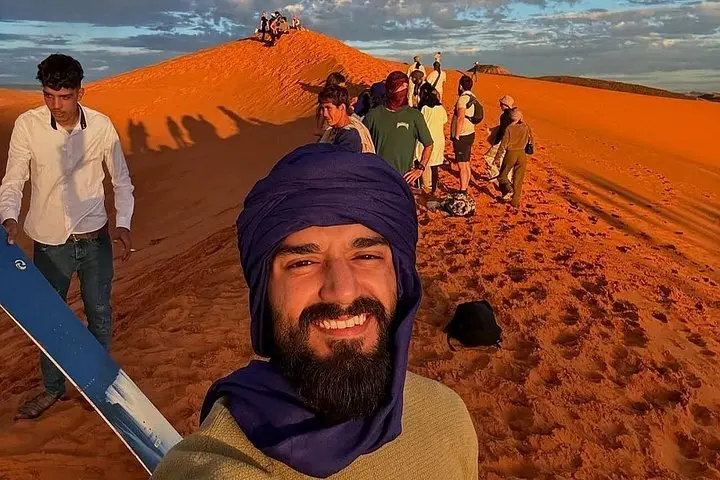
Late afternoon light pours across Erg Chebbi and the dunes seem to lean toward the horizon, daring you to climb. You arrive on camelback, the animals' steady gait setting a slow cadence as the tallest ridges pass by like rolling waves. By sunset the sand takes on ochre and gold; the camp sits beyond the last dune, a cluster of canvas lit by a cooking fire and the glow of coals.
Late afternoon light pours across Erg Chebbi and the dunes seem to lean toward the horizon, daring you to climb. You arrive on camelback, the animals' steady gait setting a slow cadence as the tallest ridges pass by like rolling waves. By sunset the sand takes on ochre and gold; the camp sits beyond the last dune, a cluster of canvas lit by a cooking fire and the glow of coals.
This route follows centuries-old caravan corridors on the edge of the Sahara. Geologically, Erg Chebbi is a sea of wind-sculpted dunes formed from fluvial deposits and persistent northerly winds; the shapes shift with each season and even overnight. Culturally, the experience is anchored in Berber hospitality: mint tea poured ceremonially, drum circles that keep old rhythms alive, and tents furnished with thick bedding for cold desert nights.
Expect an easy physical day—the camel does most of the work—but bring respect for fragile dune ecology and local customs. Nights drop sharply in temperature; the sky here is a dark ocean of stars with minimal light pollution, excellent for stargazing. Sunrise is the quieter highlight: the desert warms and the sands burn bright again.
Practical guidance: wear closed-toe shoes for sand and short walks, carry sunscreen and 1–2 liters of water, and layer for temperature swings. Photography is best at golden hour; keep valuables secure during camel rides. Camps are basic-to-luxury depending on operator—confirm bedding and toilet arrangements when you book.