THE ADVENTURE COLLECTIVE® · Independent discovery and booking for outdoor travel

Ride a camel into Erg Chebbi, spend an evening in a nomad-style camp with drums and a desert dinner, then return at sunrise. This practical guide covers what to expect, local context, and how to prepare for an overnight in the Sahara.
Ride a camel into Erg Chebbi, spend an evening in a nomad-style camp with drums and a desert dinner, then return at sunrise. This practical guide covers what to expect, local context, and how to prepare for an overnight in the Sahara.
The sun tips its brim over rolling orange ridges as your camel carries you away from the last lights of Merzouga. Wind scuffs the dune crests into sharp silhouettes; every step the camel takes rocks gently beneath you while the sand seems to push and hush the world behind.
Verified experiences and guided adventures in the surrounding area.
Operated by Marruecos-Morocco Travels · Merzouga, Errachidia Province
The sun tips its brim over rolling orange ridges as your camel carries you away from the last lights of Merzouga. Wind scuffs the dune crests into sharp silhouettes; every step the camel takes rocks gently beneath you while the sand seems to push and hush the world behind.
This is Erg Chebbi country — a band of high dunes formed from ancient Saharan sediments and wind-sorted sand. Berber families and former caravan routes shaped this landscape; Merzouga itself serves as a gateway where local culture, Gnawa music, and camel husbandry meet the desert’s geology. At camp you’ll climb a nearby dune for a sunset that drains color into cobalt, dine by a low fire to the beat of hand drums, and find a sky that feels close enough to touch when stars ignite.
Expect a roughly 90-minute camel ride into camp, a night in nomad-style tents or equipped desert tents, dinner and tea, and a morning camel ride back with breakfast and hotel facilities on return. The experience balances easy physical demands with sensory intensity: walking on soft sand is tiring, but technical skill isn’t required.
Practical notes: hydrate well before and during the ride, wear closed shoes for sand and footing, and bring layered clothing for warm days and sharp cool nights. Plan sunrise and sunset shots, respect local customs (ask before photographing people), and leave no trace—pack out waste and minimize plastic. For many travelers, a night under the Saharan sky is quietly transformative: the dunes push at your edges and, for a while, the desert sets the rhythm.
Expect about a 60–90 minute camel trek from the meeting point outside Merzouga to the desert camp, depending on pace and dune conditions.
Tents are basic nomad-style or equipped desert tents; they are not heated—bring warm layers for night temperatures that can drop sharply.
The activity is marked as physically easy, but mounting camels and uneven sand can be difficult; children must be accompanied and travel providers may offer alternative transport to camp.
Yes—most operators include a return to Merzouga with breakfast and access to hotel showers after the morning ride.
Marruecos-Morocco Travels operates guided outdoor trips and adventures with an emphasis on safety, stewardship, and memorable experiences.

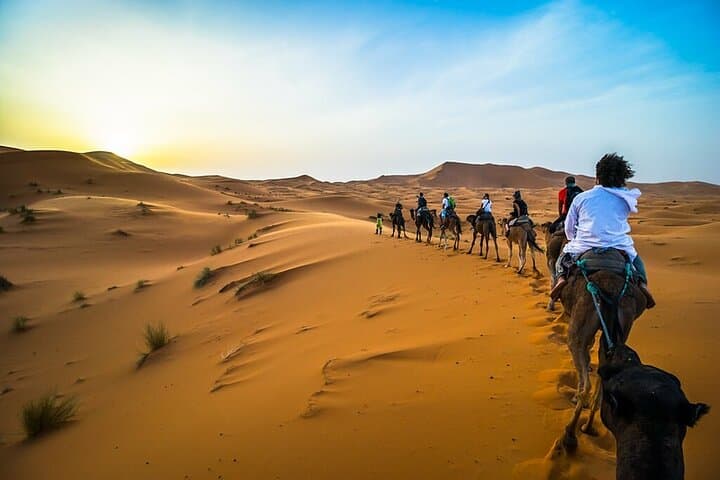


The sun tips its brim over rolling orange ridges as your camel carries you away from the last lights of Merzouga. Wind scuffs the dune crests into sharp silhouettes; every step the camel takes rocks gently beneath you while the sand seems to push and hush the world behind.
The sun tips its brim over rolling orange ridges as your camel carries you away from the last lights of Merzouga. Wind scuffs the dune crests into sharp silhouettes; every step the camel takes rocks gently beneath you while the sand seems to push and hush the world behind.
This is Erg Chebbi country — a band of high dunes formed from ancient Saharan sediments and wind-sorted sand. Berber families and former caravan routes shaped this landscape; Merzouga itself serves as a gateway where local culture, Gnawa music, and camel husbandry meet the desert’s geology. At camp you’ll climb a nearby dune for a sunset that drains color into cobalt, dine by a low fire to the beat of hand drums, and find a sky that feels close enough to touch when stars ignite.
Expect a roughly 90-minute camel ride into camp, a night in nomad-style tents or equipped desert tents, dinner and tea, and a morning camel ride back with breakfast and hotel facilities on return. The experience balances easy physical demands with sensory intensity: walking on soft sand is tiring, but technical skill isn’t required.
Practical notes: hydrate well before and during the ride, wear closed shoes for sand and footing, and bring layered clothing for warm days and sharp cool nights. Plan sunrise and sunset shots, respect local customs (ask before photographing people), and leave no trace—pack out waste and minimize plastic. For many travelers, a night under the Saharan sky is quietly transformative: the dunes push at your edges and, for a while, the desert sets the rhythm.