THE ADVENTURE COLLECTIVE® · Independent discovery and booking for outdoor travel

Ride across shifting dunes at sunset, sleep under clear desert skies, and return at sunrise on a guided overnight camel trek from Douz. Choose basic or luxury camps, enjoy local meals, and learn about the region’s geology and nomadic traditions.
Ride across shifting dunes at sunset, sleep under clear desert skies, and return at sunrise on a guided overnight camel trek from Douz. Choose basic or luxury camps, enjoy local meals, and learn about the region’s geology and nomadic traditions.
You crest a dune as the sun tips below the horizon and the sand takes on a clean, copper glow. A line of camels ambles forward, their hooves whispering across ripples carved by wind; the air cools quickly and the first stars appear as your handlers steer toward the lights of the camp.
Verified experiences and guided adventures in the surrounding area.
Operated by Sahara Activity · Douz, Kebili Governorate
You crest a dune as the sun tips below the horizon and the sand takes on a clean, copper glow. A line of camels ambles forward, their hooves whispering across ripples carved by wind; the air cools quickly and the first stars appear as your handlers steer toward the lights of the camp.
Douz is often called the gateway to the southern Sahara—an entry point into the Grand Erg and the wind-sculpted deserts beyond. Geologically, you ride across aeolian plains where loose quartz grains migrate in steady sheets and crescentic dunes rearrange after every strong sirocco. Culturally, this region blends Arab and Berber traditions: dates, mint tea, and oral storytelling anchor the night, while camel handlers keep techniques passed for generations.
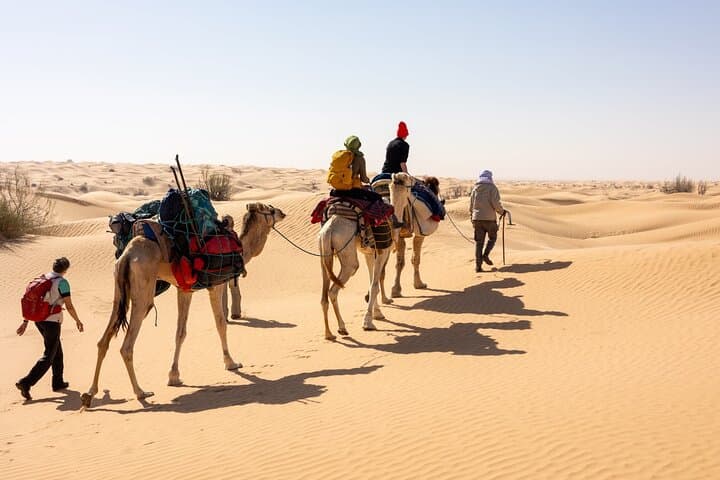
On this overnight itinerary expect a sunset camel trek of roughly 1–2 hours, a night in either a basic or upgraded tented camp with dinner and breakfast provided, then a shorter sunrise ride back. Terrain is soft sand and gentle dunes—not steep mountaineering, but uneven and shifting; camels travel at a slow, rocking gait that’s steady but can challenge knees and lower backs.
Practical guidance: arrive with a lightweight daypack, plenty of water, and layered clothing for sharp temperature swings after dark. Protect skin and eyes from glare and dust; wear closed-toe shoes for walking around camp. If you want more comfort, pick a luxury camp option with padded bedding and private facilities. Respect local customs—ask before photography of people—and leave no trace: pack out plastics and avoid disturbing fragile dune vegetation.
The sunset ride typically lasts about 1–2 hours to reach camp; the sunrise ride is shorter, usually 45–90 minutes returning to the pickup point.
Options usually include basic shared tents and upgraded private or semi-private tents—check your booking for the selected camp level and amenities.
No special experience is required; handlers guide the animals and movements are slow, but mount/dismount and the rocking motion can be uncomfortable for people with back or knee issues.
Hosts typically serve traditional Tunisian dishes—tagines, salads, bread, tea, and breakfast items—accommodations may vary for dietary restrictions if arranged in advance.
Sahara Activity operates guided outdoor trips and adventures with an emphasis on safety, stewardship, and memorable experiences.
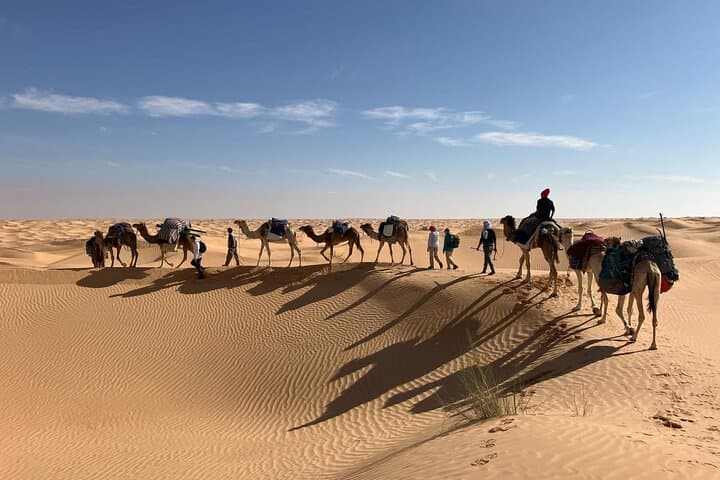
You crest a dune as the sun tips below the horizon and the sand takes on a clean, copper glow. A line of camels ambles forward, their hooves whispering across ripples carved by wind; the air cools quickly and the first stars appear as your handlers steer toward the lights of the camp.
You crest a dune as the sun tips below the horizon and the sand takes on a clean, copper glow. A line of camels ambles forward, their hooves whispering across ripples carved by wind; the air cools quickly and the first stars appear as your handlers steer toward the lights of the camp.
Douz is often called the gateway to the southern Sahara—an entry point into the Grand Erg and the wind-sculpted deserts beyond. Geologically, you ride across aeolian plains where loose quartz grains migrate in steady sheets and crescentic dunes rearrange after every strong sirocco. Culturally, this region blends Arab and Berber traditions: dates, mint tea, and oral storytelling anchor the night, while camel handlers keep techniques passed for generations.
On this overnight itinerary expect a sunset camel trek of roughly 1–2 hours, a night in either a basic or upgraded tented camp with dinner and breakfast provided, then a shorter sunrise ride back. Terrain is soft sand and gentle dunes—not steep mountaineering, but uneven and shifting; camels travel at a slow, rocking gait that’s steady but can challenge knees and lower backs.
Practical guidance: arrive with a lightweight daypack, plenty of water, and layered clothing for sharp temperature swings after dark. Protect skin and eyes from glare and dust; wear closed-toe shoes for walking around camp. If you want more comfort, pick a luxury camp option with padded bedding and private facilities. Respect local customs—ask before photography of people—and leave no trace: pack out plastics and avoid disturbing fragile dune vegetation.