THE ADVENTURE COLLECTIVE® · Independent discovery and booking for outdoor travel

Spend a night beneath the Milky Way in Egypt’s White Desert, paired with visits to the Black Desert, Crystal Mountain and Al Agabat Valley. This 2‑day trip blends wind‑sculpted geology, Bedouin stops and a basic desert camp setup.
Spend a night beneath the Milky Way in Egypt’s White Desert, paired with visits to the Black Desert, Crystal Mountain and Al Agabat Valley. This 2‑day trip blends wind‑sculpted geology, Bedouin stops and a basic desert camp setup.
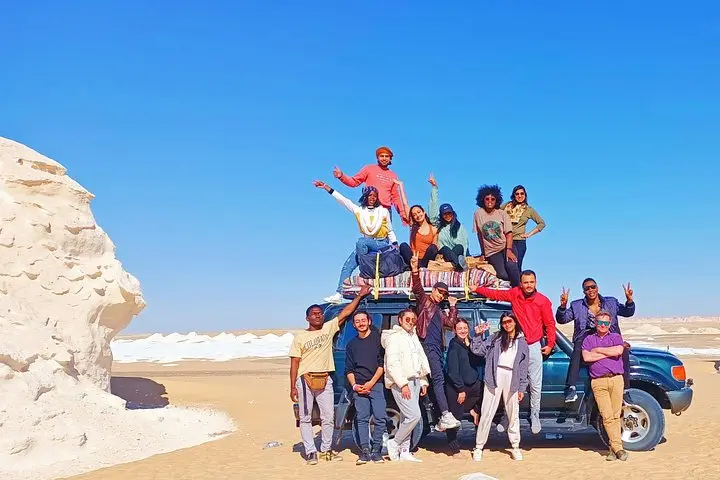
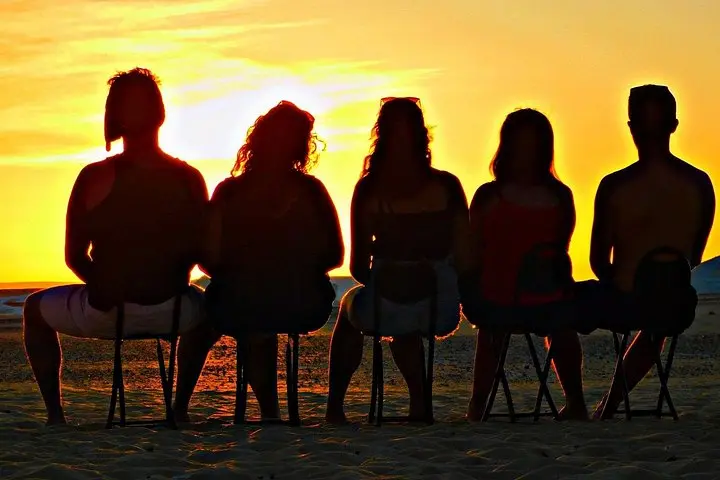
Dusk drops like an invitation over the chalk sculptures of the White Desert, and the first stars prick the sky as a thin wind rearranges sand into fresh patterns. You arrive from Farafra across a flat plain, headlights cutting through low scrub, then step out into a landscape where wind-carved limestone towers lean and balance like slow-moving creatures. That first night—under an unpolluted band of Milky Way—sets the pace: quiet, cold after sunset, and wildly open.
Verified experiences and guided adventures in the surrounding area.
Operated by Black and white desert Safari · Farafra, New Valley Governorate
Dusk drops like an invitation over the chalk sculptures of the White Desert, and the first stars prick the sky as a thin wind rearranges sand into fresh patterns. You arrive from Farafra across a flat plain, headlights cutting through low scrub, then step out into a landscape where wind-carved limestone towers lean and balance like slow-moving creatures. That first night—under an unpolluted band of Milky Way—sets the pace: quiet, cold after sunset, and wildly open.
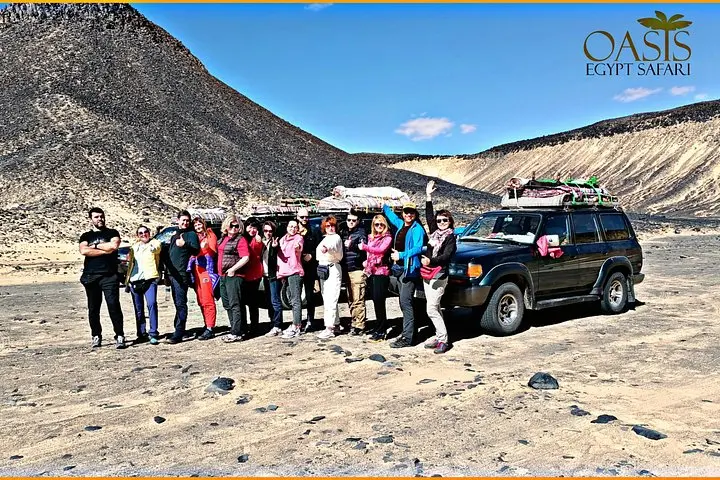
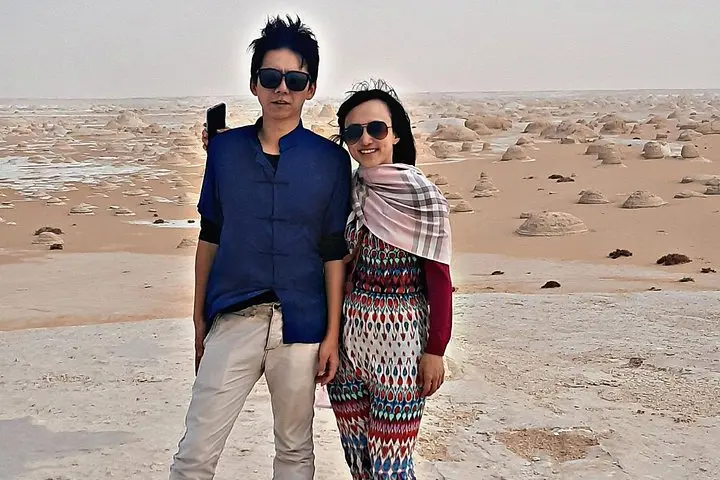
This route threads together two distinct desert moods. The White Desert's mushroom-shaped outcrops are Jurassic-era chalk reshaped by wind and occasional rain; the nearby Black Desert is a basalt-strewn field of volcanic hills and dark, rusted mounds. Crystal Mountain offers glittering quartz seams you can pick at; Al Agabat Valley funnels seasonal runoff and shelters small springs that Bedouin communities have used for generations. The Farafra region has long been a stopping point on trans-Saharan routes and today mixes Bedouin hospitality with practical desert guiding.
Practical guidance: the standard trip runs 2 days, 1 night with transport, three meals and water included; camps are basic desert camps with sleeping arrangements under canvas or open sky. Terrain is mostly flat sand and compacted playa with short rocky scrambles near Crystal Mountain; elevation changes are minor but footing can be uneven. Expect hot daytime temperatures and rapid overnight cooling—layer for temperature swings, carry 3–4 liters of water, and use closed-toe shoes for rocky sections. Aim for spring or autumn for the most comfortable weather; summer nights can be warm but daytime heat is intense. Respect fragile rock formations and pack out waste—these landscapes survive on careful travel.
Camps are simple desert setups—sleeping mats and tents or open-sky arrangements; guide companies typically provide blankets and basic bedding, but bring a warm layer.
Families with older children are common, but operators note it’s not recommended for infants or travelers with serious back, heart, or pregnancy concerns.
Most tours depart from Farafra or nearby oases; transfers are usually included in the booking and are by 4x4 across desert tracks.
Expect hot, dry days and much cooler nights; spring and autumn offer the most comfortable conditions while summer brings intense daytime heat.
Black and white desert Safari operates guided outdoor trips and adventures with an emphasis on safety, stewardship, and memorable experiences.
Dusk drops like an invitation over the chalk sculptures of the White Desert, and the first stars prick the sky as a thin wind rearranges sand into fresh patterns. You arrive from Farafra across a flat plain, headlights cutting through low scrub, then step out into a landscape where wind-carved limestone towers lean and balance like slow-moving creatures. That first night—under an unpolluted band of Milky Way—sets the pace: quiet, cold after sunset, and wildly open.
Dusk drops like an invitation over the chalk sculptures of the White Desert, and the first stars prick the sky as a thin wind rearranges sand into fresh patterns. You arrive from Farafra across a flat plain, headlights cutting through low scrub, then step out into a landscape where wind-carved limestone towers lean and balance like slow-moving creatures. That first night—under an unpolluted band of Milky Way—sets the pace: quiet, cold after sunset, and wildly open.
This route threads together two distinct desert moods. The White Desert's mushroom-shaped outcrops are Jurassic-era chalk reshaped by wind and occasional rain; the nearby Black Desert is a basalt-strewn field of volcanic hills and dark, rusted mounds. Crystal Mountain offers glittering quartz seams you can pick at; Al Agabat Valley funnels seasonal runoff and shelters small springs that Bedouin communities have used for generations. The Farafra region has long been a stopping point on trans-Saharan routes and today mixes Bedouin hospitality with practical desert guiding.
Practical guidance: the standard trip runs 2 days, 1 night with transport, three meals and water included; camps are basic desert camps with sleeping arrangements under canvas or open sky. Terrain is mostly flat sand and compacted playa with short rocky scrambles near Crystal Mountain; elevation changes are minor but footing can be uneven. Expect hot daytime temperatures and rapid overnight cooling—layer for temperature swings, carry 3–4 liters of water, and use closed-toe shoes for rocky sections. Aim for spring or autumn for the most comfortable weather; summer nights can be warm but daytime heat is intense. Respect fragile rock formations and pack out waste—these landscapes survive on careful travel.