THE ADVENTURE COLLECTIVE® · Independent discovery and booking for outdoor travel

Sleep under a star-steeped roof of rock on a two‑day hike into the Ukhahlamba Drakensberg. Carry your kit, share camp chores, swim in mountain streams and wake to serrated ridgelines—an honest overnight in one of South Africa’s wildest ranges.
Sleep under a star-steeped roof of rock on a two‑day hike into the Ukhahlamba Drakensberg. Carry your kit, share camp chores, swim in mountain streams and wake to serrated ridgelines—an honest overnight in one of South Africa’s wildest ranges.
The ridge opens like a long, slow exhale as you leave Durban’s traffic behind and climb toward the cool air of the Ukhahlamba Drakensberg. After a three‑hour drive, the trail narrows into stone shelves and tussock; river gullies chatter below and a cave waits with room enough for a small group and a bright, star-flooded sky.
Verified experiences and guided adventures in the surrounding area.
Operated by Feral Adventures · Bergville, KwaZulu-Natal
The ridge opens like a long, slow exhale as you leave Durban’s traffic behind and climb toward the cool air of the Ukhahlamba Drakensberg. After a three‑hour drive, the trail narrows into stone shelves and tussock; river gullies chatter below and a cave waits with room enough for a small group and a bright, star-flooded sky.
These high basalt buttresses are part of a dramatic escarpment formed by long-ago lava flows cut by rivers; the cliffs and caves here have sheltered people for millennia and carry rock art and the echoes of shepherding communities. Culturally the area is Zulu country—local guides point out place names and seasonal grazing patterns as easily as geological features.
The hike is straightforward but honest: expect roughly 12 km per day over uneven tracks with short steep sections, river crossings, and loose rock underfoot. You carry your personal kit; the operator supplies a backpack, sleeping mat and bag, and basic meals cooked on gas—no campfires. Nights in the cave are quiet; mountain streams offer an evening dip and dawn brings clear light on serrated ridgelines.
Practical notes: be ready to pack out rubbish, dig catholes well away from water, and keep noise low. Good waterproof footwear, layered insulation for cold nights, and a headlamp are non-negotiable. Weather can shift fast—plan for wind, rain and bright sun in a single day. For a reasonably fit hiker comfortable with carrying 8–12 kg and helping with camp chores, this is a compact, immersive way to experience the Drakensberg wilderness.
Moderate: roughly 12 km per day over uneven ground with some elevation change; a reasonable fitness level is required.
Yes—the operator supplies a sleeping bag and mat, but bring personal liners if you prefer extra warmth or hygiene.
Fresh mountain water is used by the operator, but if you have a sensitive stomach bring a filter or purification tablets to be safe.
The activity runs in most weather but can be cancelled for severe conditions; dress in layers and expect rapid changes including wind and rain.
Feral Adventures operates guided outdoor trips and adventures with an emphasis on safety, stewardship, and memorable experiences.
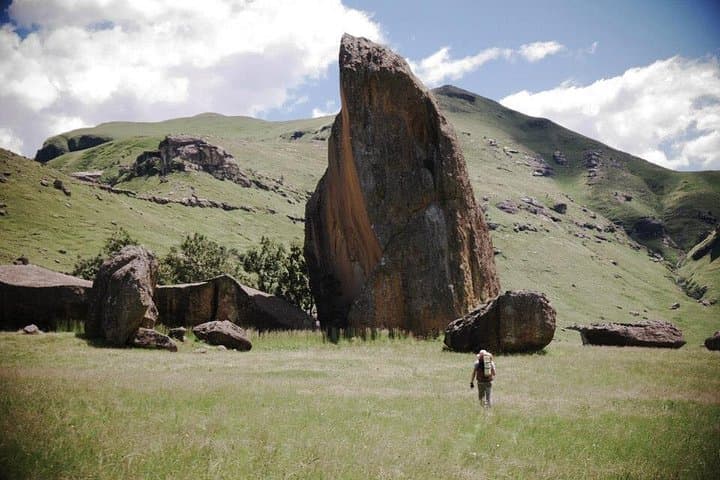
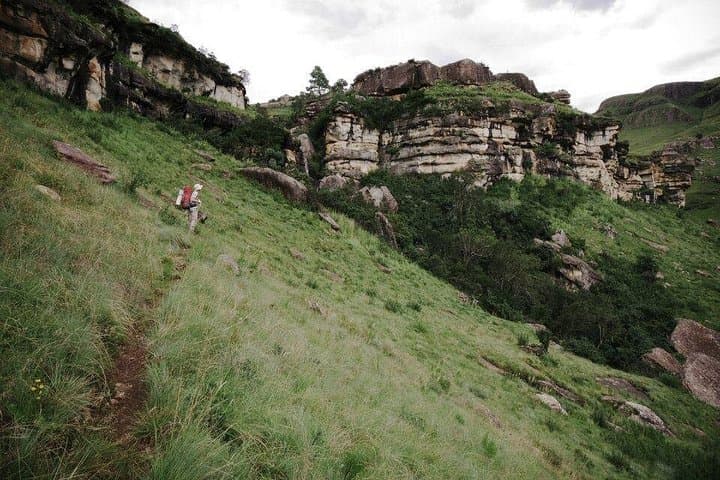
The ridge opens like a long, slow exhale as you leave Durban’s traffic behind and climb toward the cool air of the Ukhahlamba Drakensberg. After a three‑hour drive, the trail narrows into stone shelves and tussock; river gullies chatter below and a cave waits with room enough for a small group and a bright, star-flooded sky.
The ridge opens like a long, slow exhale as you leave Durban’s traffic behind and climb toward the cool air of the Ukhahlamba Drakensberg. After a three‑hour drive, the trail narrows into stone shelves and tussock; river gullies chatter below and a cave waits with room enough for a small group and a bright, star-flooded sky.
These high basalt buttresses are part of a dramatic escarpment formed by long-ago lava flows cut by rivers; the cliffs and caves here have sheltered people for millennia and carry rock art and the echoes of shepherding communities. Culturally the area is Zulu country—local guides point out place names and seasonal grazing patterns as easily as geological features.
The hike is straightforward but honest: expect roughly 12 km per day over uneven tracks with short steep sections, river crossings, and loose rock underfoot. You carry your personal kit; the operator supplies a backpack, sleeping mat and bag, and basic meals cooked on gas—no campfires. Nights in the cave are quiet; mountain streams offer an evening dip and dawn brings clear light on serrated ridgelines.
Practical notes: be ready to pack out rubbish, dig catholes well away from water, and keep noise low. Good waterproof footwear, layered insulation for cold nights, and a headlamp are non-negotiable. Weather can shift fast—plan for wind, rain and bright sun in a single day. For a reasonably fit hiker comfortable with carrying 8–12 kg and helping with camp chores, this is a compact, immersive way to experience the Drakensberg wilderness.