THE ADVENTURE COLLECTIVE® · Independent discovery and booking for outdoor travel

Ride camels across towering sand ridges, sleep in a traditional Berber tent and watch the Milky Way unfurl in Erg Chebbi. This overnight camp combines a sunset camel trek with dinner, music and stargazing near Merzouga.
Ride camels across towering sand ridges, sleep in a traditional Berber tent and watch the Milky Way unfurl in Erg Chebbi. This overnight camp combines a sunset camel trek with dinner, music and stargazing near Merzouga.
The sun melts into the sand as your caravan cuts a slow silhouette across Erg Chebbi — a sea of shifting ridges that can rise to 120–150 meters above the valley floor. A camel walk delivers you to a private Berber camp in Hassilabied where mint tea and a low-fire dinner mark the edge between day and night.
Verified experiences and guided adventures in the surrounding area.
Operated by Erg Chebbi Dunes · Merzouga, Drâa-Tafilalet
The sun melts into the sand as your caravan cuts a slow silhouette across Erg Chebbi — a sea of shifting ridges that can rise to 120–150 meters above the valley floor. A camel walk delivers you to a private Berber camp in Hassilabied where mint tea and a low-fire dinner mark the edge between day and night.
Geology here is blunt and honest: wind-built dunes of quartz sand deposited on an ancient Saharan plain, reshaped hour by hour. The region around Merzouga has been a crossroads for Tuareg and Berber caravans for centuries; camp life reflects that living heritage with storytelling and Gnawa rhythms around the fire. Culture is contact-light and hospitable — expect simple comforts in a tented setting and traditional hospitality rather than luxury hotel services.
Practical points matter: the full experience runs roughly 20 hours from pickup to return, with two short camel rides and an overnight in a Berber tent. Temperatures swing dramatically — hot afternoons, cold desert nights — and sand is everywhere, so zipper-up bags and closed shoes are useful. The best light for photography is sunset and sunrise when the dunes sharpen into contrasts.
Plan for hydration (1–2 liters per person during daylight), sun protection, and layers for overnight. Bring small cash for tips or extras and a headlamp for moving between tents after dark. If you want quieter camps, ask for smaller private groups; if you want culture, book nights with live music and local hosts. The desert gives space; the itinerary gives structure — arrive prepared and it will reward you with clear skies and a memorable night under open stars.
Camel treks to and from camp are typically 45–60 minutes each way, depending on the pickup point and pace.
Most Berber camps provide basic toilet facilities; some offer solar or shared showers — check the specific camp’s amenities before booking.
Yes — the tour is described as easy to moderate and suitable for a wide range of fitness levels, but mounting camels and overnight cold may be challenging for some; check accessibility options if needed.
Local cash (Moroccan dirham) is recommended for tips and small purchases; many remote operators do not accept cards.
Erg Chebbi Dunes operates guided outdoor trips and adventures with an emphasis on safety, stewardship, and memorable experiences.
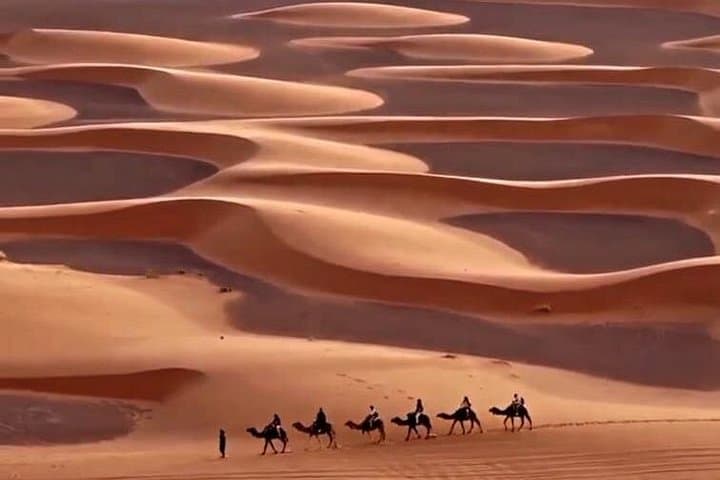
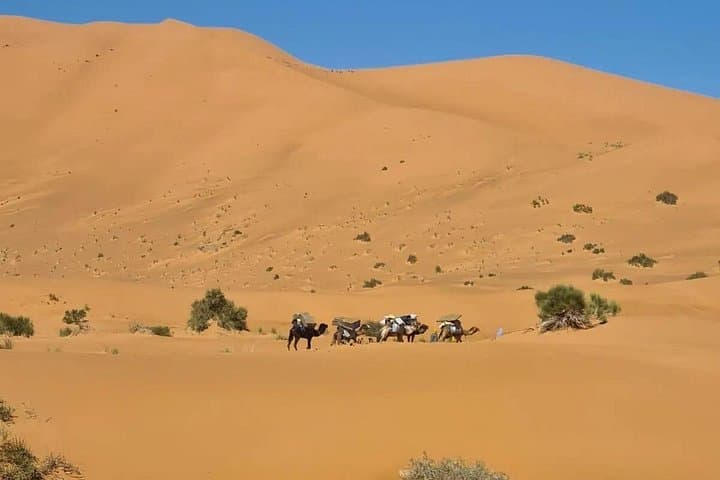
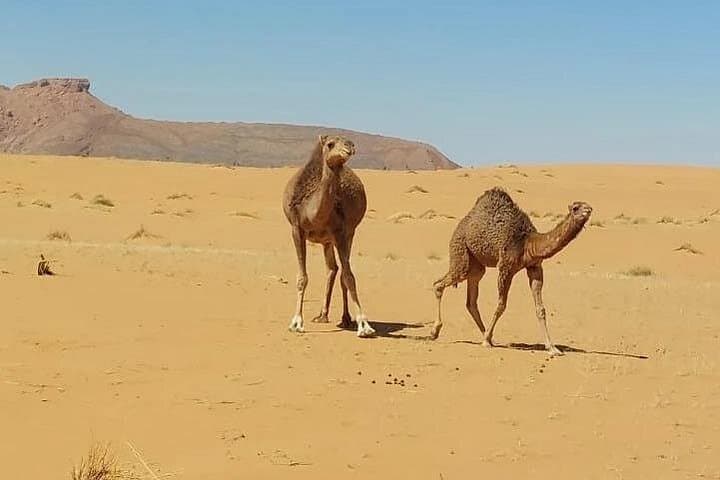
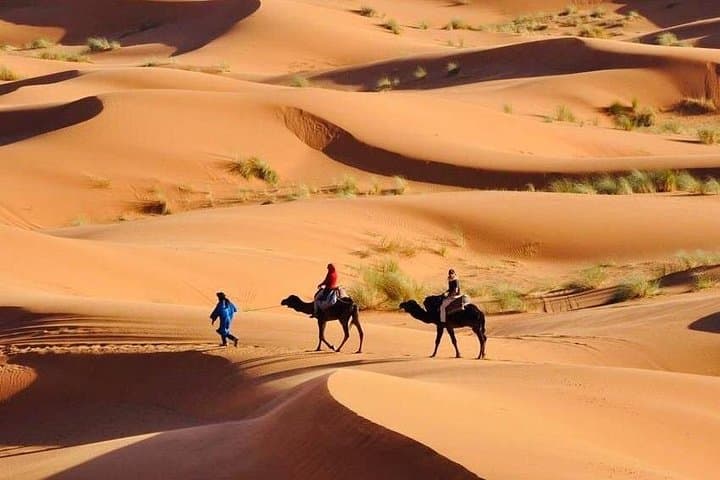
The sun melts into the sand as your caravan cuts a slow silhouette across Erg Chebbi — a sea of shifting ridges that can rise to 120–150 meters above the valley floor. A camel walk delivers you to a private Berber camp in Hassilabied where mint tea and a low-fire dinner mark the edge between day and night.
The sun melts into the sand as your caravan cuts a slow silhouette across Erg Chebbi — a sea of shifting ridges that can rise to 120–150 meters above the valley floor. A camel walk delivers you to a private Berber camp in Hassilabied where mint tea and a low-fire dinner mark the edge between day and night.
Geology here is blunt and honest: wind-built dunes of quartz sand deposited on an ancient Saharan plain, reshaped hour by hour. The region around Merzouga has been a crossroads for Tuareg and Berber caravans for centuries; camp life reflects that living heritage with storytelling and Gnawa rhythms around the fire. Culture is contact-light and hospitable — expect simple comforts in a tented setting and traditional hospitality rather than luxury hotel services.
Practical points matter: the full experience runs roughly 20 hours from pickup to return, with two short camel rides and an overnight in a Berber tent. Temperatures swing dramatically — hot afternoons, cold desert nights — and sand is everywhere, so zipper-up bags and closed shoes are useful. The best light for photography is sunset and sunrise when the dunes sharpen into contrasts.
Plan for hydration (1–2 liters per person during daylight), sun protection, and layers for overnight. Bring small cash for tips or extras and a headlamp for moving between tents after dark. If you want quieter camps, ask for smaller private groups; if you want culture, book nights with live music and local hosts. The desert gives space; the itinerary gives structure — arrive prepared and it will reward you with clear skies and a memorable night under open stars.