THE ADVENTURE COLLECTIVE® · Independent discovery and booking for outdoor travel

Two days across Egypt’s Western Desert: volcanic black hills, quartz-studded Crystal Mountain, and chalk-white sculptures in the White Desert. Expect dusty 4x4 travel, simple desert camping, epic stargazing, and short walks among otherworldly formations.
Two days across Egypt’s Western Desert: volcanic black hills, quartz-studded Crystal Mountain, and chalk-white sculptures in the White Desert. Expect dusty 4x4 travel, simple desert camping, epic stargazing, and short walks among otherworldly formations.
A low sun burns a gold edge along endless dunes as a convoy of 4x4s threads toward strange white sculptures rising from sand. You feel the engine’s rumble shift into silence when the vehicles stop—only wind and the occasional gravel slide remain. This is the Western Desert: basalt-strewn dark hills giving way to chalky mushroom rocks and crystal-studded ridges.
Verified experiences and guided adventures in the surrounding area.
Operated by Tamer Safari · Bahariya Oasis, Giza
A low sun burns a gold edge along endless dunes as a convoy of 4x4s threads toward strange white sculptures rising from sand. You feel the engine’s rumble shift into silence when the vehicles stop—only wind and the occasional gravel slide remain. This is the Western Desert: basalt-strewn dark hills giving way to chalky mushroom rocks and crystal-studded ridges.
The route leaves Bahariya Oasis, a living settlement with Roman and Pharaonic-era traces, and moves through the Black Desert’s volcanic cones. Geologically, the black hills are capped with basalt from ancient eruptions; the White Desert’s limestone formations were carved by wind and sand into mushroom and animal shapes over millennia. Crystal Mountain interrupts the monotony with quartz pockets exposed by erosion—sharp, glittering veins that hint at deep tectonic history.
Culturally you’ll pass Bedouin camps and hot springs where locals have long adapted to scarce water and shifting landscapes. Guides typically set up simple canvas camps in the White Desert, offering dinner and stargazing beneath dramatically dark skies.
Practical guidance: expect dusty 4x4 rides, brief hikes over soft sand and sharp rock, and overnight camping with basic facilities. Bring sun protection, windproof layers for cold desert nights, sturdy boots for rocky walking, and a headlamp. Respect fragile formations—do not remove crystals or carve rock. Timing: dawn and dusk deliver the best light and cooler air; mid-summer days can be intensely hot. With modest fitness and preparation, this two-day safari delivers a compact, tactile encounter with Egypt’s less-visited desert realms.
Campsites are in protected park areas with basic tent accommodations; you are off-grid but guided teams provide food, bottled water, and simple toilet facilities.
Small loose fragments are sometimes found, but removing significant pieces or damaging formations is discouraged and can be prohibited to protect the site.
The itinerary is suitable for most ages with moderate mobility—expect bumpy 4x4 transfers; infant seats may be available but check with the operator.
Clear skies are common; summer brings extreme daytime heat while winter nights can be freezing—prepare layers and sun protection accordingly.
Tamer Safari operates guided outdoor trips and adventures with an emphasis on safety, stewardship, and memorable experiences.
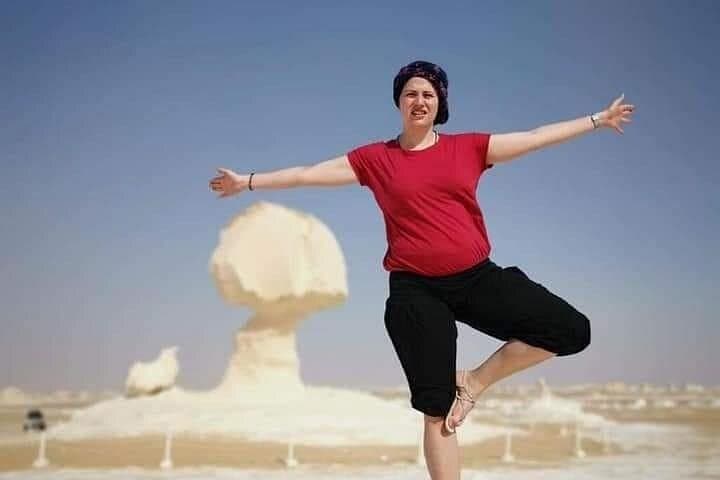
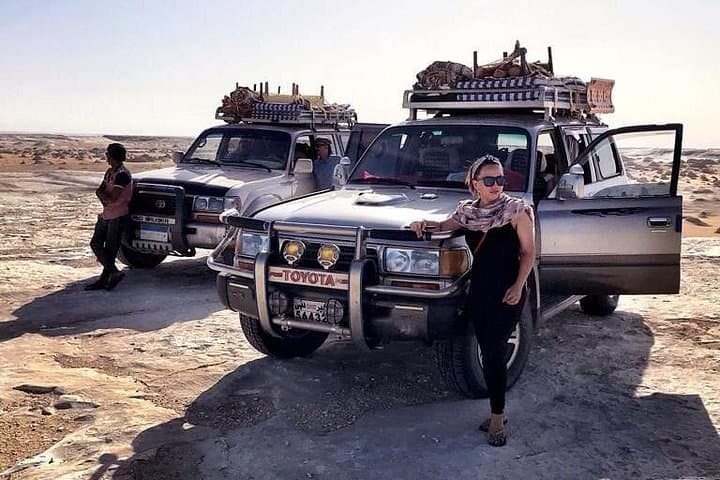
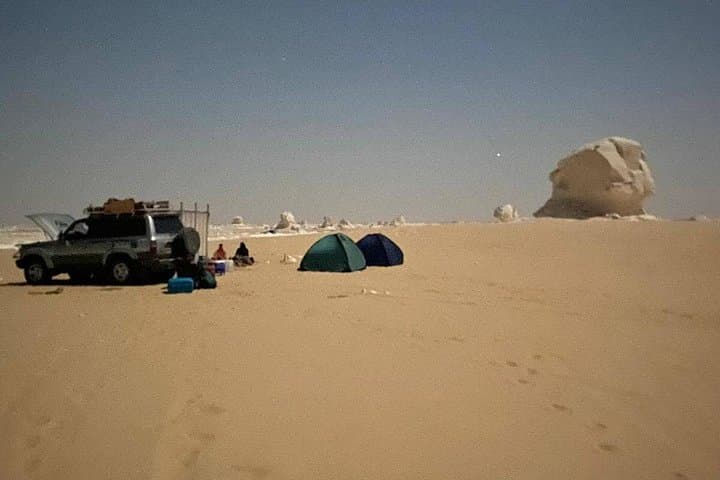
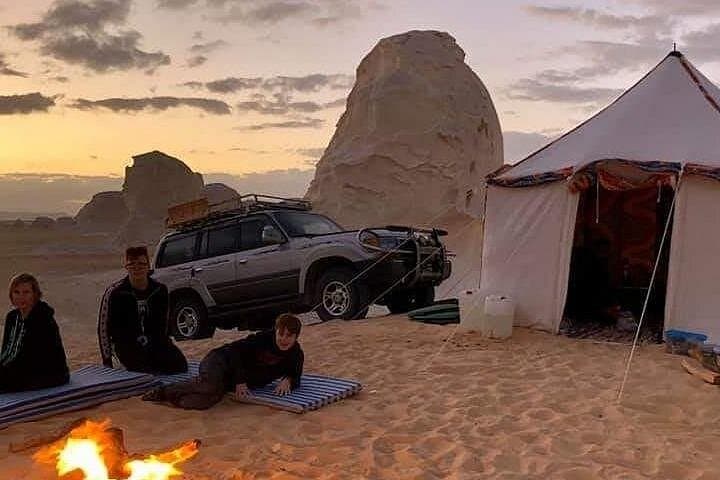
A low sun burns a gold edge along endless dunes as a convoy of 4x4s threads toward strange white sculptures rising from sand. You feel the engine’s rumble shift into silence when the vehicles stop—only wind and the occasional gravel slide remain. This is the Western Desert: basalt-strewn dark hills giving way to chalky mushroom rocks and crystal-studded ridges.
A low sun burns a gold edge along endless dunes as a convoy of 4x4s threads toward strange white sculptures rising from sand. You feel the engine’s rumble shift into silence when the vehicles stop—only wind and the occasional gravel slide remain. This is the Western Desert: basalt-strewn dark hills giving way to chalky mushroom rocks and crystal-studded ridges.
The route leaves Bahariya Oasis, a living settlement with Roman and Pharaonic-era traces, and moves through the Black Desert’s volcanic cones. Geologically, the black hills are capped with basalt from ancient eruptions; the White Desert’s limestone formations were carved by wind and sand into mushroom and animal shapes over millennia. Crystal Mountain interrupts the monotony with quartz pockets exposed by erosion—sharp, glittering veins that hint at deep tectonic history.
Culturally you’ll pass Bedouin camps and hot springs where locals have long adapted to scarce water and shifting landscapes. Guides typically set up simple canvas camps in the White Desert, offering dinner and stargazing beneath dramatically dark skies.
Practical guidance: expect dusty 4x4 rides, brief hikes over soft sand and sharp rock, and overnight camping with basic facilities. Bring sun protection, windproof layers for cold desert nights, sturdy boots for rocky walking, and a headlamp. Respect fragile formations—do not remove crystals or carve rock. Timing: dawn and dusk deliver the best light and cooler air; mid-summer days can be intensely hot. With modest fitness and preparation, this two-day safari delivers a compact, tactile encounter with Egypt’s less-visited desert realms.