THE ADVENTURE COLLECTIVE® · Independent discovery and booking for outdoor travel

Drive the Atlantic coast to Essaouira, walk its car‑free medina, then continue to Marrakech for an evening of plazas and light. This two‑day overnight blends coastal scenery with imperial monuments and hands‑on market culture.
Drive the Atlantic coast to Essaouira, walk its car‑free medina, then continue to Marrakech for an evening of plazas and light. This two‑day overnight blends coastal scenery with imperial monuments and hands‑on market culture.
The morning air off the Atlantic cuts through the car windows as you leave Agadir—the coastline unfolding, gulls circling the fishing port, and the wind that defines Essaouira daring you to slow down and listen.
Verified experiences and guided adventures in the surrounding area.
Operated by Agharass Tours · Agadir, Souss-Massa
The morning air off the Atlantic cuts through the car windows as you leave Agadir—the coastline unfolding, gulls circling the fishing port, and the wind that defines Essaouira daring you to slow down and listen.
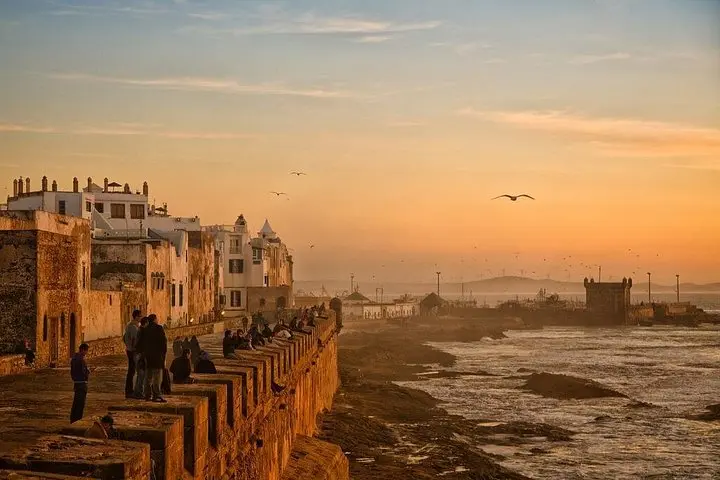
In Essaouira you disembark into narrow, car-free streets where blue shutters and seafront ramparts trace a 16th-century Portuguese plan. The medina’s compact footprint makes it ideal for an on-foot survey: expect 1–3 km of walking across cobbled alleys and the Skala du Port’s cannon-lined promenade. From there a three-hour drive inland drops you into Marrakech, an imperial city that has accumulated monuments from the Almoravid, Almohad and Saadian eras. Marrakech sits at roughly 450–470 m elevation at the edge of the High Atlas foothills; its major sites—Majorelle Garden, Bahia Palace, El Badi and the Koutoubia—are short, mostly level walks between plazas.
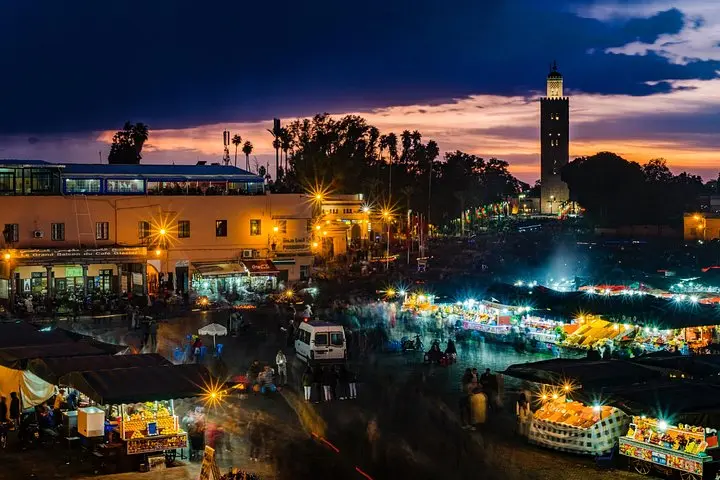
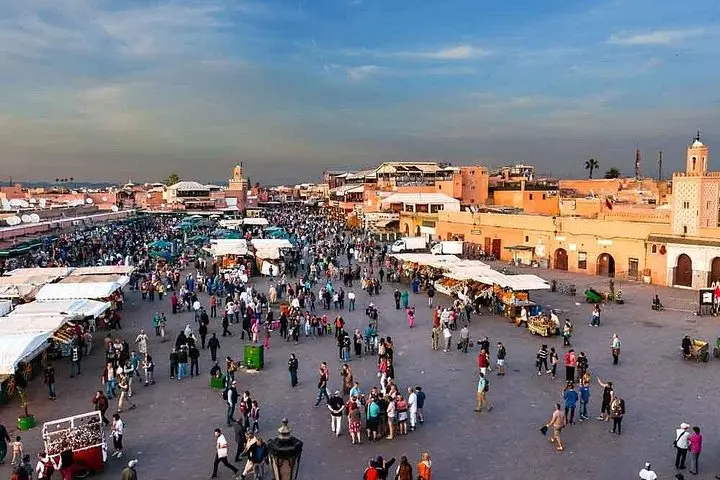
This two-day route mixes coastal light and Atlantic wind with centuries of Moroccan architecture and living culture: Gnawa music in Essaouira’s squares, artisan souks in Marrakech, and local argan cooperatives in the region.
Practical guidance: wear supportive walking shoes for uneven cobbles, carry cash for modest entrance fees (many sites are not included), and bring a sun hat—coastal wind can mask strong sun. Plan for 2–3 hours of walking across both cities, and allow extra time for bargaining at markets and photo stops along the coast. If you’re traveling in summer, schedule early starts; in winter, evenings cool quickly—pack layers. Respect mosque rules (non-Muslims cannot enter active prayer halls) and support local guides and artisans when possible.
Yes—pickup and drop-off from your Agadir accommodation are included; specify your pickup point at booking.
No—major sites like Majorelle Garden, Bahia Palace and El Badi have separate entrance fees paid on site.
Expect approximately 2–4 hours of walking across both days, mostly on flat but uneven cobbles and stairs in medinas.
Strollers can be used in some areas, but narrow alleys and steps in medinas may make them impractical—infant seats are available on request in the vehicle.
Agharass Tours operates guided outdoor trips and adventures with an emphasis on safety, stewardship, and memorable experiences.
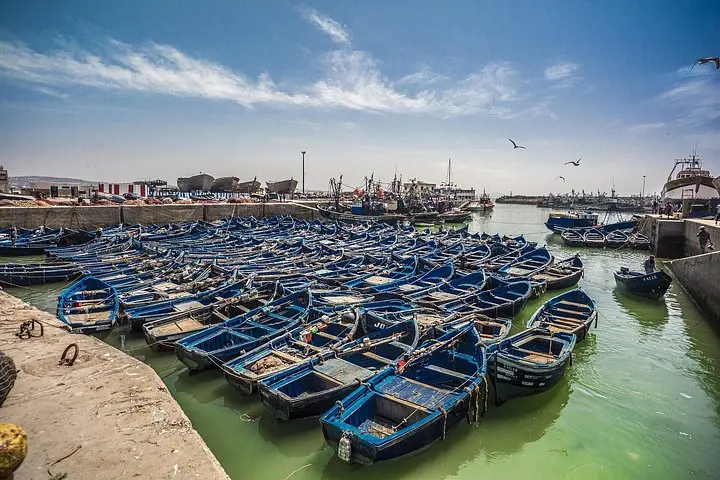
The morning air off the Atlantic cuts through the car windows as you leave Agadir—the coastline unfolding, gulls circling the fishing port, and the wind that defines Essaouira daring you to slow down and listen.
The morning air off the Atlantic cuts through the car windows as you leave Agadir—the coastline unfolding, gulls circling the fishing port, and the wind that defines Essaouira daring you to slow down and listen.
In Essaouira you disembark into narrow, car-free streets where blue shutters and seafront ramparts trace a 16th-century Portuguese plan. The medina’s compact footprint makes it ideal for an on-foot survey: expect 1–3 km of walking across cobbled alleys and the Skala du Port’s cannon-lined promenade. From there a three-hour drive inland drops you into Marrakech, an imperial city that has accumulated monuments from the Almoravid, Almohad and Saadian eras. Marrakech sits at roughly 450–470 m elevation at the edge of the High Atlas foothills; its major sites—Majorelle Garden, Bahia Palace, El Badi and the Koutoubia—are short, mostly level walks between plazas.
This two-day route mixes coastal light and Atlantic wind with centuries of Moroccan architecture and living culture: Gnawa music in Essaouira’s squares, artisan souks in Marrakech, and local argan cooperatives in the region.
Practical guidance: wear supportive walking shoes for uneven cobbles, carry cash for modest entrance fees (many sites are not included), and bring a sun hat—coastal wind can mask strong sun. Plan for 2–3 hours of walking across both cities, and allow extra time for bargaining at markets and photo stops along the coast. If you’re traveling in summer, schedule early starts; in winter, evenings cool quickly—pack layers. Respect mosque rules (non-Muslims cannot enter active prayer halls) and support local guides and artisans when possible.