THE ADVENTURE COLLECTIVE® · Independent discovery and booking for outdoor travel

Spend a night on the Ming-era Jinshanling Great Wall and hike from Jiankou to Mutianyu across exposed ridgelines. This two-day trip blends wild, unrestored sections with restored viewpoints and local village stays.
Spend a night on the Ming-era Jinshanling Great Wall and hike from Jiankou to Mutianyu across exposed ridgelines. This two-day trip blends wild, unrestored sections with restored viewpoints and local village stays.
Late afternoon light flakes off the stone—warm and orange—when the group steps through Jinshanling’s east gate and the wall suddenly broadens underfoot.
Verified experiences and guided adventures in the surrounding area.
Operated by [email protected] · Luanping, Hebei
Late afternoon light flakes off the stone—warm and orange—when the group steps through Jinshanling’s east gate and the wall suddenly broadens underfoot.
You’ll hike up to East Five Window Tower in 30–40 minutes, watch the sun pull shadows across crenellations, then set camp beside a Ming-era watchtower. The next day stitches Jiankou’s raw ruins to Mutianyu’s restored ridgeline across roughly 10 km of angled steps and exposed trail.
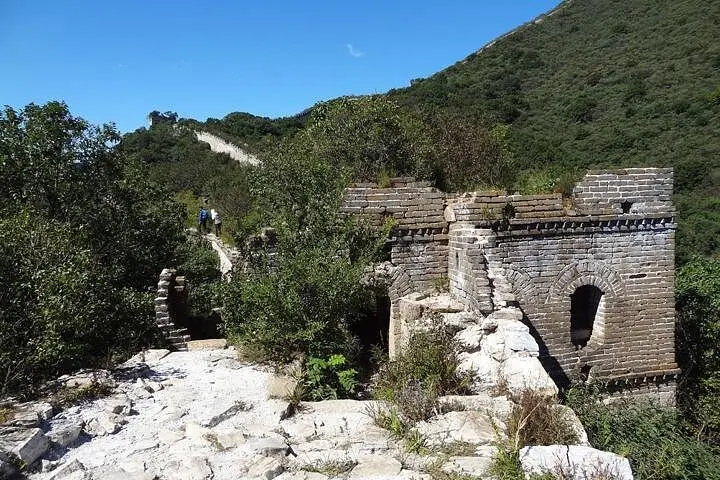
This stretch of wall is largely Ming dynasty work, built and repaired between the 14th and 17th centuries to guard Beijing’s approaches. The geology is a collage of coarse local granite and sandstone; the stone steps are uneven, sometimes loose, and the wall alternates between rebuilt platforms and wild, collapsed towers. Villages below still practice subsistence farming—shared meals and simple guesthouses reflect local culture and communal dining.
Expect exposed ridgelines, wind that tests your balance, and a silence the road can’t reach. Plan for two days of steady walking with intermittent steep sections rather than continuous ascent; guides handle heavy campsite gear, but bring a reliable daypack.
Practical tips: aim for spring or autumn for comfortable temps; carry at least 2–3 liters of water, a headlamp for pre-dawn movement, and layers for wide temperature swings. Respect repairs and ropes—many sections are fragile. With moderate fitness and good footwear, this route rewards you with sunrise and sunset from towers few overnight visitors claim.
No—the tour provides tents, sleeping bags, sleeping pads and staff handle transporting heavy gear to/from the wall; bring only a small daypack with personal items.
Expect about 10 km of mixed terrain including steep, eroded sections at Jiankou and restored steps at Mutianyu—moderate fitness and sure footing are required.
Dinner and some meals are included; food is Chinese-style shared dishes in village guesthouses—advise dietary needs ahead of booking.
Children can join but must be accompanied by an adult; the operator notes moderate fitness is required and some sections are not suitable for very young children.
[email protected] operates guided outdoor trips and adventures with an emphasis on safety, stewardship, and memorable experiences.
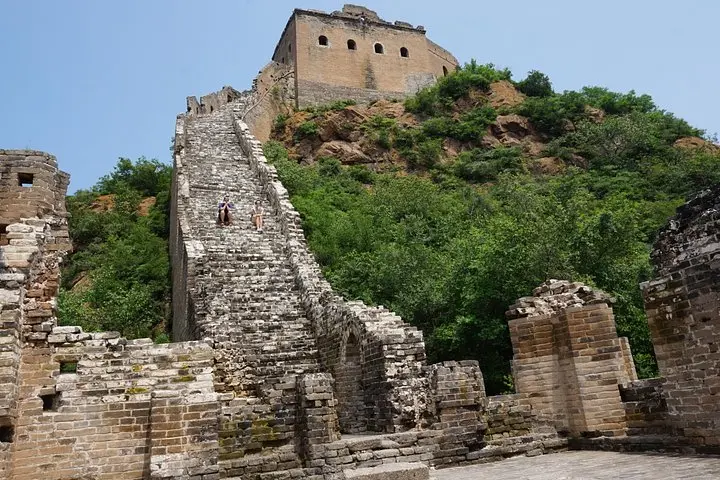
Late afternoon light flakes off the stone—warm and orange—when the group steps through Jinshanling’s east gate and the wall suddenly broadens underfoot.
Late afternoon light flakes off the stone—warm and orange—when the group steps through Jinshanling’s east gate and the wall suddenly broadens underfoot.
You’ll hike up to East Five Window Tower in 30–40 minutes, watch the sun pull shadows across crenellations, then set camp beside a Ming-era watchtower. The next day stitches Jiankou’s raw ruins to Mutianyu’s restored ridgeline across roughly 10 km of angled steps and exposed trail.
This stretch of wall is largely Ming dynasty work, built and repaired between the 14th and 17th centuries to guard Beijing’s approaches. The geology is a collage of coarse local granite and sandstone; the stone steps are uneven, sometimes loose, and the wall alternates between rebuilt platforms and wild, collapsed towers. Villages below still practice subsistence farming—shared meals and simple guesthouses reflect local culture and communal dining.
Expect exposed ridgelines, wind that tests your balance, and a silence the road can’t reach. Plan for two days of steady walking with intermittent steep sections rather than continuous ascent; guides handle heavy campsite gear, but bring a reliable daypack.
Practical tips: aim for spring or autumn for comfortable temps; carry at least 2–3 liters of water, a headlamp for pre-dawn movement, and layers for wide temperature swings. Respect repairs and ropes—many sections are fragile. With moderate fitness and good footwear, this route rewards you with sunrise and sunset from towers few overnight visitors claim.