THE ADVENTURE COLLECTIVE® · Independent discovery and booking for outdoor travel

Ride a camel into the Erg Chebbi dunes, sleep in a private Berber tent, and watch sunrise paint the Sahara. This overnight from Merzouga pairs cultural music, sandboarding and a dramatic desert landscape with practical comforts like dinner, breakfast and a guided camel transfer.
Ride a camel into the Erg Chebbi dunes, sleep in a private Berber tent, and watch sunrise paint the Sahara. This overnight from Merzouga pairs cultural music, sandboarding and a dramatic desert landscape with practical comforts like dinner, breakfast and a guided camel transfer.
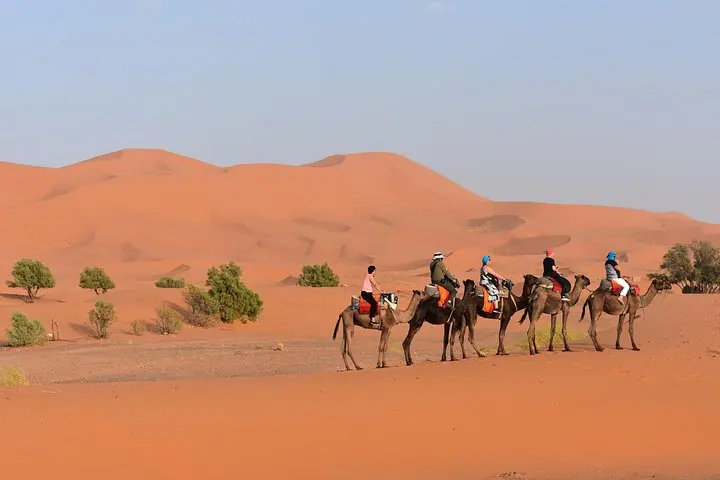
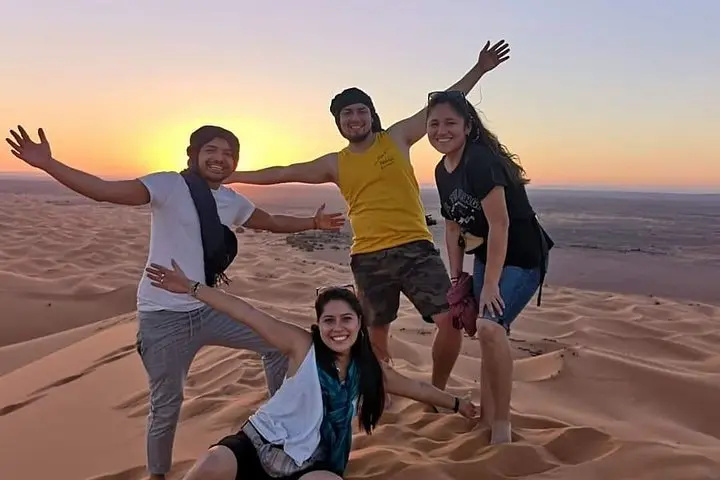
A camel caravan peels away from Merzouga as late afternoon light sharpens the dune crests; each step on the dromedary rocks you forward and the sand seems to breathe around you, pushing and reshaping under wind’s authority. By sunset the Erg Chebbi ridgelines silhouette themselves into clean waves, and your camp’s low fire will answer the cooling air with the steady beat of drums.
Verified experiences and guided adventures in the surrounding area.
Operated by Erg Chebbi · Merzouga, Drâa-Tafilalet
A camel caravan peels away from Merzouga as late afternoon light sharpens the dune crests; each step on the dromedary rocks you forward and the sand seems to breathe around you, pushing and reshaping under wind’s authority. By sunset the Erg Chebbi ridgelines silhouette themselves into clean waves, and your camp’s low fire will answer the cooling air with the steady beat of drums.
Erg Chebbi is one of Morocco’s largest dune seas, with some dunes topping roughly 150 meters and built over millennia by Saharan winds. The region has long been a corridor for Amazigh (Berber) communities and salt caravans; modern camps blend that living culture with hospitality—tea rituals, Gnawa rhythms from nearby Khamlia, and tents arranged for privacy. Geologically you’re on mobile sand, not bedrock, so the landscape remakes itself season to season.
Practicalities: this is a 24‑hour excursion from Merzouga that typically includes a guided camel ride to camp, private tent accommodation, dinner, breakfast and a chance to sandboard. Expect a 3–6 km camel transit across rolling dunes to reach a campsite on higher crests. Temperatures swing widely—hot by day, cold after dark—so plan layers, sun protection and ample water. Camps usually offer basic showers; verify logistics if you need electricity or specific dietary needs. Aim to arrive in Merzouga early enough to catch sunset from the high dune ridge and rise for the sunrise that floods the sand with gold.
Expect about 1–2 hours of camel travel covering roughly 3–6 km depending on the camp location and pace—guides set a comfortable rhythm.
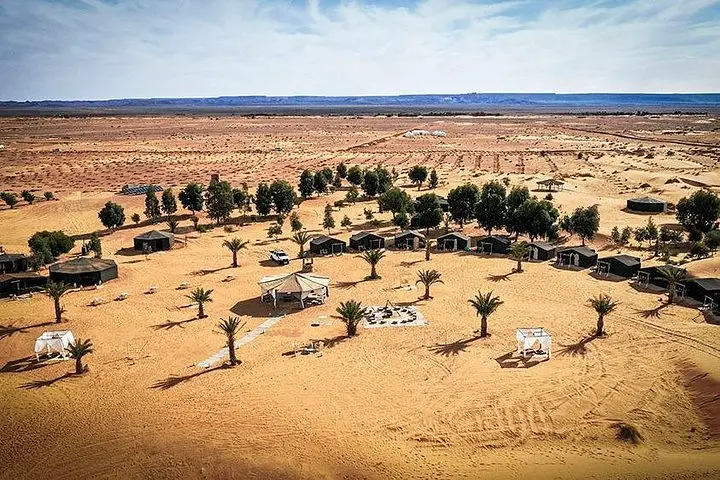
Many operators offer private tents and basic shower facilities at the camp, but amenities vary—confirm if you require an ensuite or hot water at booking.
Yes; camps are run by experienced local guides who manage fire safety and guest security, though you should follow instructions and avoid wandering after dark.
Yes—sandboarding is commonly offered; bring or rent a board at the camp and ask guides about the safest dunes for boarding based on wind and slope.
Erg Chebbi operates guided outdoor trips and adventures with an emphasis on safety, stewardship, and memorable experiences.
A camel caravan peels away from Merzouga as late afternoon light sharpens the dune crests; each step on the dromedary rocks you forward and the sand seems to breathe around you, pushing and reshaping under wind’s authority. By sunset the Erg Chebbi ridgelines silhouette themselves into clean waves, and your camp’s low fire will answer the cooling air with the steady beat of drums.
A camel caravan peels away from Merzouga as late afternoon light sharpens the dune crests; each step on the dromedary rocks you forward and the sand seems to breathe around you, pushing and reshaping under wind’s authority. By sunset the Erg Chebbi ridgelines silhouette themselves into clean waves, and your camp’s low fire will answer the cooling air with the steady beat of drums.
Erg Chebbi is one of Morocco’s largest dune seas, with some dunes topping roughly 150 meters and built over millennia by Saharan winds. The region has long been a corridor for Amazigh (Berber) communities and salt caravans; modern camps blend that living culture with hospitality—tea rituals, Gnawa rhythms from nearby Khamlia, and tents arranged for privacy. Geologically you’re on mobile sand, not bedrock, so the landscape remakes itself season to season.
Practicalities: this is a 24‑hour excursion from Merzouga that typically includes a guided camel ride to camp, private tent accommodation, dinner, breakfast and a chance to sandboard. Expect a 3–6 km camel transit across rolling dunes to reach a campsite on higher crests. Temperatures swing widely—hot by day, cold after dark—so plan layers, sun protection and ample water. Camps usually offer basic showers; verify logistics if you need electricity or specific dietary needs. Aim to arrive in Merzouga early enough to catch sunset from the high dune ridge and rise for the sunrise that floods the sand with gold.