THE ADVENTURE COLLECTIVE® · Independent discovery and booking for outdoor travel

Spend a night on Erg Chebbi’s dunes in a private Berber tent, ride a camel at sunset, and wake for sunrise over rippling sand. This practical overnight introduces you to Saharan geology, local hospitality, and simple desert comforts.
Spend a night on Erg Chebbi’s dunes in a private Berber tent, ride a camel at sunset, and wake for sunrise over rippling sand. This practical overnight introduces you to Saharan geology, local hospitality, and simple desert comforts.
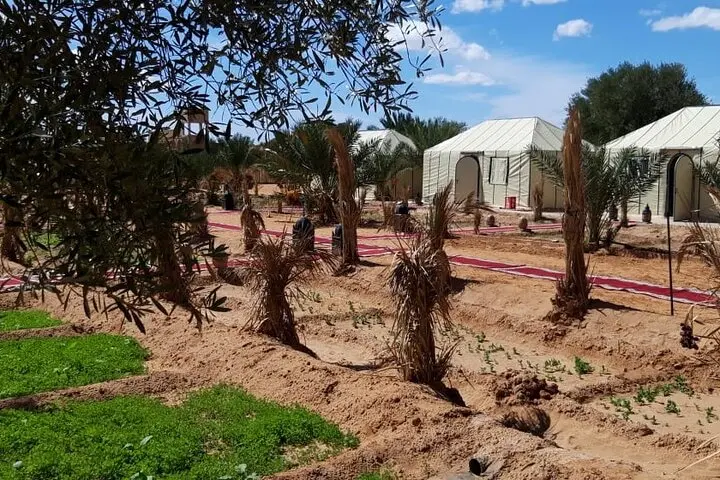
A late-afternoon sun slants across sand ridges as a string of camels threads the lip of Erg Chebbi. You arrive at a low kasbah by the road, swap the engine’s rumble for wind and sand, then mount for a short 20-minute ride that delivers you to a cluster of Berber tents pitched on warm dunes.
Verified experiences and guided adventures in the surrounding area.
Operated by Marrakech desert tour · Merzouga, Drâa-Tafilalet
A late-afternoon sun slants across sand ridges as a string of camels threads the lip of Erg Chebbi. You arrive at a low kasbah by the road, swap the engine’s rumble for wind and sand, then mount for a short 20-minute ride that delivers you to a cluster of Berber tents pitched on warm dunes.
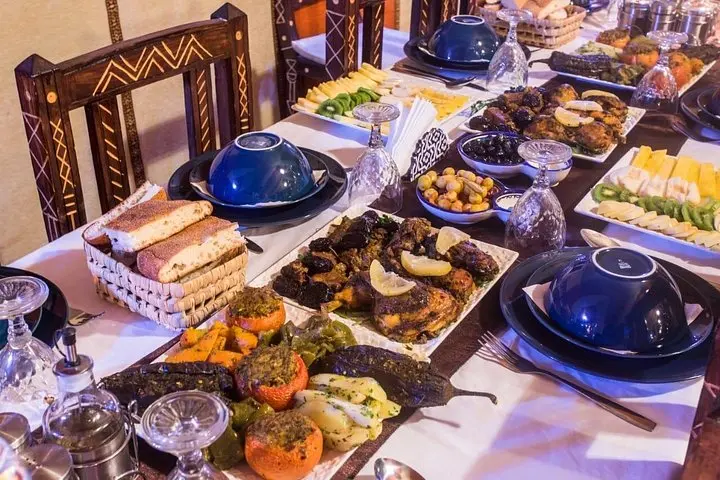
This place sits on the southeastern edge of the High Atlas rain shadow where millennia of wind have sculpted Ethiopia-sized ripples from Sahara sands. The region’s history is tied to trans-Saharan trade routes and Amazigh (Berber) hospitality; tonight’s camp continues that tradition with lantern-lit tagines and Gnawa rhythms around the fire.
Geology here is simple and dramatic: fine quartz sands, dune crests that shift seasonally, and a horizon you can read for weather. Cultural notes matter—local guides are often from nomadic or semi-nomadic families, and camp life mixes practical desert know-how with performance and cuisine.
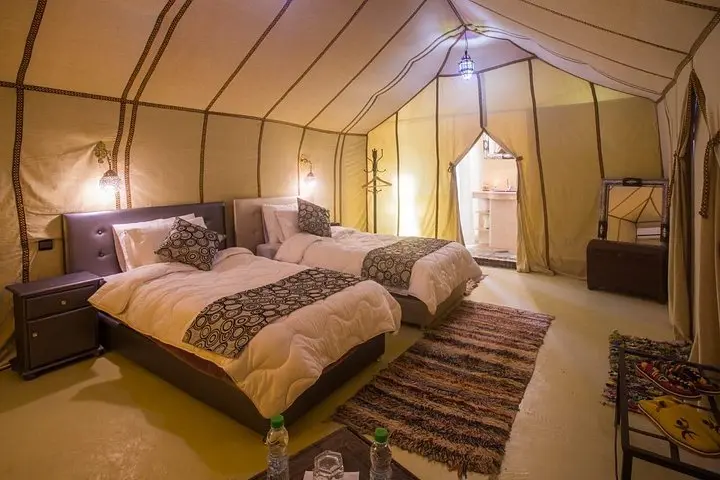
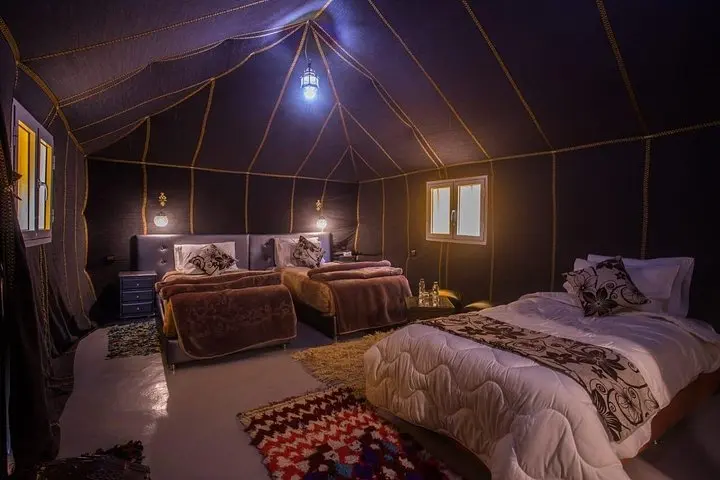
Practically: arrive with layered clothing for hot days and cold nights, a headscarf for dust, and durable shoes for walking on uneven sand. Expect a private tent, dinner and breakfast included, a sunset camel ride, campfire music, and optional morning sandboarding or motorized activities at extra cost. Facilities vary by camp—ask about toilets, hot water, and pickup logistics.
If you’re planning, time your visit for sunrise or sunset for best light, respect local customs around photography and gender, and follow leave-no-trace rules: the dunes recover slowly. The reward is straightforward—clear night skies, quiet wind, and a desert that helps you measure scale by constellations.
The typical camel ride from the meeting point to the camp is about 20 minutes, timed to reach the camp before sunset.
You’ll stay in a private Berber-style tent with bedding; amenities vary by camp—confirm whether hot water or indoor toilets are available.
Yes—dinner (tagine-style) and breakfast are included in the standard overnight package.
It’s not recommended for travelers with serious cardiovascular conditions due to camel riding and desert conditions; check with your provider and the operator before booking.
Marrakech desert tour operates guided outdoor trips and adventures with an emphasis on safety, stewardship, and memorable experiences.
A late-afternoon sun slants across sand ridges as a string of camels threads the lip of Erg Chebbi. You arrive at a low kasbah by the road, swap the engine’s rumble for wind and sand, then mount for a short 20-minute ride that delivers you to a cluster of Berber tents pitched on warm dunes.
A late-afternoon sun slants across sand ridges as a string of camels threads the lip of Erg Chebbi. You arrive at a low kasbah by the road, swap the engine’s rumble for wind and sand, then mount for a short 20-minute ride that delivers you to a cluster of Berber tents pitched on warm dunes.
This place sits on the southeastern edge of the High Atlas rain shadow where millennia of wind have sculpted Ethiopia-sized ripples from Sahara sands. The region’s history is tied to trans-Saharan trade routes and Amazigh (Berber) hospitality; tonight’s camp continues that tradition with lantern-lit tagines and Gnawa rhythms around the fire.
Geology here is simple and dramatic: fine quartz sands, dune crests that shift seasonally, and a horizon you can read for weather. Cultural notes matter—local guides are often from nomadic or semi-nomadic families, and camp life mixes practical desert know-how with performance and cuisine.
Practically: arrive with layered clothing for hot days and cold nights, a headscarf for dust, and durable shoes for walking on uneven sand. Expect a private tent, dinner and breakfast included, a sunset camel ride, campfire music, and optional morning sandboarding or motorized activities at extra cost. Facilities vary by camp—ask about toilets, hot water, and pickup logistics.
If you’re planning, time your visit for sunrise or sunset for best light, respect local customs around photography and gender, and follow leave-no-trace rules: the dunes recover slowly. The reward is straightforward—clear night skies, quiet wind, and a desert that helps you measure scale by constellations.