THE ADVENTURE COLLECTIVE® · Independent discovery and booking for outdoor travel

Ride a camel into Erg Chebbi, sleep in a nomad-style bivouac, and wake for a sunrise that chisels the Sahara into gold. This overnight balances easy trekking, sandboarding, and authentic desert hospitality.
Ride a camel into Erg Chebbi, sleep in a nomad-style bivouac, and wake for a sunrise that chisels the Sahara into gold. This overnight balances easy trekking, sandboarding, and authentic desert hospitality.
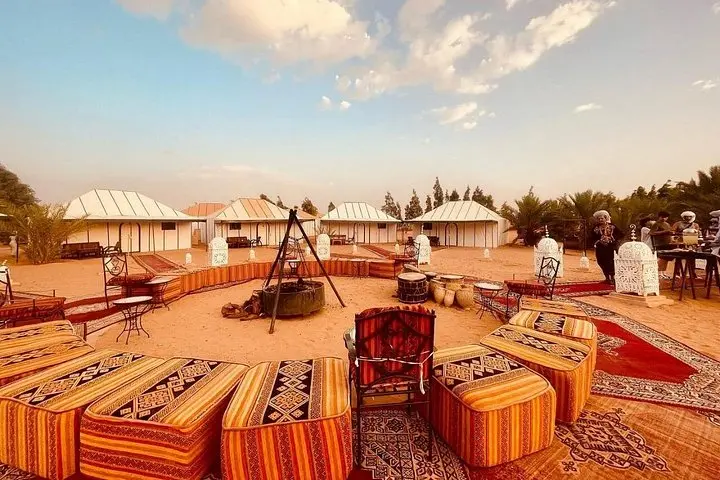
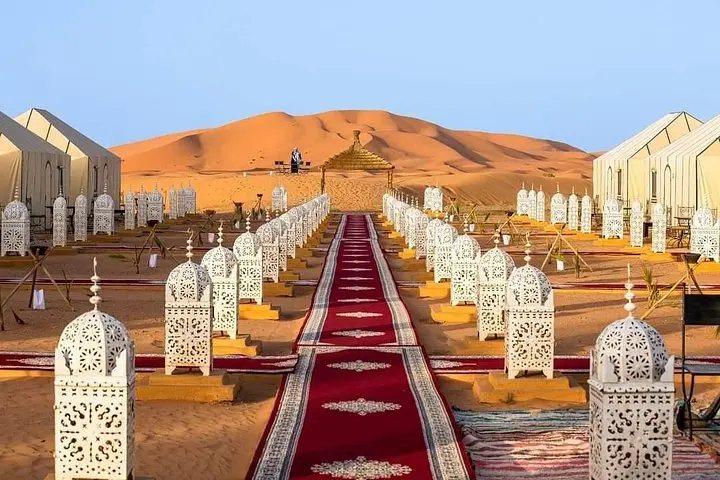
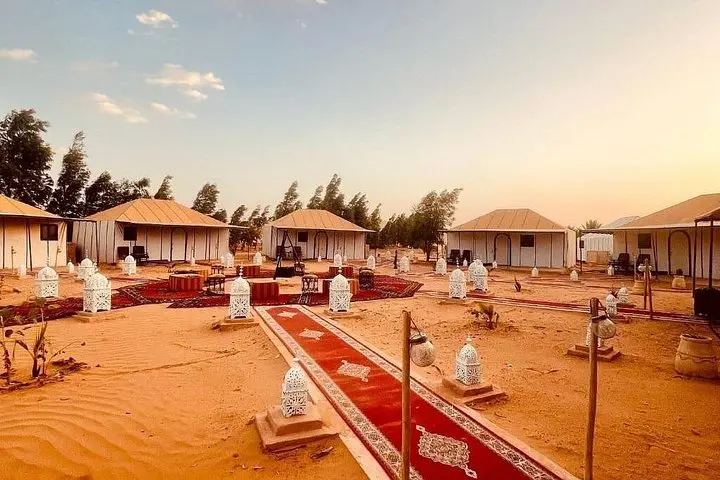
The first camel’s gait slows as the sun melts into the lip of Erg Chebbi; sand rolls like a warm sea beneath padded feet and the dunes seem to breathe around you. Evening light sharpens every ridge while the caravan cuts a slow arc toward a cluster of nomad-style tents. By the time you arrive, the desert has already assumed its evening character — cool, wide, and impossibly quiet.
Verified experiences and guided adventures in the surrounding area.
Operated by Camel Ride Trips · Merzouga, Errachidia Province
The first camel’s gait slows as the sun melts into the lip of Erg Chebbi; sand rolls like a warm sea beneath padded feet and the dunes seem to breathe around you. Evening light sharpens every ridge while the caravan cuts a slow arc toward a cluster of nomad-style tents. By the time you arrive, the desert has already assumed its evening character — cool, wide, and impossibly quiet.
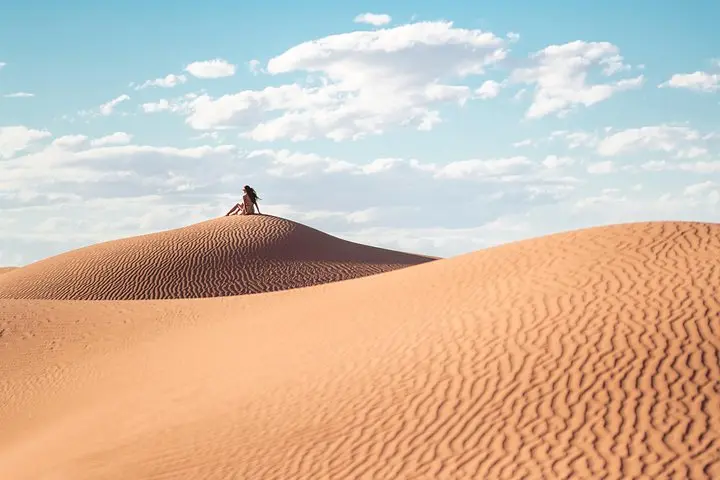
Erg Chebbi is one of Morocco’s most dramatic dune seas, built over millennia as the Atlas Mountains cast sediments downwind; some dunes reach well over 150 meters. The region has long been traversed by Amazigh (Berber) caravans and remains culturally rich — expect Gnawa rhythms and mint tea that mark desert hospitality. Local guides blend survival know-how with stories of salt routes and fossil-rich plains around nearby Erfoud.
Practical guidance: rides are typically around an hour each way, with moderate walking to climb viewing ridges and try sandboarding on gentler faces. Nights get cold — temperatures can swing 20–30°C between day and night — so bring layers. Hydrate before you enter the dunes and protect electronics from fine sand; many camps provide private shower facilities and a simple dinner around the fire. Sunrise is the reward for an early wake-up: cooler air, sharper shadows, and a horizon that seems to push the light forward.
This overnight balances active minutes (camel trek, dune climbs, sandboarding) with relaxed stretches beside a campfire and exceptional night skies — a compact, low-technical adventure best prepared for with sun protection, warm layers, and a willingness to move at the desert’s slow, deliberate pace.
Expect roughly a one-hour camel ride each way from Merzouga to the bivouac; pacing varies with sand conditions and group speed.
Most nomad-style camps used for overnight tours offer mattress bedding and a private shower and toilet area, though facilities are basic compared with hotels.
No — camps use gentle dune faces for beginner-friendly runs; a short practice climb and one or two runs are usually enough to get the hang of it.
Tipping is customary; plan a modest amount for the camel handler and a separate small gratuity for camp staff (adjust to service and group size).
Camel Ride Trips operates guided outdoor trips and adventures with an emphasis on safety, stewardship, and memorable experiences.
The first camel’s gait slows as the sun melts into the lip of Erg Chebbi; sand rolls like a warm sea beneath padded feet and the dunes seem to breathe around you. Evening light sharpens every ridge while the caravan cuts a slow arc toward a cluster of nomad-style tents. By the time you arrive, the desert has already assumed its evening character — cool, wide, and impossibly quiet.
The first camel’s gait slows as the sun melts into the lip of Erg Chebbi; sand rolls like a warm sea beneath padded feet and the dunes seem to breathe around you. Evening light sharpens every ridge while the caravan cuts a slow arc toward a cluster of nomad-style tents. By the time you arrive, the desert has already assumed its evening character — cool, wide, and impossibly quiet.
Erg Chebbi is one of Morocco’s most dramatic dune seas, built over millennia as the Atlas Mountains cast sediments downwind; some dunes reach well over 150 meters. The region has long been traversed by Amazigh (Berber) caravans and remains culturally rich — expect Gnawa rhythms and mint tea that mark desert hospitality. Local guides blend survival know-how with stories of salt routes and fossil-rich plains around nearby Erfoud.
Practical guidance: rides are typically around an hour each way, with moderate walking to climb viewing ridges and try sandboarding on gentler faces. Nights get cold — temperatures can swing 20–30°C between day and night — so bring layers. Hydrate before you enter the dunes and protect electronics from fine sand; many camps provide private shower facilities and a simple dinner around the fire. Sunrise is the reward for an early wake-up: cooler air, sharper shadows, and a horizon that seems to push the light forward.
This overnight balances active minutes (camel trek, dune climbs, sandboarding) with relaxed stretches beside a campfire and exceptional night skies — a compact, low-technical adventure best prepared for with sun protection, warm layers, and a willingness to move at the desert’s slow, deliberate pace.