THE ADVENTURE COLLECTIVE® · Independent discovery and booking for outdoor travel

Glide quiet channels in a traditional mokoro, bushwalk a private island and spend a night under Okavango stars. This overnight trip pairs community-led poling with fully serviced island camping for intimate wildlife encounters.
Glide quiet channels in a traditional mokoro, bushwalk a private island and spend a night under Okavango stars. This overnight trip pairs community-led poling with fully serviced island camping for intimate wildlife encounters.
Dawn pulls at the horizon above the Okavango like a slow hand, and by 0600 the mokoro floats begin to slip through papyrus-slashed channels. The silence is thick—only the poler’s paddle tapping and the soft ripple of water as the canoe parts it. Travelers move low and deliberate, watching waterbirds flare and giant grass reeds bend as if pointing the way.
Verified experiences and guided adventures in the surrounding area.
Operated by Open Sands Safari (Okavango Delta Safari experiences) · Maun, Ngamiland
Dawn pulls at the horizon above the Okavango like a slow hand, and by 0600 the mokoro floats begin to slip through papyrus-slashed channels. The silence is thick—only the poler’s paddle tapping and the soft ripple of water as the canoe parts it. Travelers move low and deliberate, watching waterbirds flare and giant grass reeds bend as if pointing the way.
This is the inland delta that forms where the Okavango River fans across northern Botswana, a seasonal floodplain shaped by ancient geology and slow-moving sediment. Indigenous polers carry knowledge passed through generations: where hippos travel, which islands hold sleeping elephants, and which reed beds hide secret lagoons. The mokoro itself—traditionally carved from ebony but now commonly fibreglass—is a cultural tool that makes the delta legible at water level.
Expect a day of gentle cruising, a picnic and a short bushwalk on a small island, then an evening of fully serviced island camping under a wide, unfiltered sky. Night sounds—hyena chuckles, distant elephant bellows—give the landscape personality and may dictate early bedding.
Practical notes: pack a small dry bag, insect repellent and a headlamp; wear sturdy shoes for the island walk and bring layered clothing for cool mornings. Photography is best at first light and late afternoon; be mindful of wildlife distance and your poler’s guidance. The experience supports community guides and low-impact camping; follow leave-no-trace practices and avoid single-use plastics. For travelers seeking slow, intimate wildlife viewing and the particular rhythm of poling a mokoro, this overnight is a compact, immersive introduction to the Okavango’s living floodplain.
The ride is low-impact; guests sit in the mokoro while the poler stands and poles. Basic balance is helpful for boarding and disembarking.
The trip offers fully serviced camping—expect basic bush toilets and wash stations; showers may be limited or bucket-style depending on the campsite.
Encounters are common in the Okavango, especially from islands and channels, but sightings cannot be guaranteed—guides choose safe viewing distances.
Yes, the itinerary notes suitability for all fitness levels, but guests should be able to climb in and out of a low canoe and walk short distances on uneven ground.
Open Sands Safari (Okavango Delta Safari experiences) operates guided outdoor trips and adventures with an emphasis on safety, stewardship, and memorable experiences.
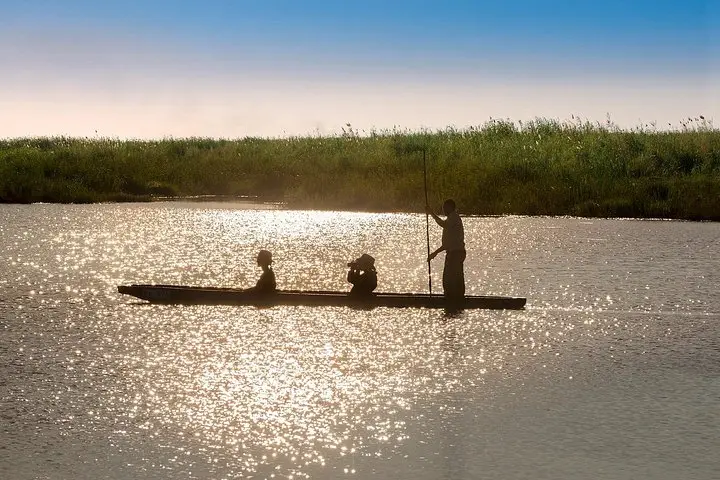
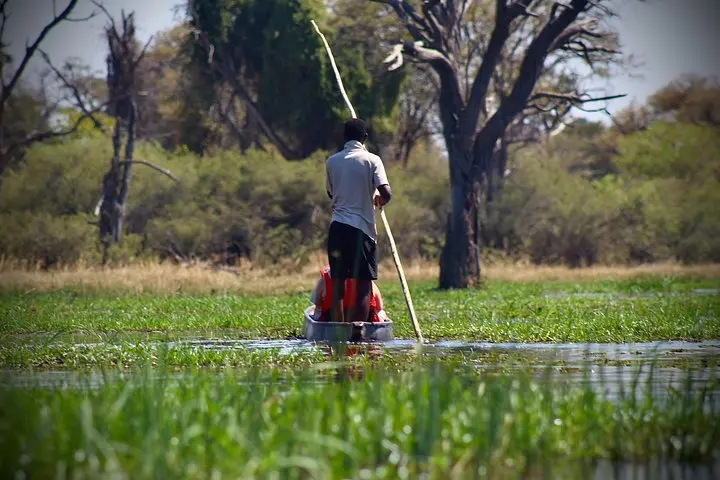
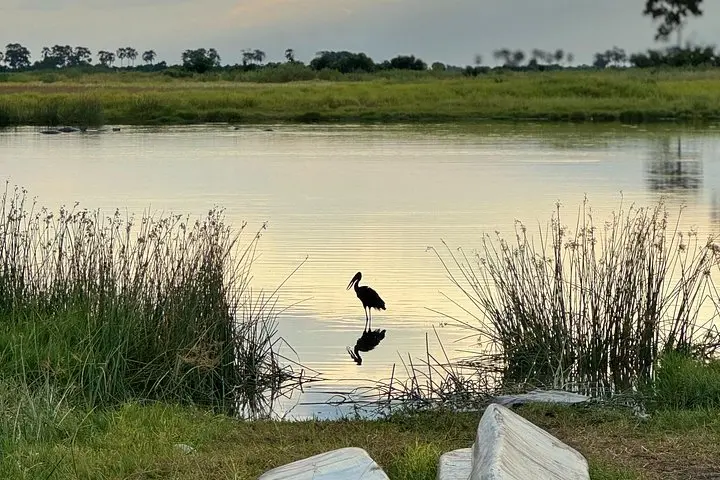
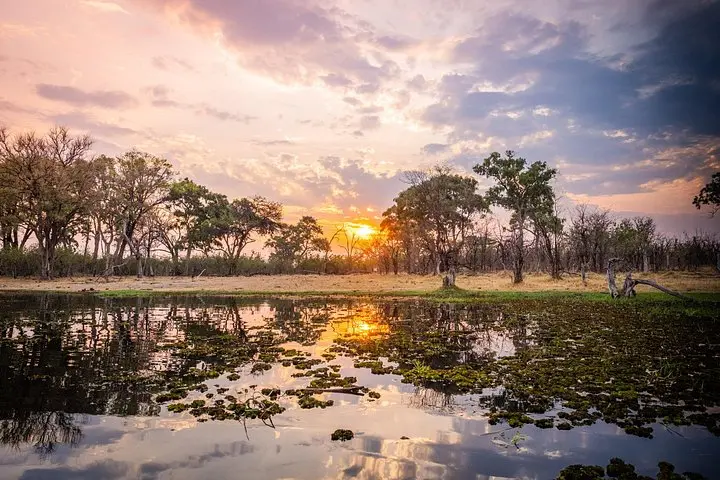
Dawn pulls at the horizon above the Okavango like a slow hand, and by 0600 the mokoro floats begin to slip through papyrus-slashed channels. The silence is thick—only the poler’s paddle tapping and the soft ripple of water as the canoe parts it. Travelers move low and deliberate, watching waterbirds flare and giant grass reeds bend as if pointing the way.
Dawn pulls at the horizon above the Okavango like a slow hand, and by 0600 the mokoro floats begin to slip through papyrus-slashed channels. The silence is thick—only the poler’s paddle tapping and the soft ripple of water as the canoe parts it. Travelers move low and deliberate, watching waterbirds flare and giant grass reeds bend as if pointing the way.
This is the inland delta that forms where the Okavango River fans across northern Botswana, a seasonal floodplain shaped by ancient geology and slow-moving sediment. Indigenous polers carry knowledge passed through generations: where hippos travel, which islands hold sleeping elephants, and which reed beds hide secret lagoons. The mokoro itself—traditionally carved from ebony but now commonly fibreglass—is a cultural tool that makes the delta legible at water level.
Expect a day of gentle cruising, a picnic and a short bushwalk on a small island, then an evening of fully serviced island camping under a wide, unfiltered sky. Night sounds—hyena chuckles, distant elephant bellows—give the landscape personality and may dictate early bedding.
Practical notes: pack a small dry bag, insect repellent and a headlamp; wear sturdy shoes for the island walk and bring layered clothing for cool mornings. Photography is best at first light and late afternoon; be mindful of wildlife distance and your poler’s guidance. The experience supports community guides and low-impact camping; follow leave-no-trace practices and avoid single-use plastics. For travelers seeking slow, intimate wildlife viewing and the particular rhythm of poling a mokoro, this overnight is a compact, immersive introduction to the Okavango’s living floodplain.