THE ADVENTURE COLLECTIVE® · Independent discovery and booking for outdoor travel

Spend an overnight bivouac at the edge of the Sahara: camel transfer from M'Hamid, a Saharan dinner, live desert music and a morning tree-planting with local ecotourism partners. Expect sunset dunes, campfire jams, and a hands-on conservation activity.
Spend an overnight bivouac at the edge of the Sahara: camel transfer from M'Hamid, a Saharan dinner, live desert music and a morning tree-planting with local ecotourism partners. Expect sunset dunes, campfire jams, and a hands-on conservation activity.
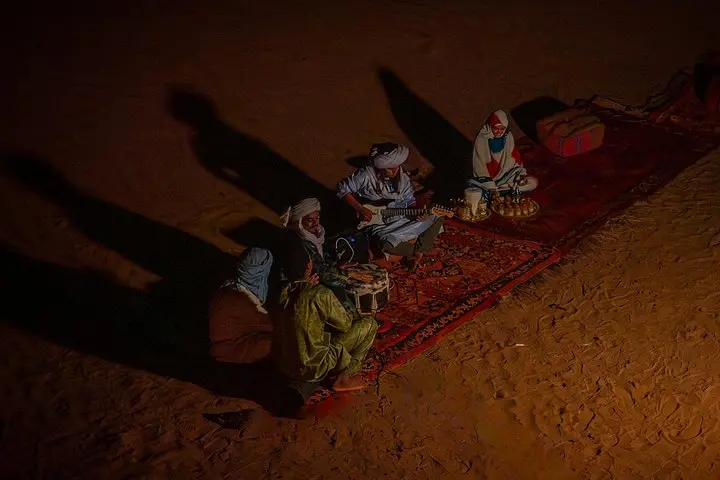
You arrive in M'Hamid in the late afternoon and the palm grove gives way to the first grainy slopes of the dunes. Tea is poured under a sun that leans toward the western horizon; the last warm light makes the sand a living surface, and the sound of a tambour or guembri threads into the air. A camel walk leads out of the ksour and across the edge of the desert to a permanent bivouac where tents and low fires mark a temporary village.
Verified experiences and guided adventures in the surrounding area.
Operated by Halim Sbai guide des espaces naturels désert et Oasis · M'Hamid, Drâa-Tafilalet
You arrive in M'Hamid in the late afternoon and the palm grove gives way to the first grainy slopes of the dunes. Tea is poured under a sun that leans toward the western horizon; the last warm light makes the sand a living surface, and the sound of a tambour or guembri threads into the air. A camel walk leads out of the ksour and across the edge of the desert to a permanent bivouac where tents and low fires mark a temporary village.
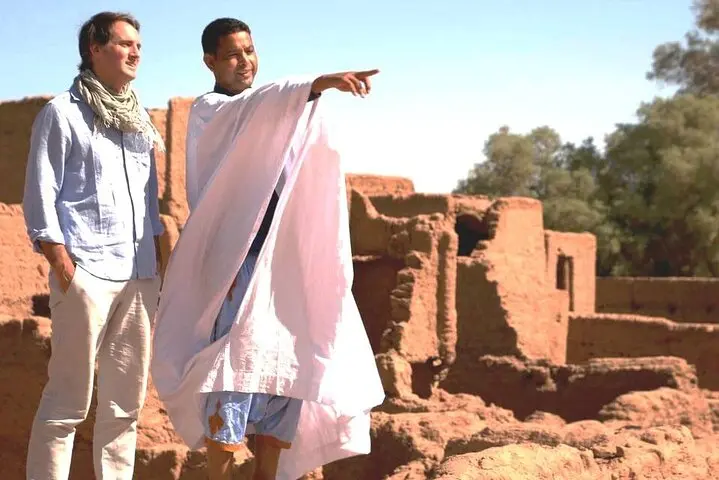
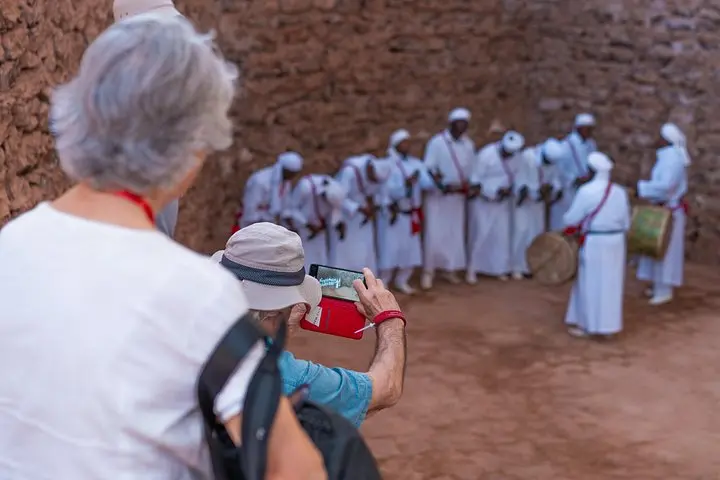
The route follows historic caravan tracks that once connected southern Morocco to Timbuktu; nearby kasbahs and ksour are reminders of old trade routes and seasonal movements of people and goods. Geologically you’re at the margin of the Drâa wadi and the Saharan dunes—sandy ridges, tamarisk, and acacia steppe. Culturally, the region blends Berber and Arab influences with a living musical tradition: local ensembles keep blues-of-the-desert rhythms alive during communal dinners and improvised jam sessions.
Practically, expect a 16–24 hour experience: a late-afternoon pickup or independent arrival, camel transfer to camp, a sunset over dunes, dinner by fire, music, and a morning tree-planting with local ecotourism partners. Nights cool quickly; winds can pick up and sand is omnipresent. Hydrate before the camel ride, wear layered clothing and closed-toe shoes, and bring a headlamp for walkways and tent areas.
The experience balances cultural immersion with low-impact ecotourism—planting a palm, olive or pomegranate is a tangible contribution to local reforestation efforts and a meaningful close to an intimate desert night.
The camel transfer from the ksour to the bivouac typically takes 45–90 minutes depending on the route and pace chosen.
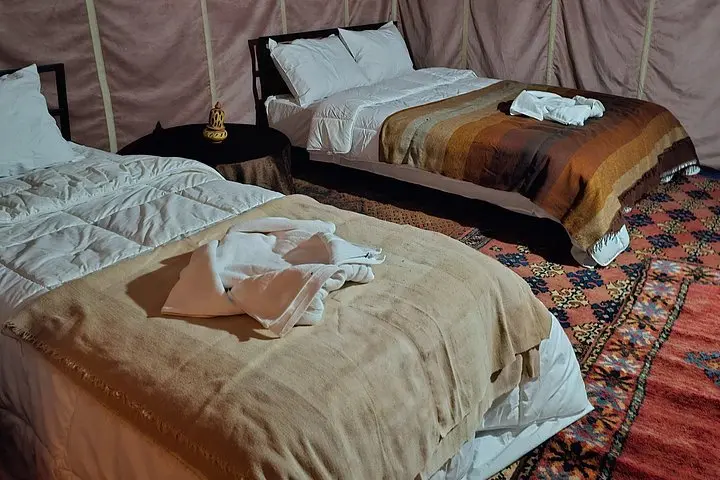
The permanent bivouac includes tent installation and basic bedding; confirm any special sleeping-bag needs with the operator before travel.
Children can participate but the camel ride and sandy terrain require caution; while sites are wheelchair-accessible in parts, the camel transfer and dune areas are not suitable for most wheelchairs.
Yes—staff guide visitors through the planting process; it’s designed to be accessible and educational for all skill levels.
Halim Sbai guide des espaces naturels désert et Oasis operates guided outdoor trips and adventures with an emphasis on safety, stewardship, and memorable experiences.
You arrive in M'Hamid in the late afternoon and the palm grove gives way to the first grainy slopes of the dunes. Tea is poured under a sun that leans toward the western horizon; the last warm light makes the sand a living surface, and the sound of a tambour or guembri threads into the air. A camel walk leads out of the ksour and across the edge of the desert to a permanent bivouac where tents and low fires mark a temporary village.
You arrive in M'Hamid in the late afternoon and the palm grove gives way to the first grainy slopes of the dunes. Tea is poured under a sun that leans toward the western horizon; the last warm light makes the sand a living surface, and the sound of a tambour or guembri threads into the air. A camel walk leads out of the ksour and across the edge of the desert to a permanent bivouac where tents and low fires mark a temporary village.
The route follows historic caravan tracks that once connected southern Morocco to Timbuktu; nearby kasbahs and ksour are reminders of old trade routes and seasonal movements of people and goods. Geologically you’re at the margin of the Drâa wadi and the Saharan dunes—sandy ridges, tamarisk, and acacia steppe. Culturally, the region blends Berber and Arab influences with a living musical tradition: local ensembles keep blues-of-the-desert rhythms alive during communal dinners and improvised jam sessions.
Practically, expect a 16–24 hour experience: a late-afternoon pickup or independent arrival, camel transfer to camp, a sunset over dunes, dinner by fire, music, and a morning tree-planting with local ecotourism partners. Nights cool quickly; winds can pick up and sand is omnipresent. Hydrate before the camel ride, wear layered clothing and closed-toe shoes, and bring a headlamp for walkways and tent areas.
The experience balances cultural immersion with low-impact ecotourism—planting a palm, olive or pomegranate is a tangible contribution to local reforestation efforts and a meaningful close to an intimate desert night.