THE ADVENTURE COLLECTIVE® · Independent discovery and booking for outdoor travel

Trade the city skyline for a night on Vancouver’s horizon line. This guided two-day traverse camps between The Lions and follows the Howe Sound Crest Trail over granite spines and broad-view ridges—rugged, scenic, and fully supported.
Trade the city skyline for a night on Vancouver’s horizon line. This guided two-day traverse camps between The Lions and follows the Howe Sound Crest Trail over granite spines and broad-view ridges—rugged, scenic, and fully supported.
Moss-dark forest swallows the noise of the city as you leave Cypress Mountain’s lodge behind, boards creaking under pack straps while creeks chatter over granite. The trail rises in cool switchbacks past old hemlock and cedar, then breaks free at St. Mark’s Summit where Howe Sound spreads below—emerald islands afloat on steel-blue water, ferries cutting pale wakes, the wind urging you higher along the crest. By afternoon the ridge turns combed and raw. Granite ribs lift into the sky and the trail threads them, daring you to trust your feet. The Two Lions—called Ch'ich'iyúy Elxwíkn by the Sḵwx̱wú7mesh (Squamish) People—stand close enough to feel their stone hold the day’s warmth. Camp goes up in the saddle between them, stoves whispering while city lights flicker far away. Night is alpine-quiet. Stars shoulder into view. The ridge keeps watch.
Verified experiences and guided adventures in the surrounding area.
Operated by Vincent · West Vancouver, British Columbia
Moss-dark forest swallows the noise of the city as you leave Cypress Mountain’s lodge behind, boards creaking under pack straps while creeks chatter over granite. The trail rises in cool switchbacks past old hemlock and cedar, then breaks free at St. Mark’s Summit where Howe Sound spreads below—emerald islands afloat on steel-blue water, ferries cutting pale wakes, the wind urging you higher along the crest. By afternoon the ridge turns combed and raw. Granite ribs lift into the sky and the trail threads them, daring you to trust your feet. The Two Lions—called Ch'ich'iyúy Elxwíkn by the Sḵwx̱wú7mesh (Squamish) People—stand close enough to feel their stone hold the day’s warmth. Camp goes up in the saddle between them, stoves whispering while city lights flicker far away. Night is alpine-quiet. Stars shoulder into view. The ridge keeps watch.
Morning comes like a fuse: the sun tips over the Coast Mountains and pours down Howe Sound, gilding the islands and tracing every fjord-cut edge. Guides pace the group south along the Howe Sound Crest Trail, one of British Columbia’s classic ridgeline traverses. Glaciation carved these slabs and basins; today you move across their clean geometry—over Unnecessary Mountain, beneath Harvey’s flanks, into airy steps where the wind pushes and pulls. It’s rugged but deliberate: a curated overnight with safety briefings, route-finding handled, and stories that anchor the terrain to Indigenous names, logging-era lore, and the modern push for protected alpine.
Expect 24–30 km over two days with roughly 1,600–2,000 m of cumulative elevation gain, steep roots and rock, and short sections of hands-on scrambling. Water flows in early season from creeks and seeps; late-summer sources thin out, so your guide times refills and treats everything. Snow can linger into July; summer brings wildflowers and broad horizons; fall swaps heat for crisp air and shorter daylight. Fires are prohibited; tents tuck into durable sites, and Leave No Trace isn’t a suggestion—it’s how this place stays wild.
Logistics are smooth: private transport from Vancouver, meals steaming at camp, group gear handled so your pack stays reasonable. You carry your personal layers, sleeping kit if not provided, and a sense of steady momentum. The trail works on you: legs build rhythm, ridges link like chapters, and the sound itself keeps nudging your gaze outward. By the descent toward Porteau Cove, sea air pushes upslope and the forest takes you back, softer with every step. You’ve crossed a skyline Vancouver stares at daily. Now you know how it feels underfoot.
Plan for 24–30 km over two days with roughly 1,600–2,000 m of cumulative gain, depending on conditions and camp placement.
Group gear, tents, and meals are provided; bring personal clothing, hiking boots, a headlamp, and any preferred snacks. A detailed packing list is shared after booking.
Water is available at seasonal creeks; your guide identifies refill points and treats water. In late summer, carries between sources may be longer.
No technical climbing is required, but you should be comfortable with short, hands-on sections, exposure, and uneven terrain.
Black bears live here. Guides follow bear-safe travel practices and carry deterrents; all food is secured and camps are kept clean.
Trips run in variable mountain weather; itineraries may be adjusted for safety. If conditions are unsafe, the operator may reschedule or refund per policy.
Vincent operates guided outdoor trips and adventures with an emphasis on safety, stewardship, and memorable experiences.
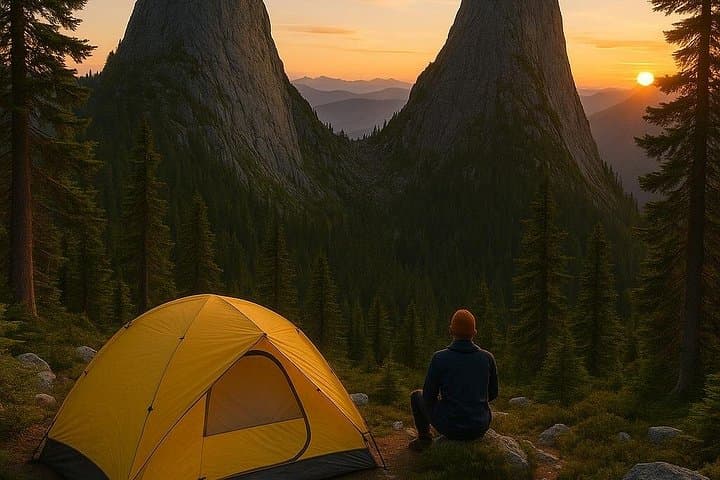
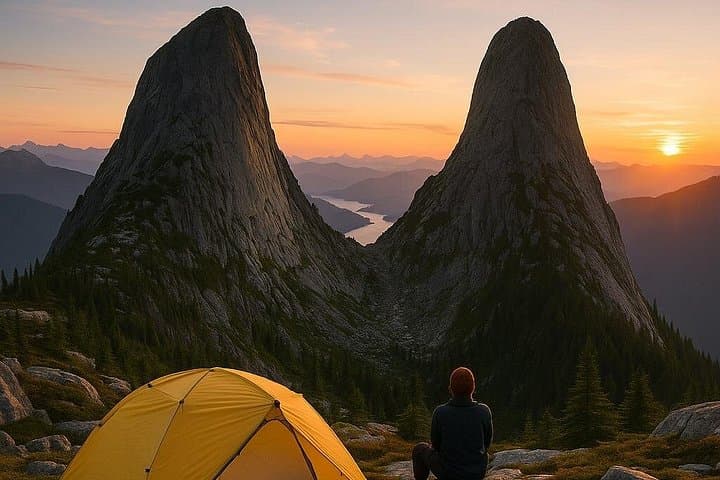
Moss-dark forest swallows the noise of the city as you leave Cypress Mountain’s lodge behind, boards creaking under pack straps while creeks chatter over granite. The trail rises in cool switchbacks past old hemlock and cedar, then breaks free at St. Mark’s Summit where Howe Sound spreads below—emerald islands afloat on steel-blue water, ferries cutting pale wakes, the wind urging you higher along the crest. By afternoon the ridge turns combed and raw. Granite ribs lift into the sky and the trail threads them, daring you to trust your feet. The Two Lions—called Ch'ich'iyúy Elxwíkn by the Sḵwx̱wú7mesh (Squamish) People—stand close enough to feel their stone hold the day’s warmth. Camp goes up in the saddle between them, stoves whispering while city lights flicker far away. Night is alpine-quiet. Stars shoulder into view. The ridge keeps watch.
Moss-dark forest swallows the noise of the city as you leave Cypress Mountain’s lodge behind, boards creaking under pack straps while creeks chatter over granite. The trail rises in cool switchbacks past old hemlock and cedar, then breaks free at St. Mark’s Summit where Howe Sound spreads below—emerald islands afloat on steel-blue water, ferries cutting pale wakes, the wind urging you higher along the crest. By afternoon the ridge turns combed and raw. Granite ribs lift into the sky and the trail threads them, daring you to trust your feet. The Two Lions—called Ch'ich'iyúy Elxwíkn by the Sḵwx̱wú7mesh (Squamish) People—stand close enough to feel their stone hold the day’s warmth. Camp goes up in the saddle between them, stoves whispering while city lights flicker far away. Night is alpine-quiet. Stars shoulder into view. The ridge keeps watch.
Morning comes like a fuse: the sun tips over the Coast Mountains and pours down Howe Sound, gilding the islands and tracing every fjord-cut edge. Guides pace the group south along the Howe Sound Crest Trail, one of British Columbia’s classic ridgeline traverses. Glaciation carved these slabs and basins; today you move across their clean geometry—over Unnecessary Mountain, beneath Harvey’s flanks, into airy steps where the wind pushes and pulls. It’s rugged but deliberate: a curated overnight with safety briefings, route-finding handled, and stories that anchor the terrain to Indigenous names, logging-era lore, and the modern push for protected alpine.
Expect 24–30 km over two days with roughly 1,600–2,000 m of cumulative elevation gain, steep roots and rock, and short sections of hands-on scrambling. Water flows in early season from creeks and seeps; late-summer sources thin out, so your guide times refills and treats everything. Snow can linger into July; summer brings wildflowers and broad horizons; fall swaps heat for crisp air and shorter daylight. Fires are prohibited; tents tuck into durable sites, and Leave No Trace isn’t a suggestion—it’s how this place stays wild.
Logistics are smooth: private transport from Vancouver, meals steaming at camp, group gear handled so your pack stays reasonable. You carry your personal layers, sleeping kit if not provided, and a sense of steady momentum. The trail works on you: legs build rhythm, ridges link like chapters, and the sound itself keeps nudging your gaze outward. By the descent toward Porteau Cove, sea air pushes upslope and the forest takes you back, softer with every step. You’ve crossed a skyline Vancouver stares at daily. Now you know how it feels underfoot.