THE ADVENTURE COLLECTIVE® · Independent discovery and booking for outdoor travel

Two days of mountain trails, rice terraces and hill-tribe villages reached by overnight sleeper bus from Hanoi. This combo tour pairs guided trekking through Muong Hoa Valley with a comfortable hotel stay in Sapa town.
Two days of mountain trails, rice terraces and hill-tribe villages reached by overnight sleeper bus from Hanoi. This combo tour pairs guided trekking through Muong Hoa Valley with a comfortable hotel stay in Sapa town.
The bus eases out of Hanoi at dawn and the lowland haze peels away as the road climbs toward Sapa’s cool air. By afternoon you step off into a small mountain town sitting at roughly 1,600 m, where stone streets and the distant silhouette of Fansipan hold court. On the first afternoon a short, mostly downhill walk drops into Cat Cat and the Muong Hoa valley, where water channels and wooden bridges seem to tug at your pace; the second day follows rice-terraced slopes through Y Linh Ho, Lao Chai and Ta Van before a return to town.
Verified experiences and guided adventures in the surrounding area.
Operated by Charm Tourist · Sapa, Lao Cai
The bus eases out of Hanoi at dawn and the lowland haze peels away as the road climbs toward Sapa’s cool air. By afternoon you step off into a small mountain town sitting at roughly 1,600 m, where stone streets and the distant silhouette of Fansipan hold court. On the first afternoon a short, mostly downhill walk drops into Cat Cat and the Muong Hoa valley, where water channels and wooden bridges seem to tug at your pace; the second day follows rice-terraced slopes through Y Linh Ho, Lao Chai and Ta Van before a return to town.
This region bears layers of history — traders and minority groups like the Black H’mong and Tay have farmed these slopes for generations. Geologically, the Hoang Lien Range is the weather-worn edge of northern Vietnam, its steep valleys carved by seasonal streams and terraced into agricultural art. Village culture is active and public: woven textiles, stilt houses, and market stalls are as much a part of the route as the trails.
Expect mixed terrain: compact dirt tracks, stone staircases, narrow terrace ledges and occasional muddy stretches after rain. Typical trekking distances on day two range from 6–10 km with cumulative elevation changes of a few hundred meters (short, steady ups and downs rather than technical climbing). Bring layered clothing for sharp temperature swings, sturdy footwear for slippery stone, and a day pack with water and rain protection. Guided transfers and an overnight hotel keep logistics simple — the trip is designed to maximize time on the trail while minimizing hassle back in Hanoi.
The overnight sleeper bus covers roughly 300–330 km and takes about 5–7 hours depending on traffic and stops; departure is typically early morning pick-up from Hanoi's Old Quarter.
The walks are non-technical and suitable for most people with basic fitness; expect uneven surfaces, short climbs and descents rather than steep alpine routes.
The tour includes a twin-sharing private room at a 3- or 4-star hotel in Sapa with an en-suite bathroom; upgrades may be available separately.
Yes—small shops and vendors in villages usually accept cash only, so carry Vietnamese đồng for snacks, tips, and small purchases.
Charm Tourist operates guided outdoor trips and adventures with an emphasis on safety, stewardship, and memorable experiences.


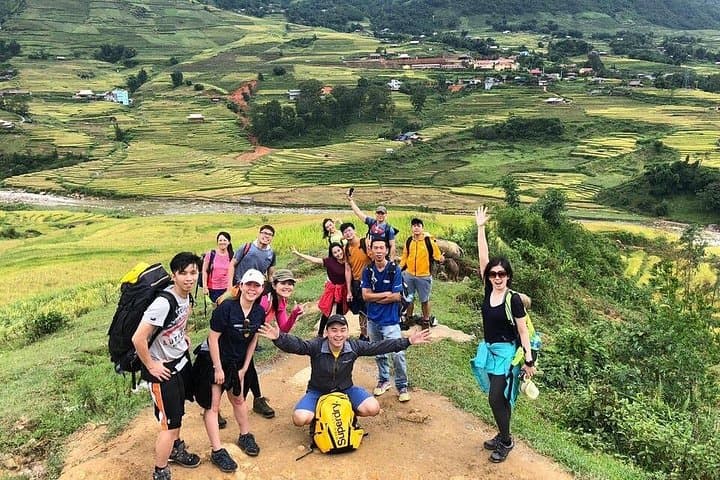

The bus eases out of Hanoi at dawn and the lowland haze peels away as the road climbs toward Sapa’s cool air. By afternoon you step off into a small mountain town sitting at roughly 1,600 m, where stone streets and the distant silhouette of Fansipan hold court. On the first afternoon a short, mostly downhill walk drops into Cat Cat and the Muong Hoa valley, where water channels and wooden bridges seem to tug at your pace; the second day follows rice-terraced slopes through Y Linh Ho, Lao Chai and Ta Van before a return to town.
The bus eases out of Hanoi at dawn and the lowland haze peels away as the road climbs toward Sapa’s cool air. By afternoon you step off into a small mountain town sitting at roughly 1,600 m, where stone streets and the distant silhouette of Fansipan hold court. On the first afternoon a short, mostly downhill walk drops into Cat Cat and the Muong Hoa valley, where water channels and wooden bridges seem to tug at your pace; the second day follows rice-terraced slopes through Y Linh Ho, Lao Chai and Ta Van before a return to town.
This region bears layers of history — traders and minority groups like the Black H’mong and Tay have farmed these slopes for generations. Geologically, the Hoang Lien Range is the weather-worn edge of northern Vietnam, its steep valleys carved by seasonal streams and terraced into agricultural art. Village culture is active and public: woven textiles, stilt houses, and market stalls are as much a part of the route as the trails.
Expect mixed terrain: compact dirt tracks, stone staircases, narrow terrace ledges and occasional muddy stretches after rain. Typical trekking distances on day two range from 6–10 km with cumulative elevation changes of a few hundred meters (short, steady ups and downs rather than technical climbing). Bring layered clothing for sharp temperature swings, sturdy footwear for slippery stone, and a day pack with water and rain protection. Guided transfers and an overnight hotel keep logistics simple — the trip is designed to maximize time on the trail while minimizing hassle back in Hanoi.