THE ADVENTURE COLLECTIVE® · Independent discovery and booking for outdoor travel

Ride an overnight seated train from Cairo to Luxor and spend a day exploring the Valley of the Kings, Hatshepsut’s terraces, the Colossi of Memnon, Karnak and Luxor Temples. This private, guided excursion pairs efficient rail travel with on-site expertise for a concentrated Upper Egypt experience.
Ride an overnight seated train from Cairo to Luxor and spend a day exploring the Valley of the Kings, Hatshepsut’s terraces, the Colossi of Memnon, Karnak and Luxor Temples. This private, guided excursion pairs efficient rail travel with on-site expertise for a concentrated Upper Egypt experience.
You arrive at Cairo’s station as dusk settles, the city’s heat folding behind you while the train hums north along the Nile’s corridor. Overnight seating on a first-class carriage becomes your temporary camp; the river—broad and deliberate—seems to dare you toward Upper Egypt’s carved stone and silent courtyards.
Verified experiences and guided adventures in the surrounding area.
Operated by Luxor Private Day Tours · Luxor, Luxor Governorate
You arrive at Cairo’s station as dusk settles, the city’s heat folding behind you while the train hums north along the Nile’s corridor. Overnight seating on a first-class carriage becomes your temporary camp; the river—broad and deliberate—seems to dare you toward Upper Egypt’s carved stone and silent courtyards.
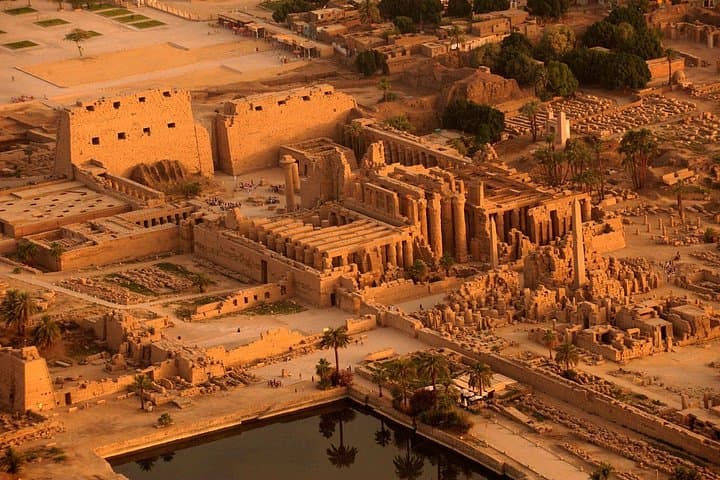
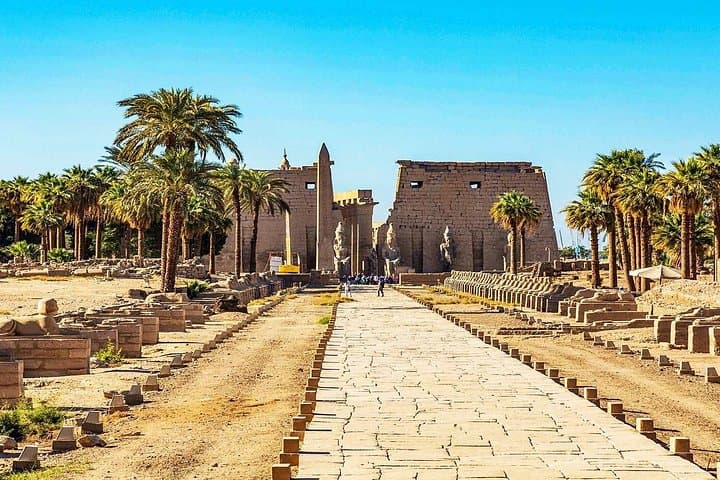
By morning the West Bank opens with a desert palette and the Valley of the Kings: tomb entrances, painted corridors, and the quiet weight of millennia where pharaohs were entombed. Nearby, Queen Hatshepsut’s mortuary temple at Deir el-Bahri rises in terraces against limestone cliffs, an architectural claim from a ruler not content to be overlooked. Across the river, Karnak sprawls—columns, pylons, and the Hypostyle Hall recalling ancient state religion. Luxor Temple, smaller but intimately lit at dusk, anchors the city’s living rituals.
Geologically, Luxor sits in the floodplain of the Nile flanked by Eocene limestone cliffs; the river’s annual pulse long sustained agriculture and the caravan routes that made the city a crossroads of culture. Modern guides weave archaeological context with local customs: bargaining in souqs, timing visits to avoid heat, and the etiquette around temple photography and donations.
Practical side: pack sun protection, a refillable water bottle, and comfortable closed-toe shoes for uneven stone surfaces. Train travel here is simple but long—secure important documents and expect basic onboard facilities. Early starts beat the crowds at tombs; late afternoons reward you with warm light on sandstone.
This itinerary combines low-impact walking with immersive history—ideal for travelers who want the pulse of the Nile and the full sweep of Luxor’s monuments without camping in the desert.
The scheduled journey is roughly 9 hours each way on the first-class seated overnight train—expect overnight seating rather than sleeper cabins.
Yes—this tour lists entrance fees to the Valley of the Kings, Hatshepsut, Karnak and Luxor Temples as included in the package.
Your operator typically manages transfers and will store or transport luggage between the train and sites; confirm arrangements at booking.
The itinerary is classified as physically easy and suitable for most ages, but tomb steps and uneven terrain can be challenging—consider mobility limitations and bring assistance if needed.
Luxor Private Day Tours operates guided outdoor trips and adventures with an emphasis on safety, stewardship, and memorable experiences.


You arrive at Cairo’s station as dusk settles, the city’s heat folding behind you while the train hums north along the Nile’s corridor. Overnight seating on a first-class carriage becomes your temporary camp; the river—broad and deliberate—seems to dare you toward Upper Egypt’s carved stone and silent courtyards.
You arrive at Cairo’s station as dusk settles, the city’s heat folding behind you while the train hums north along the Nile’s corridor. Overnight seating on a first-class carriage becomes your temporary camp; the river—broad and deliberate—seems to dare you toward Upper Egypt’s carved stone and silent courtyards.
By morning the West Bank opens with a desert palette and the Valley of the Kings: tomb entrances, painted corridors, and the quiet weight of millennia where pharaohs were entombed. Nearby, Queen Hatshepsut’s mortuary temple at Deir el-Bahri rises in terraces against limestone cliffs, an architectural claim from a ruler not content to be overlooked. Across the river, Karnak sprawls—columns, pylons, and the Hypostyle Hall recalling ancient state religion. Luxor Temple, smaller but intimately lit at dusk, anchors the city’s living rituals.
Geologically, Luxor sits in the floodplain of the Nile flanked by Eocene limestone cliffs; the river’s annual pulse long sustained agriculture and the caravan routes that made the city a crossroads of culture. Modern guides weave archaeological context with local customs: bargaining in souqs, timing visits to avoid heat, and the etiquette around temple photography and donations.
Practical side: pack sun protection, a refillable water bottle, and comfortable closed-toe shoes for uneven stone surfaces. Train travel here is simple but long—secure important documents and expect basic onboard facilities. Early starts beat the crowds at tombs; late afternoons reward you with warm light on sandstone.
This itinerary combines low-impact walking with immersive history—ideal for travelers who want the pulse of the Nile and the full sweep of Luxor’s monuments without camping in the desert.