THE ADVENTURE COLLECTIVE® · Independent discovery and booking for outdoor travel

Experience Uluru and Kata Tjuta across two compact days: an afternoon hike among the domes, an unforgettable sunset, and a sunrise base walk around the world’s largest monolith. This trip pairs geological spectacle with Anangu cultural insight and practical logistics for first-time visitors.
Experience Uluru and Kata Tjuta across two compact days: an afternoon hike among the domes, an unforgettable sunset, and a sunrise base walk around the world’s largest monolith. This trip pairs geological spectacle with Anangu cultural insight and practical logistics for first-time visitors.
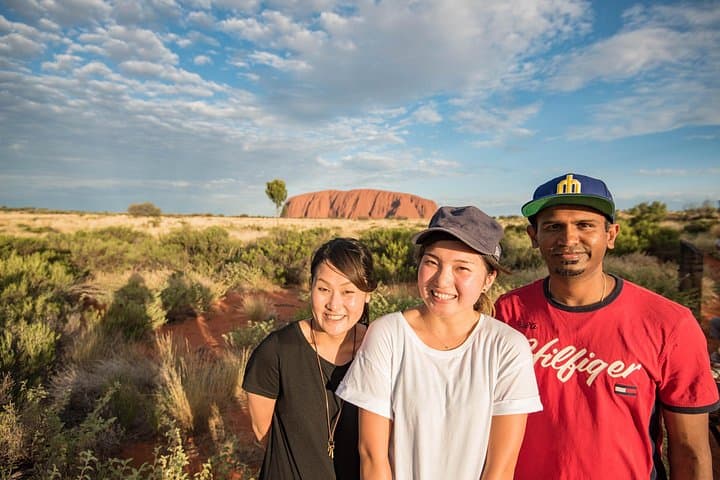
The bus slows to a hush as the western sky ignites—Uluru turning from ochre to molten orange while the desert breathes a cooler breath. You stand on a sandy ridge with a small group, a guide pointing out rock art panels and songlines as the shadowed face of the monolith resolves into ridges and caves. That first evening, Kata Tjuta's domes wait like hulking sentinels across the plain, ready for an afternoon walk that pushes through narrow gullies where wind has carved the sandstone into odd, bulbous forms.
Verified experiences and guided adventures in the surrounding area.
Operated by Adventure Tours Australia · Yulara, Northern Territory
The bus slows to a hush as the western sky ignites—Uluru turning from ochre to molten orange while the desert breathes a cooler breath. You stand on a sandy ridge with a small group, a guide pointing out rock art panels and songlines as the shadowed face of the monolith resolves into ridges and caves. That first evening, Kata Tjuta's domes wait like hulking sentinels across the plain, ready for an afternoon walk that pushes through narrow gullies where wind has carved the sandstone into odd, bulbous forms.
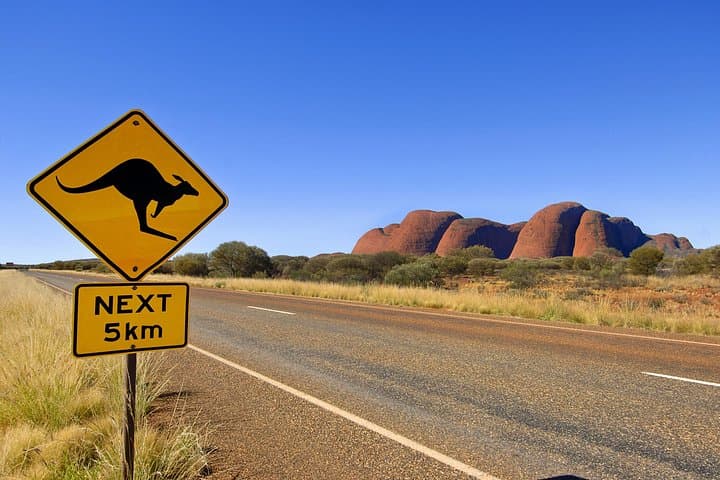
This two-day loop through the heart of Australia’s Red Centre compresses ancient geology and living culture into a tight, memorable package. Uluru—formed from sediment laid down roughly half a billion years ago—circles you at a steady 10.6-kilometre base. Kata Tjuta, 36 domes of conglomerate rock, reads differently: jagged, folded, less monolithic but no less monumental. Both sites are owned and co-managed by the Anangu people, whose creation stories are woven into the land. The Uluru Cultural Centre provides a clear, grounded primer on those traditions and a chance to buy works by local artists that carry generations of knowledge.
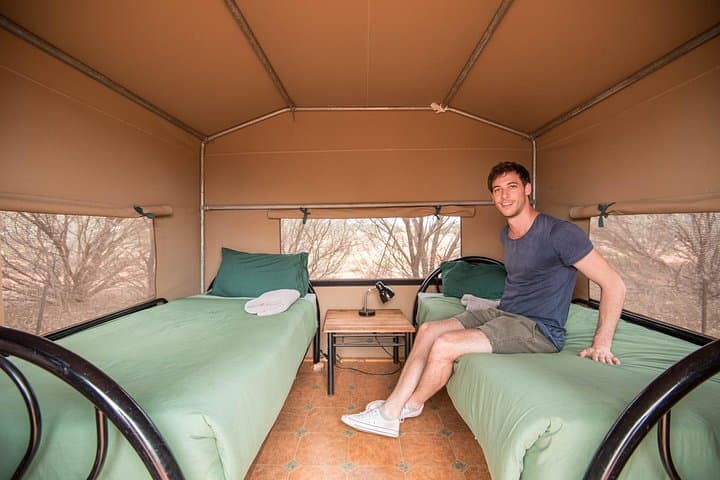
On day one the afternoon hike around Kata Tjuta introduces you to steep gullies and uneven footing; the walk can be tailored by your guide and ranges from shorter gorge stints to longer ridge routes. Afterward, you move to a powered campsite in Yulara, where dinner features native produce and the night sky stages an immense show—southern constellations so bright they feel close enough to touch.
Sunrise at Uluru on day two is the centerpiece. The tour times are precise: pickup is in the early afternoon on day one (arrive at Yulara before 1:40 p.m. if flying), and the walk around the base takes roughly three to four hours, depending on stops for geology and story-telling. You do not climb Uluru; climbing has been closed and the experience here emphasizes respect, interpretation and the base walk that reveals caves, waterholes and ancient paintings.
Practical tips: bring sturdy walking shoes for rocky, sometimes sandy terrain; carry at least 2 litres of water for the daywalks; wear a wide-brim hat and sunscreen—the mid-day sun is relentless. Expect shared powered camping facilities in Yulara and light meals included (dinner day one and breakfast day two; plan on arranging your own lunch on day one). The itinerary suits travelers with moderate fitness who can manage multiple hours of walking across uneven surfaces. Guides move at a considerate pace but be ready for firm ground underfoot and sudden gusts.
This is an expedition of observation more than conquest: rock that commands attention, stories that command listening, and a sky that dares you to look up.
No. Climbing Uluru is permanently closed out of respect for Anangu culture; this tour focuses on guided walks, cultural interpretation and viewpoints.
Dinner on day one and breakfast on day two are included; lunch on day one is not included so plan to eat before pickup or carry provisions.
Expect roughly 1–2 hours of walking at Kata Tjuta and a 3–4 hour guided base walk around Uluru, with stops for interpretation and photography.
Overnight accommodation is a powered campsite in Yulara with shared facilities—comfortable for travelers who don’t require hotel amenities.
Most landscapes and general areas can be photographed, but follow guide direction regarding sacred sites and rock art where photography is restricted.
The operator requires arrivals before 1:40 p.m.; late arrivals cannot be accommodated on the same departure day, so schedule flights accordingly.
Adventure Tours Australia operates guided outdoor trips and adventures with an emphasis on safety, stewardship, and memorable experiences.

The bus slows to a hush as the western sky ignites—Uluru turning from ochre to molten orange while the desert breathes a cooler breath. You stand on a sandy ridge with a small group, a guide pointing out rock art panels and songlines as the shadowed face of the monolith resolves into ridges and caves. That first evening, Kata Tjuta's domes wait like hulking sentinels across the plain, ready for an afternoon walk that pushes through narrow gullies where wind has carved the sandstone into odd, bulbous forms.
The bus slows to a hush as the western sky ignites—Uluru turning from ochre to molten orange while the desert breathes a cooler breath. You stand on a sandy ridge with a small group, a guide pointing out rock art panels and songlines as the shadowed face of the monolith resolves into ridges and caves. That first evening, Kata Tjuta's domes wait like hulking sentinels across the plain, ready for an afternoon walk that pushes through narrow gullies where wind has carved the sandstone into odd, bulbous forms.
This two-day loop through the heart of Australia’s Red Centre compresses ancient geology and living culture into a tight, memorable package. Uluru—formed from sediment laid down roughly half a billion years ago—circles you at a steady 10.6-kilometre base. Kata Tjuta, 36 domes of conglomerate rock, reads differently: jagged, folded, less monolithic but no less monumental. Both sites are owned and co-managed by the Anangu people, whose creation stories are woven into the land. The Uluru Cultural Centre provides a clear, grounded primer on those traditions and a chance to buy works by local artists that carry generations of knowledge.
On day one the afternoon hike around Kata Tjuta introduces you to steep gullies and uneven footing; the walk can be tailored by your guide and ranges from shorter gorge stints to longer ridge routes. Afterward, you move to a powered campsite in Yulara, where dinner features native produce and the night sky stages an immense show—southern constellations so bright they feel close enough to touch.
Sunrise at Uluru on day two is the centerpiece. The tour times are precise: pickup is in the early afternoon on day one (arrive at Yulara before 1:40 p.m. if flying), and the walk around the base takes roughly three to four hours, depending on stops for geology and story-telling. You do not climb Uluru; climbing has been closed and the experience here emphasizes respect, interpretation and the base walk that reveals caves, waterholes and ancient paintings.
Practical tips: bring sturdy walking shoes for rocky, sometimes sandy terrain; carry at least 2 litres of water for the daywalks; wear a wide-brim hat and sunscreen—the mid-day sun is relentless. Expect shared powered camping facilities in Yulara and light meals included (dinner day one and breakfast day two; plan on arranging your own lunch on day one). The itinerary suits travelers with moderate fitness who can manage multiple hours of walking across uneven surfaces. Guides move at a considerate pace but be ready for firm ground underfoot and sudden gusts.
This is an expedition of observation more than conquest: rock that commands attention, stories that command listening, and a sky that dares you to look up.