THE ADVENTURE COLLECTIVE® · Independent discovery and booking for outdoor travel

Spend a private two-day trip from Muscat into the striking orange dunes of Wahiba Sands. Combine desert camping, camel rides, wadis with turquoise pools, and traditional Bedouin hospitality on a compact overnight adventure.
Spend a private two-day trip from Muscat into the striking orange dunes of Wahiba Sands. Combine desert camping, camel rides, wadis with turquoise pools, and traditional Bedouin hospitality on a compact overnight adventure.
Night settles across the dunes like a slow tide — the sand cools, wind-writing across ridges, and stars punch bright holes through a sky that seems close enough to touch. You arrive from Muscat in a 4x4 as the last light gilds the eastern slopes; the camp is simple tents, a bonfire, and the low hum of a desert night.
Verified experiences and guided adventures in the surrounding area.
Operated by Landscape Tours · Muscat, Ash Sharqiyah
Night settles across the dunes like a slow tide — the sand cools, wind-writing across ridges, and stars punch bright holes through a sky that seems close enough to touch. You arrive from Muscat in a 4x4 as the last light gilds the eastern slopes; the camp is simple tents, a bonfire, and the low hum of a desert night.
Wahiba Sands (Ramlat al-Wahiba) is a young sea of wind-shaped dunes formed from marine sediments pushed inland over millennia. Bedouin tribes have traversed these sands for generations; their influence shows in camp layout, hospitality, and the camel rides offered at sunset. Nearby sinkholes, wadis and coastal beaches speak to Oman’s varied geology — from limestone coasts to gravel plains and red dunes.
Expect evenings of traditional barbecue, storytelling, and clear-night astronomy; mornings reward early risers with a copper sunrise spilling down dune faces. Days on this itinerary also include stops at Bimmah Sink Hole, Fins Beach, Wadi Shab and Wadi Bani Khalid — each offering contrasting pools, palms and short hikes through rocky canyons.
Practically: tents are basic but comfortable, with provided sleeping mats and shared camp facilities; bring your own warm layer for night temperatures that can drop sharply. Walking on loose sand is tiring — plan for slower progress and wear supportive shoes. Water is supplied, but carry a refillable bottle and hydrate proactively. Respect local customs in the Bedouin house and follow guides on where vehicles may drive — dune vegetation and crusts are fragile. The trip is ideal for travelers seeking an accessible desert immersion with short hikes and cultural encounters, not technical mountaineering or remote backcountry camping.
Camps typically provide basic shared toilet facilities; hot-water showers may be limited — check with the operator if a shower is essential.
A short camel ride is usually included as an experience; rides are brief (10–30 minutes) and aimed at photo opportunities rather than long treks.
Vegetarian and common dietary needs are usually manageable if requested in advance; note local kitchens may have limited ingredient substitutions.
The drive to Wahiba Sands camp is roughly 2–3 hours from Muscat depending on stops; private pickup and drop-off around Muscat are typically included.
Landscape Tours operates guided outdoor trips and adventures with an emphasis on safety, stewardship, and memorable experiences.
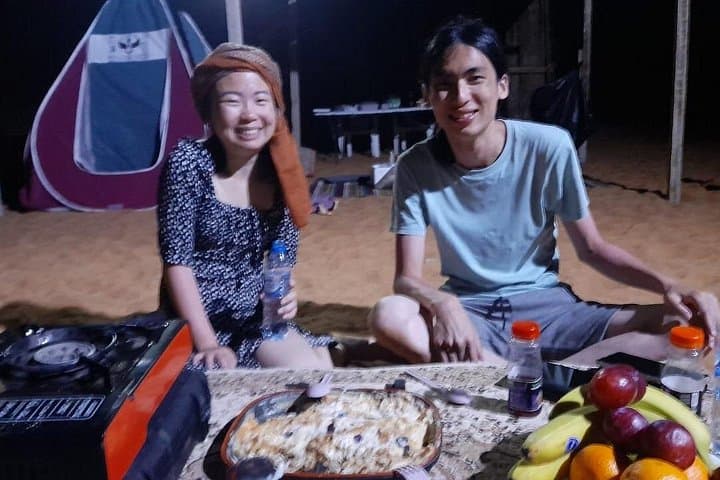
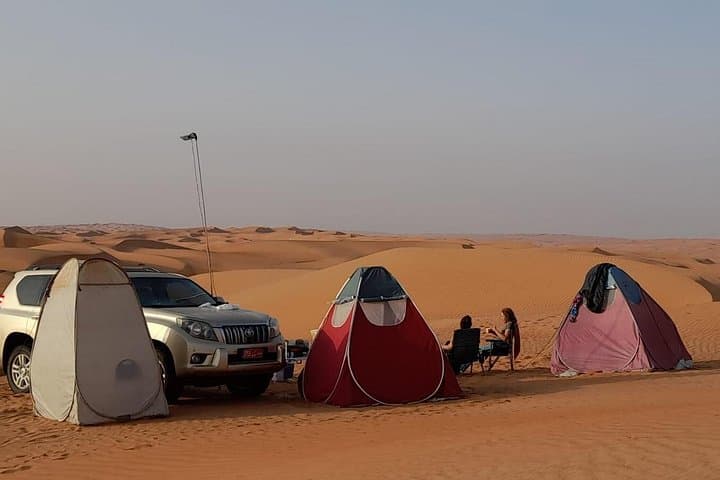
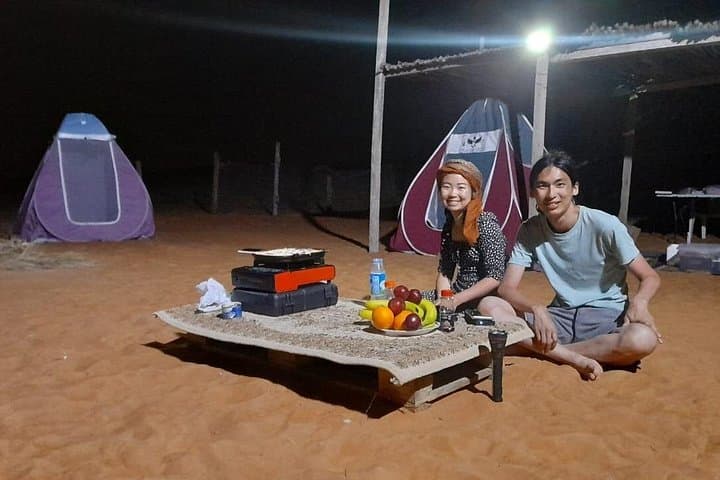
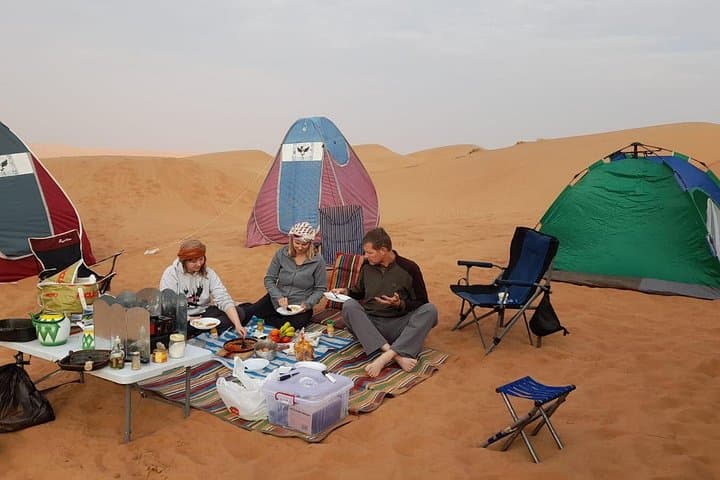
Night settles across the dunes like a slow tide — the sand cools, wind-writing across ridges, and stars punch bright holes through a sky that seems close enough to touch. You arrive from Muscat in a 4x4 as the last light gilds the eastern slopes; the camp is simple tents, a bonfire, and the low hum of a desert night.
Night settles across the dunes like a slow tide — the sand cools, wind-writing across ridges, and stars punch bright holes through a sky that seems close enough to touch. You arrive from Muscat in a 4x4 as the last light gilds the eastern slopes; the camp is simple tents, a bonfire, and the low hum of a desert night.
Wahiba Sands (Ramlat al-Wahiba) is a young sea of wind-shaped dunes formed from marine sediments pushed inland over millennia. Bedouin tribes have traversed these sands for generations; their influence shows in camp layout, hospitality, and the camel rides offered at sunset. Nearby sinkholes, wadis and coastal beaches speak to Oman’s varied geology — from limestone coasts to gravel plains and red dunes.
Expect evenings of traditional barbecue, storytelling, and clear-night astronomy; mornings reward early risers with a copper sunrise spilling down dune faces. Days on this itinerary also include stops at Bimmah Sink Hole, Fins Beach, Wadi Shab and Wadi Bani Khalid — each offering contrasting pools, palms and short hikes through rocky canyons.
Practically: tents are basic but comfortable, with provided sleeping mats and shared camp facilities; bring your own warm layer for night temperatures that can drop sharply. Walking on loose sand is tiring — plan for slower progress and wear supportive shoes. Water is supplied, but carry a refillable bottle and hydrate proactively. Respect local customs in the Bedouin house and follow guides on where vehicles may drive — dune vegetation and crusts are fragile. The trip is ideal for travelers seeking an accessible desert immersion with short hikes and cultural encounters, not technical mountaineering or remote backcountry camping.