THE ADVENTURE COLLECTIVE® · Independent discovery and booking for outdoor travel

Paddle the Zambezi’s famed grade 4–5 rapids, camp on wide sandbars, and swim under sections of Victoria Falls on a 2–3 day overnight rafting journey from Livingstone. Expect big water, basalt gorges, and riverside nights around the campfire.
Paddle the Zambezi’s famed grade 4–5 rapids, camp on wide sandbars, and swim under sections of Victoria Falls on a 2–3 day overnight rafting journey from Livingstone. Expect big water, basalt gorges, and riverside nights around the campfire.
Dawn arrives on the Zambezi with a hush that the river refuses to keep. Low water exposes wide, burnished beaches and the river moves like a muscle—long, powerful, ready to test a pair of oars and a steady crew. You shove off from a rocky lip below Victoria Falls, the canyon walls closing in until the river narrows into the Batoka Gorge and every rapid feels personal. On an overnight rafting trip here, the day’s adrenaline resolves into the simple choreography of camp: tarps stretched, stew over coals, voices low around a fire while the river hisses and calls beyond the sand.
Verified experiences and guided adventures in the surrounding area.
Operated by Bundu Rafting · Livingstone, Southern Province
Dawn arrives on the Zambezi with a hush that the river refuses to keep. Low water exposes wide, burnished beaches and the river moves like a muscle—long, powerful, ready to test a pair of oars and a steady crew. You shove off from a rocky lip below Victoria Falls, the canyon walls closing in until the river narrows into the Batoka Gorge and every rapid feels personal. On an overnight rafting trip here, the day’s adrenaline resolves into the simple choreography of camp: tarps stretched, stew over coals, voices low around a fire while the river hisses and calls beyond the sand.
This stretch of the Zambezi is geological theater. Basalt flows from ancient volcanic activity form the high, columnar walls of the Batoka Gorge; the same forces that helped carve Victoria Falls feed a channel that produces some of the world’s most sustained grade 4 and 5 rapids. The river’s character changes with the seasons—August to December is the low, warm period when the rapids reveal deeper channels and technical lines, and when guides can push harder without losing safety margins.
Livingstone’s history is threaded through the itinerary. European exploration centered on David Livingstone and the colonial mapping of the Falls, but the riverbanks are older still—home to Tonga and Lozi peoples whose fishing and rivercraft traditions still inform local guiding and camp skills. Rafting operators combine that local knowledge with modern safety practices: professional guides, dry bags, and shore camps on broad sandbars far from the nearest road.
Practically speaking, trips run two to three days and pack a lot into each one: morning runs through big rapids, quiet pools for rinsing off, and evenings spent camping on the bank under an enormous southern sky. Expect guided swims under safe sections of the Falls when conditions allow, communal meals cooked on open fires, and basic but secure camping equipment supplied by operators.
Prepare for heat, sun, and exertion. Bring a snug river shoe, quick-dry layers, a high-SPF sunscreen, and a waterproof case for cameras. Hydration is non-negotiable—Zambezi sun strips energy fast—and strong swimmers are better positioned to relax if a raft flips. Listen to briefings, respect guide commands, and treat wildlife—hippo and crocodile among them—from a safe distance.
On the river you’ll trade polished comforts for raw rhythm: the violent slap of foam, the patient glint of the horizon, and a night where the river keeps talking while you sleep. This is whitewater with a wilderness spine—intense rapids during the day, and the sort of riverbank nights that make the effort worth every exhausted smile.
Minimum age is 15 years due to the difficulty of the rapids and overnight camping requirements.
Not strictly, but previous whitewater experience and strong swimming skills make the trip safer and more enjoyable.
Trips include professional guides, lifejackets, helmets, safety briefings, and shore teams; operators also carry rescue gear and first aid kits.
Swimming under the Falls is occasionally offered in designated safe spots when conditions allow, but is supervised and subject to guide decision.
Rapids range from grade 3 to 5; expect technical, long runs in the Batoka Gorge that require teamwork and precise paddling.
Camping is on sandy river beaches with basic tents and shared facilities provided by the outfitter; meals are campfire-cooked.
Bundu Rafting operates guided outdoor trips and adventures with an emphasis on safety, stewardship, and memorable experiences.
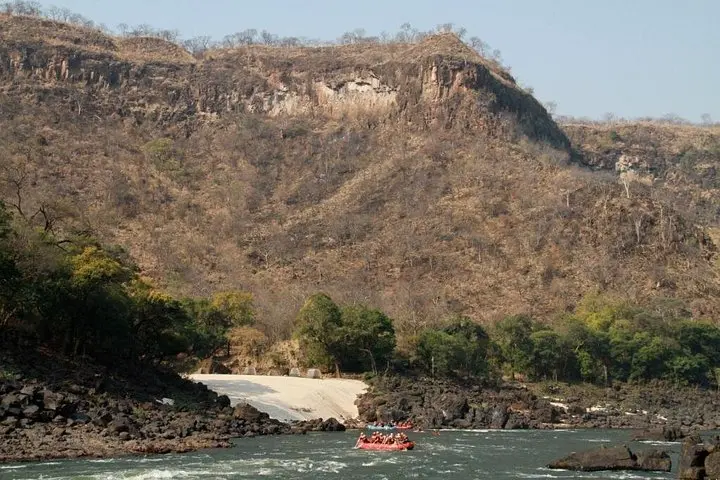
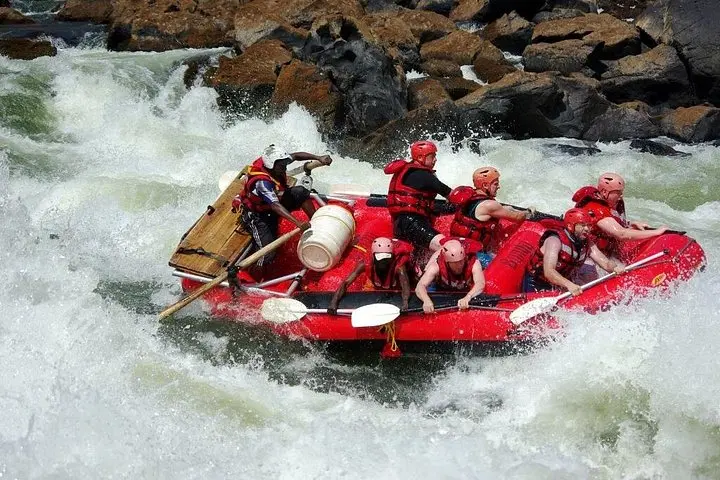
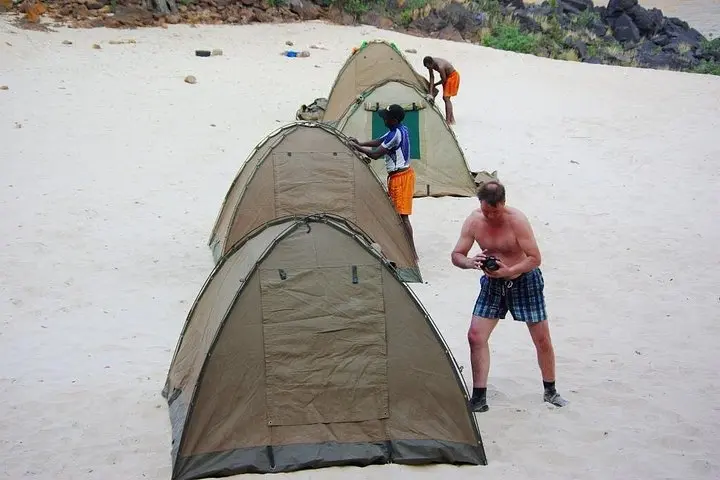
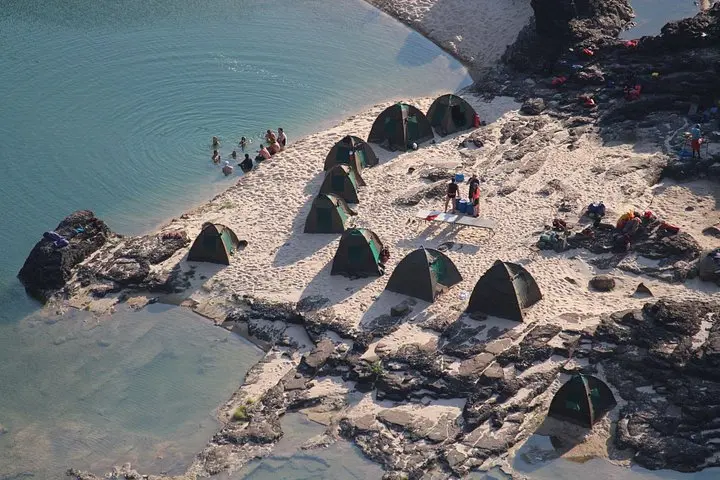
Dawn arrives on the Zambezi with a hush that the river refuses to keep. Low water exposes wide, burnished beaches and the river moves like a muscle—long, powerful, ready to test a pair of oars and a steady crew. You shove off from a rocky lip below Victoria Falls, the canyon walls closing in until the river narrows into the Batoka Gorge and every rapid feels personal. On an overnight rafting trip here, the day’s adrenaline resolves into the simple choreography of camp: tarps stretched, stew over coals, voices low around a fire while the river hisses and calls beyond the sand.
Dawn arrives on the Zambezi with a hush that the river refuses to keep. Low water exposes wide, burnished beaches and the river moves like a muscle—long, powerful, ready to test a pair of oars and a steady crew. You shove off from a rocky lip below Victoria Falls, the canyon walls closing in until the river narrows into the Batoka Gorge and every rapid feels personal. On an overnight rafting trip here, the day’s adrenaline resolves into the simple choreography of camp: tarps stretched, stew over coals, voices low around a fire while the river hisses and calls beyond the sand.
This stretch of the Zambezi is geological theater. Basalt flows from ancient volcanic activity form the high, columnar walls of the Batoka Gorge; the same forces that helped carve Victoria Falls feed a channel that produces some of the world’s most sustained grade 4 and 5 rapids. The river’s character changes with the seasons—August to December is the low, warm period when the rapids reveal deeper channels and technical lines, and when guides can push harder without losing safety margins.
Livingstone’s history is threaded through the itinerary. European exploration centered on David Livingstone and the colonial mapping of the Falls, but the riverbanks are older still—home to Tonga and Lozi peoples whose fishing and rivercraft traditions still inform local guiding and camp skills. Rafting operators combine that local knowledge with modern safety practices: professional guides, dry bags, and shore camps on broad sandbars far from the nearest road.
Practically speaking, trips run two to three days and pack a lot into each one: morning runs through big rapids, quiet pools for rinsing off, and evenings spent camping on the bank under an enormous southern sky. Expect guided swims under safe sections of the Falls when conditions allow, communal meals cooked on open fires, and basic but secure camping equipment supplied by operators.
Prepare for heat, sun, and exertion. Bring a snug river shoe, quick-dry layers, a high-SPF sunscreen, and a waterproof case for cameras. Hydration is non-negotiable—Zambezi sun strips energy fast—and strong swimmers are better positioned to relax if a raft flips. Listen to briefings, respect guide commands, and treat wildlife—hippo and crocodile among them—from a safe distance.
On the river you’ll trade polished comforts for raw rhythm: the violent slap of foam, the patient glint of the horizon, and a night where the river keeps talking while you sleep. This is whitewater with a wilderness spine—intense rapids during the day, and the sort of riverbank nights that make the effort worth every exhausted smile.