THE ADVENTURE COLLECTIVE® · Independent discovery and booking for outdoor travel

A short drive from Lima opens onto an extensive pre-Inca ceremonial center where adobe pyramids, painted temples, and a once-famous oracle trace nearly two millennia of coastal Andean life. This guided half-day tour combines on-site archaeology, a focused museum visit, and convenient hotel pickup.
A short drive from Lima opens onto an extensive pre-Inca ceremonial center where adobe pyramids, painted temples, and a once-famous oracle trace nearly two millennia of coastal Andean life. This guided half-day tour combines on-site archaeology, a focused museum visit, and convenient hotel pickup.
The minivan peels off the Pan‑American Highway and the city noise thins into a coastal breath: salt wind, a scrub-brushed plain, and a horizon punctuated by adobe terraces. You step out onto sun-warmed paths and the scale of Pachacamac arrives slow and deliberate — low pyramids, long ramps, and plazas that once held pilgrims from across the Andean world. Guides hand out headsets; voices and ambient soundtracks drift through the complex, turning dry stone into a stage for old prophecies and new discoveries.
Verified experiences and guided adventures in the surrounding area.
Operated by Perú Sightseeing · Lurín, Lima
The minivan peels off the Pan‑American Highway and the city noise thins into a coastal breath: salt wind, a scrub-brushed plain, and a horizon punctuated by adobe terraces. You step out onto sun-warmed paths and the scale of Pachacamac arrives slow and deliberate — low pyramids, long ramps, and plazas that once held pilgrims from across the Andean world. Guides hand out headsets; voices and ambient soundtracks drift through the complex, turning dry stone into a stage for old prophecies and new discoveries.
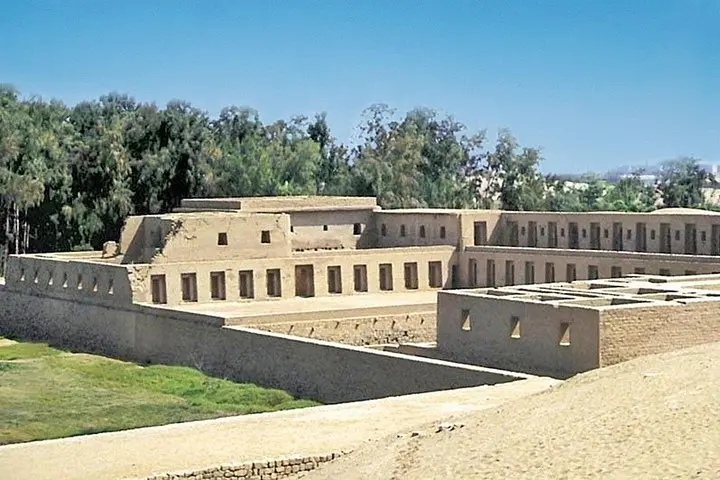
Pachacamac built its reputation long before the Inca absorbed it into the Tawantinsuyo. The site was active for nearly two millennia, occupied by Lima, Wari, Ichma cultures, and finally the Incas. Its oracle — a wooden idol said to reveal futures for desperate rulers and commoners alike — made this place an early Mecca of the Peruvian coast. Walk past the early adobe compound of Los Adobitos, climb toward the Painted Temple with its faded pigments from the 8th century, and you can still read layers of construction like chapters in a book.
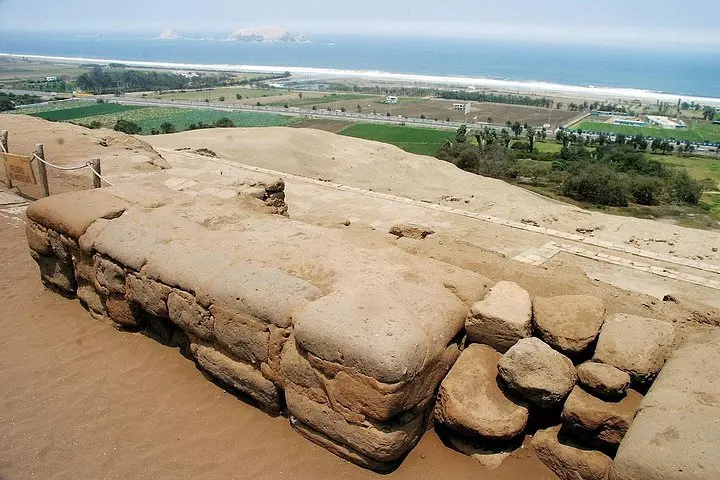
Geologically the complex sits on an arid coastal plain fed by Andean rivers and shaped by seasonal runoff. The soils and construction materials are local: sun-dried adobe, river sand, and shell-tempered ceramics now housed in the on-site museum. The contrast between stonework and the Pacific light is striking — the sea seems to watch over the site from a distance, a reminder of why Pachacamac attracted maritime as well as inland pilgrims.
Culturally the site is practical and ceremonial. Pilgrims arrived to consult the oracle about droughts, battles, or the fate of crops; today visitors arrive to understand a ritual landscape and to shop at the nearby artisan market. The tour includes a museum stop where pottery, textiles, and the wooden idol recovered in 1938 illuminate daily life and belief.
Practical tips: the shared tour runs about 3.5 hours and includes hotel pickup and return from Lima. Terrain is mostly flat with sandy tracks and occasional stairs — comfortable closed-toe shoes are recommended. There’s minimal elevation to worry about, but sun exposure is constant; mornings are cooler and easier for photography. The tour offers bilingual guides and headset narration so groups remain small and focused. If you prefer to linger, you can stay at the artisan market or Larcomar afterward; otherwise the guide will return you to central Lima.
For travelers who want historical depth without a long drive, Pachacamac delivers a compact, readable slice of Andean history. It moves at a steady, thoughtful pace — the stones seem to keep their own counsel, inviting you to listen.
The shared tour lasts about 3.5 hours, including hotel pickup and a museum visit.
Yes—official tourism guides provide commentary in English and Spanish and the tour includes headset audio.
Yes—paths are stroller-accessible in most areas, though some ramps and stairs may require assistance.
Visitors can ascend certain ramps and terraces designated for public access, but follow posted restrictions to protect fragile structures.
Basic restroom facilities and small vendors are available; for a larger selection, the nearby artisan market or Larcomar mall is best.
Pachacamac is open year-round; coastal fog (garúa) in winter reduces sun but does not typically close the site.
Perú Sightseeing operates guided outdoor trips and adventures with an emphasis on safety, stewardship, and memorable experiences.

The minivan peels off the Pan‑American Highway and the city noise thins into a coastal breath: salt wind, a scrub-brushed plain, and a horizon punctuated by adobe terraces. You step out onto sun-warmed paths and the scale of Pachacamac arrives slow and deliberate — low pyramids, long ramps, and plazas that once held pilgrims from across the Andean world. Guides hand out headsets; voices and ambient soundtracks drift through the complex, turning dry stone into a stage for old prophecies and new discoveries.
The minivan peels off the Pan‑American Highway and the city noise thins into a coastal breath: salt wind, a scrub-brushed plain, and a horizon punctuated by adobe terraces. You step out onto sun-warmed paths and the scale of Pachacamac arrives slow and deliberate — low pyramids, long ramps, and plazas that once held pilgrims from across the Andean world. Guides hand out headsets; voices and ambient soundtracks drift through the complex, turning dry stone into a stage for old prophecies and new discoveries.
Pachacamac built its reputation long before the Inca absorbed it into the Tawantinsuyo. The site was active for nearly two millennia, occupied by Lima, Wari, Ichma cultures, and finally the Incas. Its oracle — a wooden idol said to reveal futures for desperate rulers and commoners alike — made this place an early Mecca of the Peruvian coast. Walk past the early adobe compound of Los Adobitos, climb toward the Painted Temple with its faded pigments from the 8th century, and you can still read layers of construction like chapters in a book.
Geologically the complex sits on an arid coastal plain fed by Andean rivers and shaped by seasonal runoff. The soils and construction materials are local: sun-dried adobe, river sand, and shell-tempered ceramics now housed in the on-site museum. The contrast between stonework and the Pacific light is striking — the sea seems to watch over the site from a distance, a reminder of why Pachacamac attracted maritime as well as inland pilgrims.
Culturally the site is practical and ceremonial. Pilgrims arrived to consult the oracle about droughts, battles, or the fate of crops; today visitors arrive to understand a ritual landscape and to shop at the nearby artisan market. The tour includes a museum stop where pottery, textiles, and the wooden idol recovered in 1938 illuminate daily life and belief.
Practical tips: the shared tour runs about 3.5 hours and includes hotel pickup and return from Lima. Terrain is mostly flat with sandy tracks and occasional stairs — comfortable closed-toe shoes are recommended. There’s minimal elevation to worry about, but sun exposure is constant; mornings are cooler and easier for photography. The tour offers bilingual guides and headset narration so groups remain small and focused. If you prefer to linger, you can stay at the artisan market or Larcomar afterward; otherwise the guide will return you to central Lima.
For travelers who want historical depth without a long drive, Pachacamac delivers a compact, readable slice of Andean history. It moves at a steady, thoughtful pace — the stones seem to keep their own counsel, inviting you to listen.