THE ADVENTURE COLLECTIVE® · Independent discovery and booking for outdoor travel

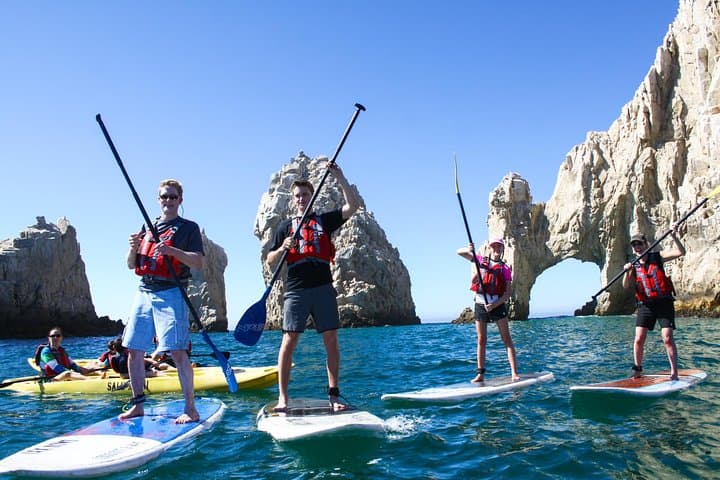
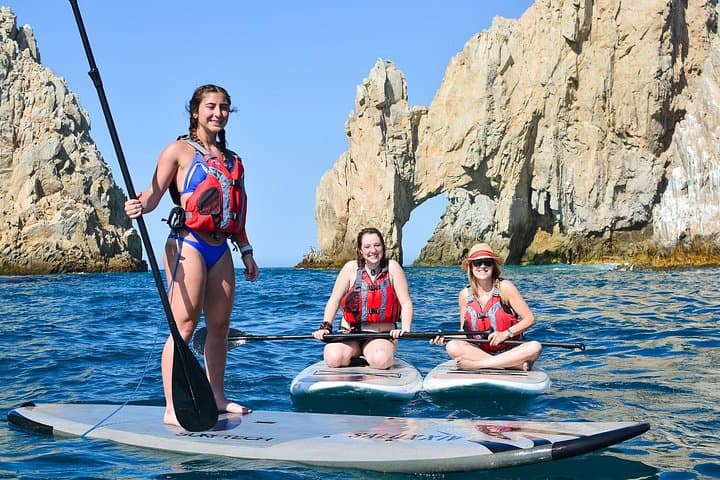
Stand-up paddle to El Arco, glide alongside a sunbathing colony of sea lions, then drop into clear water at Pelican Rock for snorkeling. This three-hour SUP-and-snorkel tour from Cabo San Lucas blends wildlife viewing, easy learning, and ocean access for new and confident paddlers alike.
Stand-up paddle to El Arco, glide alongside a sunbathing colony of sea lions, then drop into clear water at Pelican Rock for snorkeling. This three-hour SUP-and-snorkel tour from Cabo San Lucas blends wildlife viewing, easy learning, and ocean access for new and confident paddlers alike.
The sea here has a way of setting the tempo. You push off from a narrow strip of sand, the paddle chirring through glassy water, and the first thing you notice is how the Pacific and Sea of Cortez argue and then agree at the same place: El Arco. The rock looms ahead—scoured, tilted, and insistently horizontal—while a colony of sea lions sprawls on a sun-warmed ledge, barking like a harbor orchestra that refuses to be hushed.
Verified experiences and guided adventures in the surrounding area.
Operated by High Tide Los Cabos · Cabo San Lucas, Baja California Sur
The sea here has a way of setting the tempo. You push off from a narrow strip of sand, the paddle chirring through glassy water, and the first thing you notice is how the Pacific and Sea of Cortez argue and then agree at the same place: El Arco. The rock looms ahead—scoured, tilted, and insistently horizontal—while a colony of sea lions sprawls on a sun-warmed ledge, barking like a harbor orchestra that refuses to be hushed.
Guides clip leashes to boards, run through a quick balance drill, and then let the current and curiosity take over. Paddleboarding in Cabo San Lucas is intimate: you’re level with the water, close enough to see parrotfish nudge coral, and close enough to feel the warm breath of the ocean on your face as the Arch slides into view.
Geologically, El Arco is the result of wind-driven erosion and tidal chiseling along volcanic and granitic formations pushed up by tectonic activity over millions of years. Culturally, this stretch of coastline—known as Land’s End—has been a navigational touchstone for fishing communities and, more recently, an icon for the tourism economy that defines modern Cabo.
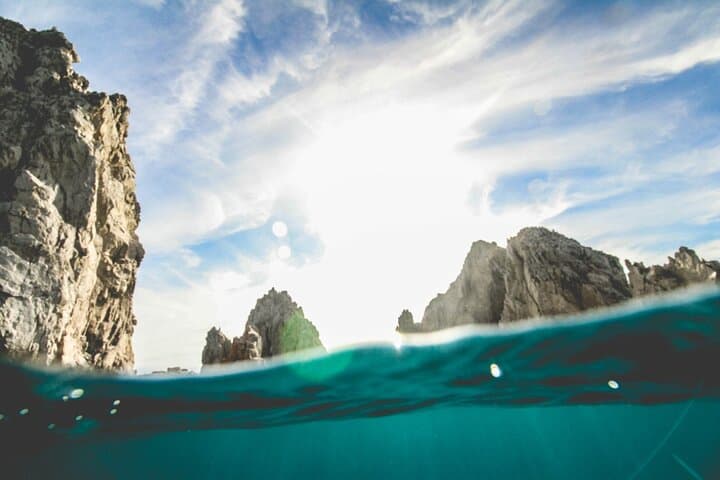
The paddling route doubles as a wildlife watch. Sea lions claim the rocky outcrops; brown pelicans wheel overhead; and the clear water around Pelican Rock reveals schools of tropical fish that seem to choreograph their own currents. Locals point out that morning sessions are calmer: thermals haven’t kicked up, and the snorkeling visibility is best before the sun fractures the surface.
Practical guidance begins with timing. Book the 9 a.m. slot if you can—less wind, softer light, and a higher chance of reaching the Arch on calm seas. Expect a three-hour outing that includes round-trip transport from the Cabo tourist area, an on-beach SUP lesson, a paddle to El Arco, and roughly 40 minutes of snorkeling at Pelican Rock.
Skill-wise, this is approachable: novices can stand within minutes with basic instruction, but you should be comfortable in the water and able to swim. Wear a rash guard or quick-dry layers, reef-safe sunscreen, and water shoes for the launch and return. Guides carry flotation devices, snorkeling gear, bottled water, and snacks, but leave valuables on the bus or in the safe transport provided.
Safety is straightforward: wind and swell can close access to the Arch, and operators may pivot to more snorkeling if conditions turn. Respect wildlife—keep distance from the sea lions and don’t touch coral—and bring a waterproof camera or phone case to capture the raw geometry of the Arch and the sudden, bright life beneath the surface.
In three hours you’ll move between vantage points: the quiet intimacy of a paddleboard, the buoyant silence of snorkeling, and the stony grandeur of El Arco—an active, kinetic encounter with one of Baja’s most immediate landscapes.
Participants must be at least 6 years old; children should be supervised and comfortable in the water.
Yes—SNUBA and snorkel gear, life vests, and SUPs are provided and fitted by the guides.
Non-swimmers are not recommended; participants should be comfortable in the water and able to wear a life jacket.
The meeting point is Plaza Gali (OXXO) on Blvd. Paseo de la Marina near Sandos Finisterra; guides will wait by the convenience store.
If conditions prevent access to the Arch, the operator will reschedule, move to more sheltered snorkeling, or issue a full refund depending on circumstances.
There are no lockers on the beach; the transport vehicle can hold belongings but plan to bring only essentials to the launch.
High Tide Los Cabos operates guided outdoor trips and adventures with an emphasis on safety, stewardship, and memorable experiences.

The sea here has a way of setting the tempo. You push off from a narrow strip of sand, the paddle chirring through glassy water, and the first thing you notice is how the Pacific and Sea of Cortez argue and then agree at the same place: El Arco. The rock looms ahead—scoured, tilted, and insistently horizontal—while a colony of sea lions sprawls on a sun-warmed ledge, barking like a harbor orchestra that refuses to be hushed.
The sea here has a way of setting the tempo. You push off from a narrow strip of sand, the paddle chirring through glassy water, and the first thing you notice is how the Pacific and Sea of Cortez argue and then agree at the same place: El Arco. The rock looms ahead—scoured, tilted, and insistently horizontal—while a colony of sea lions sprawls on a sun-warmed ledge, barking like a harbor orchestra that refuses to be hushed.
Guides clip leashes to boards, run through a quick balance drill, and then let the current and curiosity take over. Paddleboarding in Cabo San Lucas is intimate: you’re level with the water, close enough to see parrotfish nudge coral, and close enough to feel the warm breath of the ocean on your face as the Arch slides into view.
Geologically, El Arco is the result of wind-driven erosion and tidal chiseling along volcanic and granitic formations pushed up by tectonic activity over millions of years. Culturally, this stretch of coastline—known as Land’s End—has been a navigational touchstone for fishing communities and, more recently, an icon for the tourism economy that defines modern Cabo.
The paddling route doubles as a wildlife watch. Sea lions claim the rocky outcrops; brown pelicans wheel overhead; and the clear water around Pelican Rock reveals schools of tropical fish that seem to choreograph their own currents. Locals point out that morning sessions are calmer: thermals haven’t kicked up, and the snorkeling visibility is best before the sun fractures the surface.
Practical guidance begins with timing. Book the 9 a.m. slot if you can—less wind, softer light, and a higher chance of reaching the Arch on calm seas. Expect a three-hour outing that includes round-trip transport from the Cabo tourist area, an on-beach SUP lesson, a paddle to El Arco, and roughly 40 minutes of snorkeling at Pelican Rock.
Skill-wise, this is approachable: novices can stand within minutes with basic instruction, but you should be comfortable in the water and able to swim. Wear a rash guard or quick-dry layers, reef-safe sunscreen, and water shoes for the launch and return. Guides carry flotation devices, snorkeling gear, bottled water, and snacks, but leave valuables on the bus or in the safe transport provided.
Safety is straightforward: wind and swell can close access to the Arch, and operators may pivot to more snorkeling if conditions turn. Respect wildlife—keep distance from the sea lions and don’t touch coral—and bring a waterproof camera or phone case to capture the raw geometry of the Arch and the sudden, bright life beneath the surface.
In three hours you’ll move between vantage points: the quiet intimacy of a paddleboard, the buoyant silence of snorkeling, and the stony grandeur of El Arco—an active, kinetic encounter with one of Baja’s most immediate landscapes.