THE ADVENTURE COLLECTIVE® · Independent discovery and booking for outdoor travel

See Cartagena from sea level on a 90-minute guided kayak that skirts the colonial walls, threads mangrove channels and visits the Island of Birds. Expect easy paddling, abundant birdlife and unique views of the city’s forts and clock tower.
See Cartagena from sea level on a 90-minute guided kayak that skirts the colonial walls, threads mangrove channels and visits the Island of Birds. Expect easy paddling, abundant birdlife and unique views of the city’s forts and clock tower.
Morning light cuts across Cartagena’s harbor as the city wakes and the water flicks like a metal sheet. From the Pegasos pier you push off in a stable sea kayak, the clock tower shrinking as you paddle past the camellón of the Martyrs and the Convention Center. The sea seems to test you with gentle wakes; mangroves huddle at the water’s edge, their roots like fingers holding the shoreline.
Verified experiences and guided adventures in the surrounding area.
Operated by Karib kayak & Paddle Center. · Cartagena, Bolívar
Morning light cuts across Cartagena’s harbor as the city wakes and the water flicks like a metal sheet. From the Pegasos pier you push off in a stable sea kayak, the clock tower shrinking as you paddle past the camellón of the Martyrs and the Convention Center. The sea seems to test you with gentle wakes; mangroves huddle at the water’s edge, their roots like fingers holding the shoreline.
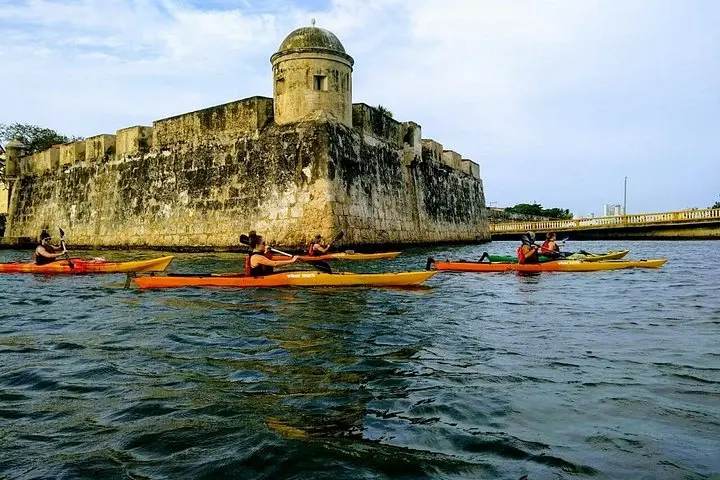
Cartagena’s walls and forts date to the 16th–18th century, built to defend Spain’s vital Caribbean port; from the water those ramparts read like a coastline of history. Geologically the lagoon of San Lázaro is a shallow coastal basin where mangrove peat and marine sediments create sheltered channels that feed the Island of Birds, a small mangrove islet alive with calls of frigatebirds and herons.
Culturally the route threads past working piers and modern convention spaces, a reminder that Cartagena is both living city and preserved colonial core. Local guides point out Fort San Sebastián de Pastelillo and explain the role of mangroves in fisheries and storm protection.
Practical guidance: departures are about 90 minutes and suitable for most fitness levels; expect calm, shallow paddling with short open-water sections. Wear reef-safe sunscreen, bring a refillable bottle and a dry sack for valuables. Keep distance from nesting birds and follow your guide’s line: tides and occasional boat wakes are the only variable. Morning slots offer cooler temperatures and quieter bays; afternoons bring more boat traffic and brief squalls during the rainy months. This is a short, accessible paddle that delivers close-up nature, coastal history, and clear views of Cartagena from sea level.
No—this tour is designed for beginners with stable sea kayaks; guides cover basic paddle techniques and safety before launch.
Policies vary; minors are often allowed with parental supervision — check booking requirements for age or weight limits.
Short rain showers are common; operators monitor conditions and may reschedule if seas or winds become unsafe — cancellation rules typically require 24‑hour notice for a refund.
Yes—bring a waterproof case or put devices in the supplied dry bag; keep distance when photographing wildlife to avoid disturbance.
Karib kayak & Paddle Center. operates guided outdoor trips and adventures with an emphasis on safety, stewardship, and memorable experiences.
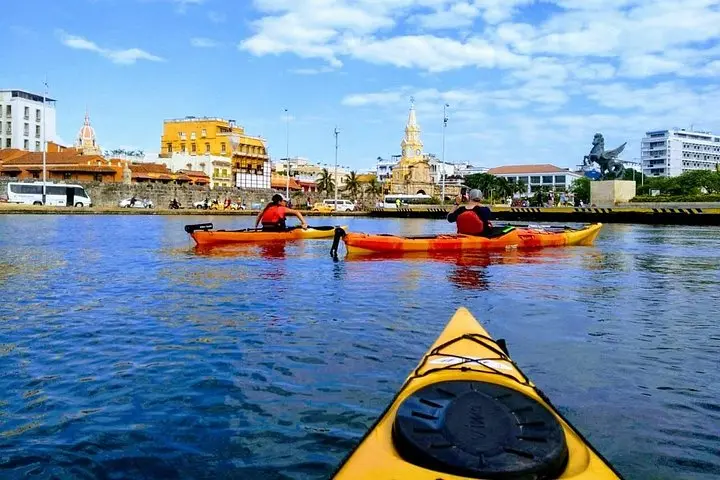
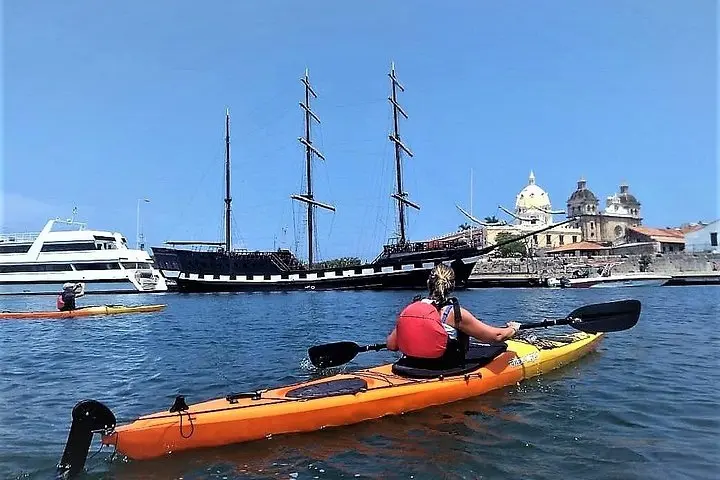
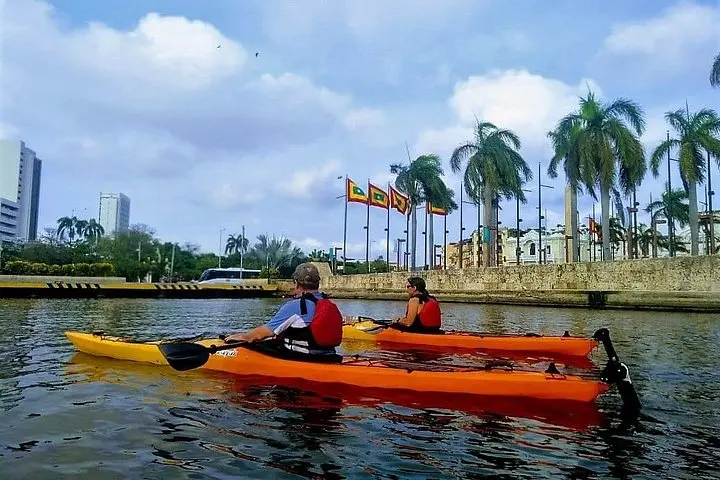
Morning light cuts across Cartagena’s harbor as the city wakes and the water flicks like a metal sheet. From the Pegasos pier you push off in a stable sea kayak, the clock tower shrinking as you paddle past the camellón of the Martyrs and the Convention Center. The sea seems to test you with gentle wakes; mangroves huddle at the water’s edge, their roots like fingers holding the shoreline.
Morning light cuts across Cartagena’s harbor as the city wakes and the water flicks like a metal sheet. From the Pegasos pier you push off in a stable sea kayak, the clock tower shrinking as you paddle past the camellón of the Martyrs and the Convention Center. The sea seems to test you with gentle wakes; mangroves huddle at the water’s edge, their roots like fingers holding the shoreline.
Cartagena’s walls and forts date to the 16th–18th century, built to defend Spain’s vital Caribbean port; from the water those ramparts read like a coastline of history. Geologically the lagoon of San Lázaro is a shallow coastal basin where mangrove peat and marine sediments create sheltered channels that feed the Island of Birds, a small mangrove islet alive with calls of frigatebirds and herons.
Culturally the route threads past working piers and modern convention spaces, a reminder that Cartagena is both living city and preserved colonial core. Local guides point out Fort San Sebastián de Pastelillo and explain the role of mangroves in fisheries and storm protection.
Practical guidance: departures are about 90 minutes and suitable for most fitness levels; expect calm, shallow paddling with short open-water sections. Wear reef-safe sunscreen, bring a refillable bottle and a dry sack for valuables. Keep distance from nesting birds and follow your guide’s line: tides and occasional boat wakes are the only variable. Morning slots offer cooler temperatures and quieter bays; afternoons bring more boat traffic and brief squalls during the rainy months. This is a short, accessible paddle that delivers close-up nature, coastal history, and clear views of Cartagena from sea level.