THE ADVENTURE COLLECTIVE® · Independent discovery and booking for outdoor travel

Glide through Damas Island’s mangrove channels on a high-tide kayak tour from Manuel Antonio. Learn local ecology from a naturalist guide while scanning for birds, monkeys, and the subtle signs of an estuary at work.
Glide through Damas Island’s mangrove channels on a high-tide kayak tour from Manuel Antonio. Learn local ecology from a naturalist guide while scanning for birds, monkeys, and the subtle signs of an estuary at work.
You push off in a narrow channel and the mangrove canopy closes like a living tunnel—roots braid the water’s edge, birds call from the branches, and the tide sets the rhythm of the paddle. On the Mangrove Kayak Tour from Manuel Antonio, guides time departures to the high tide so kayaks slip deeper into Damas Island’s protected estuary, where water and forest trade edges.
Verified experiences and guided adventures in the surrounding area.
Operated by Costa Rica Jade Tours · Quepos, Puntarenas
You push off in a narrow channel and the mangrove canopy closes like a living tunnel—roots braid the water’s edge, birds call from the branches, and the tide sets the rhythm of the paddle. On the Mangrove Kayak Tour from Manuel Antonio, guides time departures to the high tide so kayaks slip deeper into Damas Island’s protected estuary, where water and forest trade edges.
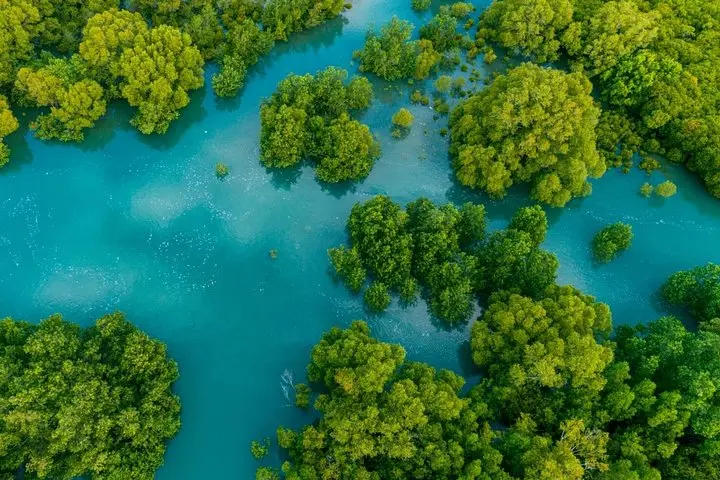
Geology here is recent and dynamic: coastal sediments and riverborne silt build the mangrove flats that shelter juvenile fish and filter runoff before it reaches the Pacific. Culturally, local fishing communities have long relied on these stands for baitfish and seasonal harvests; today naturalist guides interpret both the ecology and the conservation efforts that protect this patch of forest.
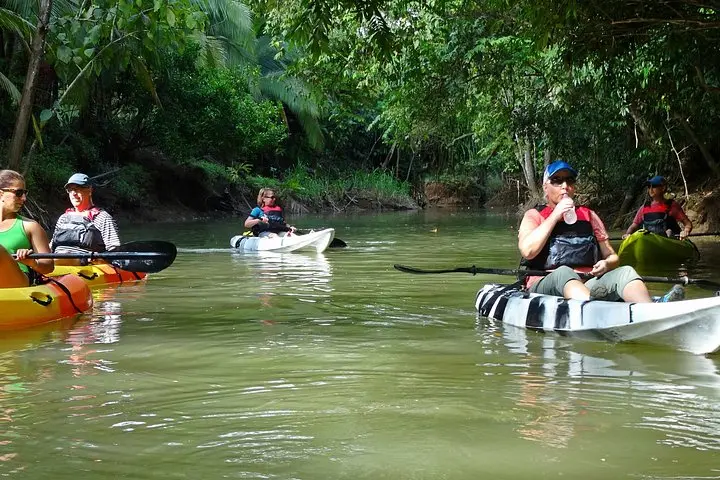
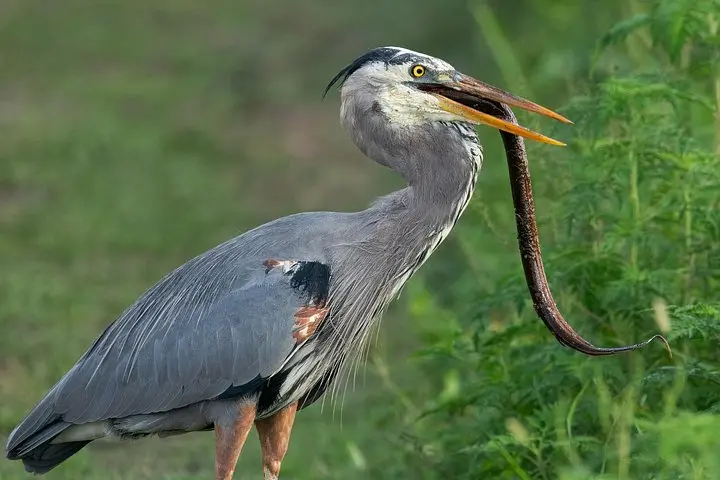
Expect close wildlife encounters—kingfishers hover, herons stalk in shallows, and howler monkeys throw their voices from the canopy—plus narrow channels that reward careful paddling with hidden coves. The tour typically runs three hours and includes equipment, bottled water, lunch, and transport from Manuel Antonio or Quepos.
Practical tips: wear quick-dry clothes, reef-safe sunscreen and sturdy water shoes; secure cameras and phones in dry bags; follow the guide’s instructions when entering shallow channels to avoid disturbing roots and nests. The outing is best during morning high tides for calmer water and better light, but guides adjust timing with the tide tables. Moderate fitness and basic paddling ability make this an accessible, memorable introduction to Costa Rica’s mangrove ecosystems.
The tour lasts about three hours and typically includes kayak equipment, bottled water, lunch, a naturalist guide, transport, and park or docking fees.
No formal experience required—basic paddling ability and moderate fitness are sufficient; guides provide instruction and lead the group.
Common sightings include herons, kingfishers, egrets, white-faced capuchin or howler monkeys, and various shorebirds; crocodiles are uncommon inside Damas channels but may be seen in larger nearby rivers.
Pickup time is set according to the high tide and provided after booking; confirm details with the operator and allow flexibility if tides shift.
Costa Rica Jade Tours operates guided outdoor trips and adventures with an emphasis on safety, stewardship, and memorable experiences.
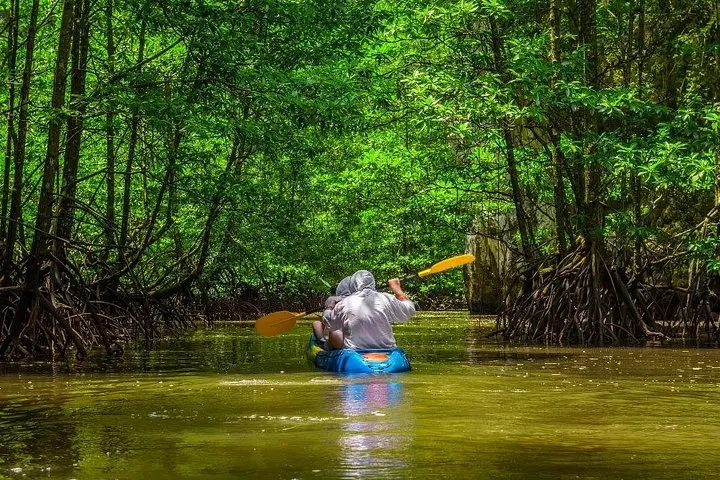
You push off in a narrow channel and the mangrove canopy closes like a living tunnel—roots braid the water’s edge, birds call from the branches, and the tide sets the rhythm of the paddle. On the Mangrove Kayak Tour from Manuel Antonio, guides time departures to the high tide so kayaks slip deeper into Damas Island’s protected estuary, where water and forest trade edges.
You push off in a narrow channel and the mangrove canopy closes like a living tunnel—roots braid the water’s edge, birds call from the branches, and the tide sets the rhythm of the paddle. On the Mangrove Kayak Tour from Manuel Antonio, guides time departures to the high tide so kayaks slip deeper into Damas Island’s protected estuary, where water and forest trade edges.
Geology here is recent and dynamic: coastal sediments and riverborne silt build the mangrove flats that shelter juvenile fish and filter runoff before it reaches the Pacific. Culturally, local fishing communities have long relied on these stands for baitfish and seasonal harvests; today naturalist guides interpret both the ecology and the conservation efforts that protect this patch of forest.
Expect close wildlife encounters—kingfishers hover, herons stalk in shallows, and howler monkeys throw their voices from the canopy—plus narrow channels that reward careful paddling with hidden coves. The tour typically runs three hours and includes equipment, bottled water, lunch, and transport from Manuel Antonio or Quepos.
Practical tips: wear quick-dry clothes, reef-safe sunscreen and sturdy water shoes; secure cameras and phones in dry bags; follow the guide’s instructions when entering shallow channels to avoid disturbing roots and nests. The outing is best during morning high tides for calmer water and better light, but guides adjust timing with the tide tables. Moderate fitness and basic paddling ability make this an accessible, memorable introduction to Costa Rica’s mangrove ecosystems.