THE ADVENTURE COLLECTIVE® · Independent discovery and booking for outdoor travel

Glide through narrow mangrove channels near Manuel Antonio to encounter sloths, monkeys, and kingfishers in a compact, two-hour kayak tour. Local guides explain the ecology and history of Quepos as you paddle calm tidal water.
Glide through narrow mangrove channels near Manuel Antonio to encounter sloths, monkeys, and kingfishers in a compact, two-hour kayak tour. Local guides explain the ecology and history of Quepos as you paddle calm tidal water.
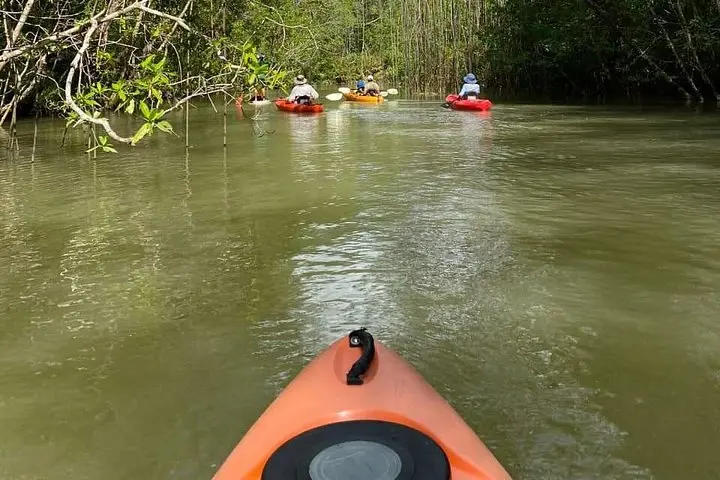
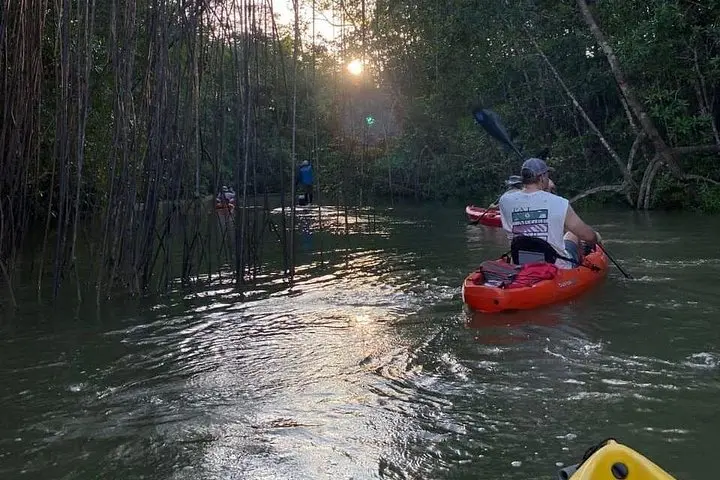
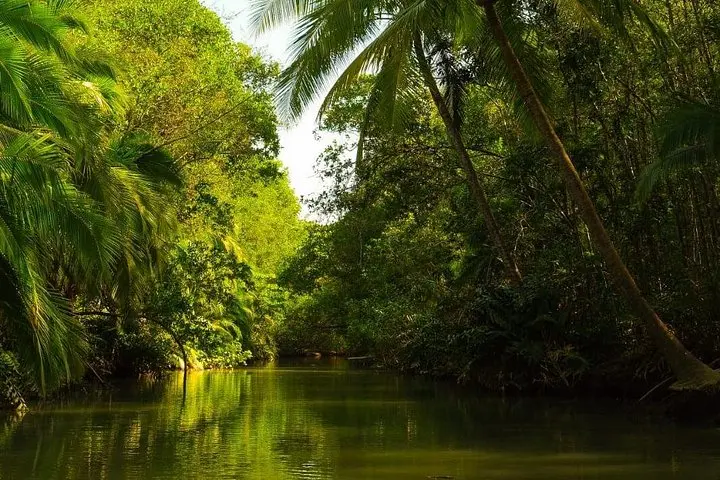
A paddle parts a narrow mangrove channel and the morning quiet shifts: roots weave like iron lattices, and birds fold their wings as the kayaks slip by. The water here reflects a sky that changes with the tides, and the guide points out a sloth clinging to a branch as if time slowed to watch you pass.
Verified experiences and guided adventures in the surrounding area.
Operated by Soleil Sport Fishing And Tours · Quepos, Puntarenas
A paddle parts a narrow mangrove channel and the morning quiet shifts: roots weave like iron lattices, and birds fold their wings as the kayaks slip by. The water here reflects a sky that changes with the tides, and the guide points out a sloth clinging to a branch as if time slowed to watch you pass.
This stretch of Costa Rica's Central Pacific coast sits where estuary sediment meets the forest: mangrove species trap silt, protect shorelines, and cradle juvenile fish. Quepos and Manuel Antonio carry a layered history — from banana piers built by the United Fruit Company to the later rise of palm plantations — and the human shoreline life you pass en route feels lived-in and immediate: fishermen mending nets, kids biking to school, a small Catholic church marked near the pier.
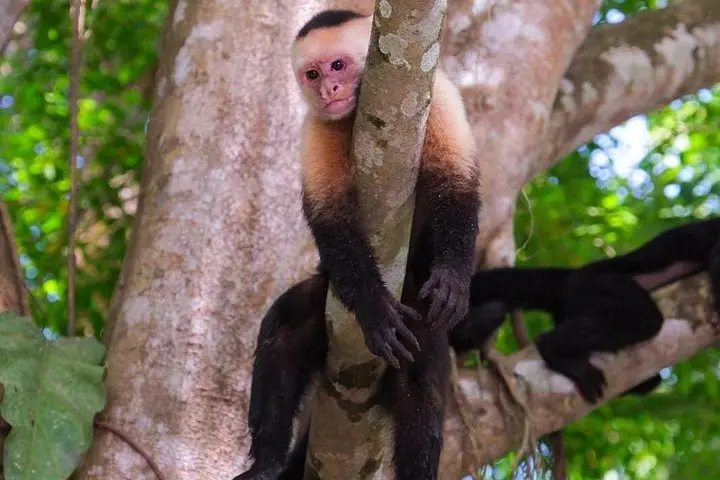
Wildlife is the tour's draw: white-faced capuchins, two- and three-toed sloths, kingfishers and herons all use the channels as corridors. Guides translate local ecology into plain terms and stress conservation; these trees are both nursery and storm buffer.
Practical edge: the trip is roughly two hours on mostly flat water in sit-on-top kayaks. Expect gentle tidal currents and narrow turns; minimal paddle skill is needed but basic balance helps. Bring reef-safe sunscreen, insect repellent, a dry bag for electronics, and a light layer for early-morning breezes. Plan for calm, wildlife-rich windows around low tide and early morning when animals are most active.
No; tours use stable sit-on-top kayaks and guides give a safety briefing. Basic balance and the ability to paddle for two hours are sufficient.
Yes for most children accompanied by adults; operators may set age or height minimums—check with the provider before booking.
Common sightings include white-faced capuchin monkeys, two- and three-toed sloths, kingfishers, herons, and various crabs and fish depending on tide and season.
Most guests are transferred from Quepos or Manuel Antonio; confirm pickup details with the operator and arrive early if using your own transport.
Soleil Sport Fishing And Tours operates guided outdoor trips and adventures with an emphasis on safety, stewardship, and memorable experiences.
A paddle parts a narrow mangrove channel and the morning quiet shifts: roots weave like iron lattices, and birds fold their wings as the kayaks slip by. The water here reflects a sky that changes with the tides, and the guide points out a sloth clinging to a branch as if time slowed to watch you pass.
A paddle parts a narrow mangrove channel and the morning quiet shifts: roots weave like iron lattices, and birds fold their wings as the kayaks slip by. The water here reflects a sky that changes with the tides, and the guide points out a sloth clinging to a branch as if time slowed to watch you pass.
This stretch of Costa Rica's Central Pacific coast sits where estuary sediment meets the forest: mangrove species trap silt, protect shorelines, and cradle juvenile fish. Quepos and Manuel Antonio carry a layered history — from banana piers built by the United Fruit Company to the later rise of palm plantations — and the human shoreline life you pass en route feels lived-in and immediate: fishermen mending nets, kids biking to school, a small Catholic church marked near the pier.
Wildlife is the tour's draw: white-faced capuchins, two- and three-toed sloths, kingfishers and herons all use the channels as corridors. Guides translate local ecology into plain terms and stress conservation; these trees are both nursery and storm buffer.
Practical edge: the trip is roughly two hours on mostly flat water in sit-on-top kayaks. Expect gentle tidal currents and narrow turns; minimal paddle skill is needed but basic balance helps. Bring reef-safe sunscreen, insect repellent, a dry bag for electronics, and a light layer for early-morning breezes. Plan for calm, wildlife-rich windows around low tide and early morning when animals are most active.