THE ADVENTURE COLLECTIVE® · Independent discovery and booking for outdoor travel

Three days of guided sea kayaking across the Stockholm Archipelago—40–60 km of island-dotted channels, granite skerries and quiet bays. Learn safety skills, camp on remote islets, and watch for sea eagles and seals while dining on organic, open-fire meals.
Three days of guided sea kayaking across the Stockholm Archipelago—40–60 km of island-dotted channels, granite skerries and quiet bays. Learn safety skills, camp on remote islets, and watch for sea eagles and seals while dining on organic, open-fire meals.
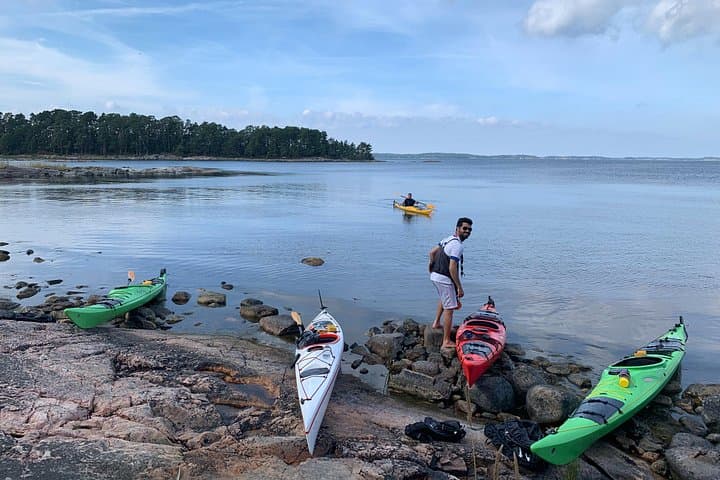
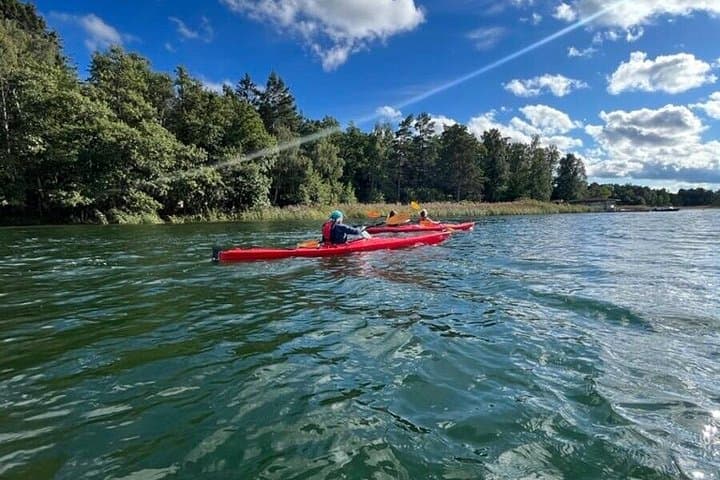
The first stroke breaks a glassy sheet of Baltic water and the archipelago answers with low islands, wind-raked pines and the distant cry of a sea eagle. On a three-day circuit you move through channels where granite ribs rise like old reefs and sheltered bays that invite a midday swim.
Verified experiences and guided adventures in the surrounding area.
Operated by Stockholm Nature AB · Stockholm, Stockholm County
The first stroke breaks a glassy sheet of Baltic water and the archipelago answers with low islands, wind-raked pines and the distant cry of a sea eagle. On a three-day circuit you move through channels where granite ribs rise like old reefs and sheltered bays that invite a midday swim.
This part of Sweden is shaped by the last ice age—smoothed granite outcrops, skerries and post-glacial rebound that still lifts shorelines a few millimeters a year. Culturally the islands long supported fishing and small-scale farming; today the “Allemansrätten” or freedom to roam allows respectful camping on many islets, a principle the guides use to place tents away from crowded harbors.
Expect practical instruction: advanced safety briefings, group paddling techniques, and route planning tuned to tides and wind. Meals are simple and local—organic breakfasts and open-fire dinners—designed for recovery after 40–60 km of paddling across mixed conditions. Wildlife is part of the itinerary; keep your distance from resting seals and nesting birds.
Plan for wind and chop—crossings can change from calm to brisk within hours. Stagger your layers, keep electronics in dry bags, and be ready to adjust the day’s distance to group pace. Bring a compact sleeping system and a light stove if you prefer personal comfort—operators provide eco-friendly equipment and waterproof storage but individual preparation makes the trip smoother.
By the last evening, the islands slow their pace; navigation fades and the simple rhythm of paddle, camp, cook becomes the point of the trip.
No advanced experience required; guides provide instruction on technique, group paddling and safety—basic fitness and comfort in a small boat are helpful.
Organic breakfasts, lunches and dinners are provided as listed; camping is on small islands—guests pitch tents provided or bring personal tents as arranged with the operator.
Operators monitor forecasts closely; the itinerary can be modified or canceled for safety. Check cancellation policy before booking.
Yes—small-group tours accept solo bookings but notify operator in advance; average group size is 2–5 guests per guide.
Stockholm Nature AB operates guided outdoor trips and adventures with an emphasis on safety, stewardship, and memorable experiences.


The first stroke breaks a glassy sheet of Baltic water and the archipelago answers with low islands, wind-raked pines and the distant cry of a sea eagle. On a three-day circuit you move through channels where granite ribs rise like old reefs and sheltered bays that invite a midday swim.
The first stroke breaks a glassy sheet of Baltic water and the archipelago answers with low islands, wind-raked pines and the distant cry of a sea eagle. On a three-day circuit you move through channels where granite ribs rise like old reefs and sheltered bays that invite a midday swim.
This part of Sweden is shaped by the last ice age—smoothed granite outcrops, skerries and post-glacial rebound that still lifts shorelines a few millimeters a year. Culturally the islands long supported fishing and small-scale farming; today the “Allemansrätten” or freedom to roam allows respectful camping on many islets, a principle the guides use to place tents away from crowded harbors.
Expect practical instruction: advanced safety briefings, group paddling techniques, and route planning tuned to tides and wind. Meals are simple and local—organic breakfasts and open-fire dinners—designed for recovery after 40–60 km of paddling across mixed conditions. Wildlife is part of the itinerary; keep your distance from resting seals and nesting birds.
Plan for wind and chop—crossings can change from calm to brisk within hours. Stagger your layers, keep electronics in dry bags, and be ready to adjust the day’s distance to group pace. Bring a compact sleeping system and a light stove if you prefer personal comfort—operators provide eco-friendly equipment and waterproof storage but individual preparation makes the trip smoother.
By the last evening, the islands slow their pace; navigation fades and the simple rhythm of paddle, camp, cook becomes the point of the trip.