THE ADVENTURE COLLECTIVE® · Independent discovery and booking for outdoor travel

Glide through tidal creeks and salt grasses on a two-hour guided paddle along Amelia Island’s marshes. Learn local ecology and paddling basics while watching birds, crabs and the slow choreography of the estuary.
Glide through tidal creeks and salt grasses on a two-hour guided paddle along Amelia Island’s marshes. Learn local ecology and paddling basics while watching birds, crabs and the slow choreography of the estuary.
Early morning on the salt marsh feels like an invitation: a thin veil of mist lifts off the water while wading birds strike statuesque poses on oyster bars. You push off from a sandy spit between tidal creeks and the marsh opens like a map—ribbons of tannic water carving through cordgrass, punctuated by the occasional plop of a fish. On the Amelia Salt Marsh Paddle, a licensed guide steers the rhythm, teaching strokes and pointing out the small dramas of estuarine life so you notice them: fiddler crabs excavating tunnels, a mangrove root dotted with barnacles, the way the current teases a board sideways.
Verified experiences and guided adventures in the surrounding area.
Operated by PADL · Fernandina Beach, Florida
Early morning on the salt marsh feels like an invitation: a thin veil of mist lifts off the water while wading birds strike statuesque poses on oyster bars. You push off from a sandy spit between tidal creeks and the marsh opens like a map—ribbons of tannic water carving through cordgrass, punctuated by the occasional plop of a fish. On the Amelia Salt Marsh Paddle, a licensed guide steers the rhythm, teaching strokes and pointing out the small dramas of estuarine life so you notice them: fiddler crabs excavating tunnels, a mangrove root dotted with barnacles, the way the current teases a board sideways.
This stretch of coast sits inside the greater Timucuan Ecological and Historic Preserve, an area shaped by centuries of changing sea levels, Native habitation, and Spanish and British colonial contact. The marsh itself is the estuary’s first line of work—trapping sediment, filtering runoff and feeding an array of shorebirds and fish. Geologically, the flatness is recent: barrier islands and salt marshes here are dynamic features, constantly reworked by tides, storms and the slow migration of sand.
The experience is equal parts natural history and hands-on paddling. Guides share local lore about the Timucua peoples and early settlers while explaining how tides dictate your route: high water opens narrow creeks, low water reveals oyster bars and sand flats. Wildlife is the main character—glossy ibises, osprey, and the stealthy glide of diamondback terrapins—but the trip also highlights how fragile these habitats are under pressure from development and sea-level rise.
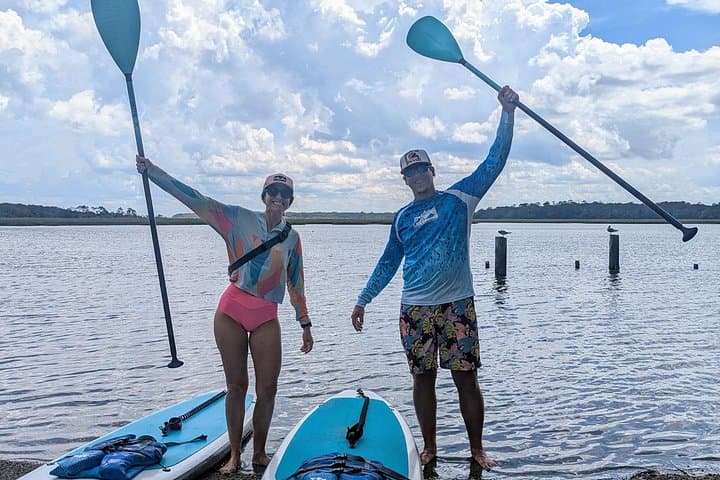
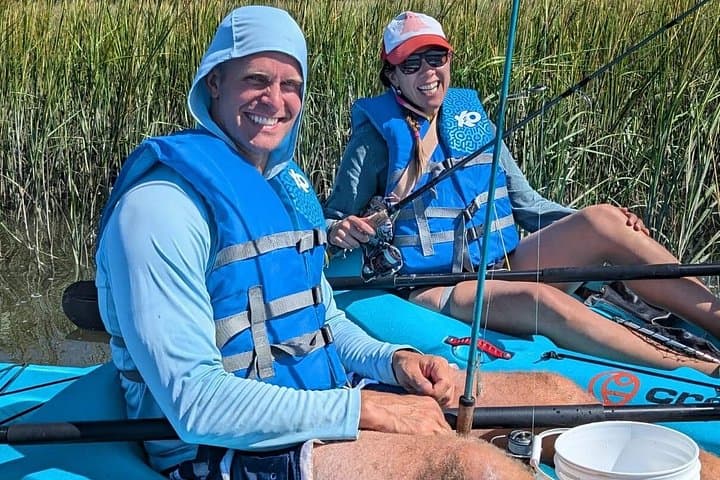
Practical details: the outing lasts about two hours and moves at an easy pace suitable for beginners and families. Launch is on a protected inlet with little chop; expect flat, shallow water and short, guided legs that total a few miles depending on tides. Bring sunscreen, a brimmed hat, and a waterproof pouch for your phone. Timing matters—the best wildlife activity and calm water are generally at morning slack tide or late afternoon. Guides provide kayaks or paddleboards, PFDs, instruction and a waterproof bag for keys/phone.
Safety and comfort tips: watch the tide table for your day, listen to guide briefings about currents, and wear quick-drying layers and secure footwear. Photography is rewarding—catch reflections at golden hour and close-up shots of shorebirds with a telephoto. Above all, paddle with respect: keep distance from nesting birds, avoid driving onto oyster beds, and leave nothing behind. The marsh will reward you with quiet, concentration and the odd flash of a fish—a small, living archive of the coast’s wildness.
No—this is a beginner-friendly outing; guides cover basic kayak and paddleboard technique during the safety briefing.
Guides, kayak or paddleboard rental, paddle, PFD, instruction, and a waterproof bag for small items are included.
Meeting point and on-site facilities are wheelchair accessible, but the actual paddle requires boarding a kayak or SUP; contact operator for accommodations.
Yes—families are welcome, though small children should be able to sit safely in a boat or ride with a guardian; check age restrictions with the operator.
Trips are canceled for unsafe conditions; full refunds are available if canceled at least 24 hours before departure per policy.
Dolphins are spotted occasionally in nearshore waters; manatees are less common but possible—wildlife sightings are never guaranteed.
PADL operates guided outdoor trips and adventures with an emphasis on safety, stewardship, and memorable experiences.
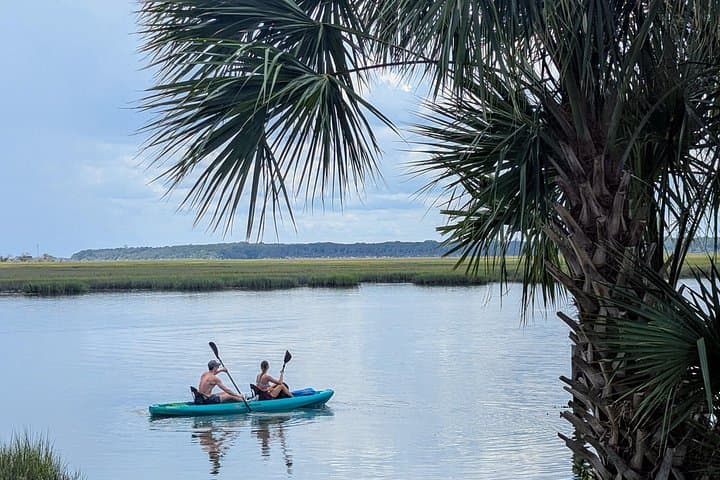
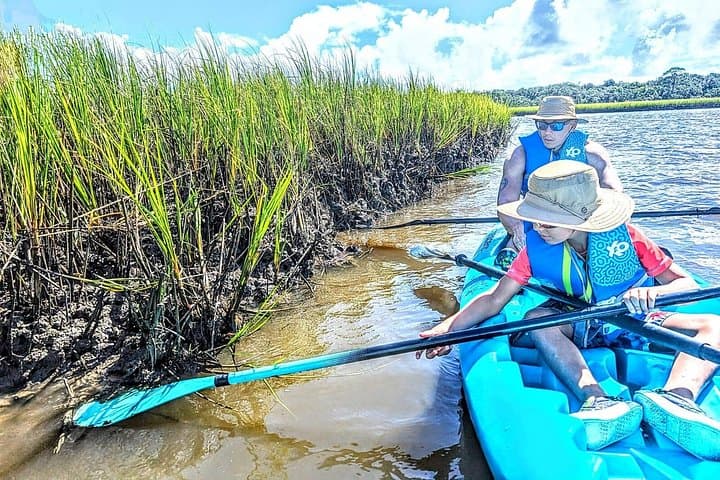
Early morning on the salt marsh feels like an invitation: a thin veil of mist lifts off the water while wading birds strike statuesque poses on oyster bars. You push off from a sandy spit between tidal creeks and the marsh opens like a map—ribbons of tannic water carving through cordgrass, punctuated by the occasional plop of a fish. On the Amelia Salt Marsh Paddle, a licensed guide steers the rhythm, teaching strokes and pointing out the small dramas of estuarine life so you notice them: fiddler crabs excavating tunnels, a mangrove root dotted with barnacles, the way the current teases a board sideways.
Early morning on the salt marsh feels like an invitation: a thin veil of mist lifts off the water while wading birds strike statuesque poses on oyster bars. You push off from a sandy spit between tidal creeks and the marsh opens like a map—ribbons of tannic water carving through cordgrass, punctuated by the occasional plop of a fish. On the Amelia Salt Marsh Paddle, a licensed guide steers the rhythm, teaching strokes and pointing out the small dramas of estuarine life so you notice them: fiddler crabs excavating tunnels, a mangrove root dotted with barnacles, the way the current teases a board sideways.
This stretch of coast sits inside the greater Timucuan Ecological and Historic Preserve, an area shaped by centuries of changing sea levels, Native habitation, and Spanish and British colonial contact. The marsh itself is the estuary’s first line of work—trapping sediment, filtering runoff and feeding an array of shorebirds and fish. Geologically, the flatness is recent: barrier islands and salt marshes here are dynamic features, constantly reworked by tides, storms and the slow migration of sand.
The experience is equal parts natural history and hands-on paddling. Guides share local lore about the Timucua peoples and early settlers while explaining how tides dictate your route: high water opens narrow creeks, low water reveals oyster bars and sand flats. Wildlife is the main character—glossy ibises, osprey, and the stealthy glide of diamondback terrapins—but the trip also highlights how fragile these habitats are under pressure from development and sea-level rise.
Practical details: the outing lasts about two hours and moves at an easy pace suitable for beginners and families. Launch is on a protected inlet with little chop; expect flat, shallow water and short, guided legs that total a few miles depending on tides. Bring sunscreen, a brimmed hat, and a waterproof pouch for your phone. Timing matters—the best wildlife activity and calm water are generally at morning slack tide or late afternoon. Guides provide kayaks or paddleboards, PFDs, instruction and a waterproof bag for keys/phone.
Safety and comfort tips: watch the tide table for your day, listen to guide briefings about currents, and wear quick-drying layers and secure footwear. Photography is rewarding—catch reflections at golden hour and close-up shots of shorebirds with a telephoto. Above all, paddle with respect: keep distance from nesting birds, avoid driving onto oyster beds, and leave nothing behind. The marsh will reward you with quiet, concentration and the odd flash of a fish—a small, living archive of the coast’s wildness.