THE ADVENTURE COLLECTIVE® · Independent discovery and booking for outdoor travel

Explore Unawatuna’s mangrove labyrinth by canoe on a small-group guided paddle. This 1–2 hour excursion offers close wildlife viewing, local coastal insights, and calm tidal waterways ideal for beginners.
Explore Unawatuna’s mangrove labyrinth by canoe on a small-group guided paddle. This 1–2 hour excursion offers close wildlife viewing, local coastal insights, and calm tidal waterways ideal for beginners.
The lagoon opens like a green throat off the coast—mangrove roots arching over narrow waterways while the sea is only a faint line on the horizon. Paddlers push through quiet water, each stroke loosening a rhythm as kingfishers flash and herons lift off from exposed roots.
Verified experiences and guided adventures in the surrounding area.
Operated by Chameera Cycling · Unawatuna, Southern Province
The lagoon opens like a green throat off the coast—mangrove roots arching over narrow waterways while the sea is only a faint line on the horizon. Paddlers push through quiet water, each stroke loosening a rhythm as kingfishers flash and herons lift off from exposed roots.
This stretch of southern Sri Lanka sits on limestone and coastal sand deposits shaped by seasonal tides and centuries of trade from nearby Galle, a port city with Dutch and Portuguese colonial layers. Local fishing families have long worked these sheltered channels; today small guided tours translate that working knowledge into safe, interpretive paddling.
Geologically the lagoon is tidal and shallow, with silted channels that reveal root systems at low tide. Culturally, the area remains tied to seafood markets and temple festivals in Unawatuna and Galle, so visits often intersect with village life at the lagoon’s edges.
Practically, expect 1–2 hours of paddling in single- or two-person canoes on mostly flat water, with short stretches through narrow mangrove tunnels. Guides provide instruction, life vests, paddles and bottled water; groups are capped at 10 for calm navigation and wildlife viewing.
Plan morning or late-afternoon departures to avoid midday heat; wear sun protection and quick-dry clothing, and use reef-safe sunscreen. Tides and wind can alter the route, so bring insect repellent and a small dry bag for essentials. The trip is low-impact but brings you face-to-face with a fragile coastal ecosystem—move quietly, keep distance from nesting birds, and leave no trace.
Total paddling time is typically 1.5–2 hours, though short trips of about 60 minutes are possible depending on group choice and conditions.
Yes—most operators recommend a minimum age of around 6; children should be comfortable sitting in a canoe and follow the guide’s instructions.
Trips can be modified or canceled for heavy rain or unsafe wind; operators may reschedule or refund per their policy, and guides monitor tide windows.
No—guides offer hands-on instruction and life jackets; basic coordination and following commands is sufficient.
Chameera Cycling operates guided outdoor trips and adventures with an emphasis on safety, stewardship, and memorable experiences.
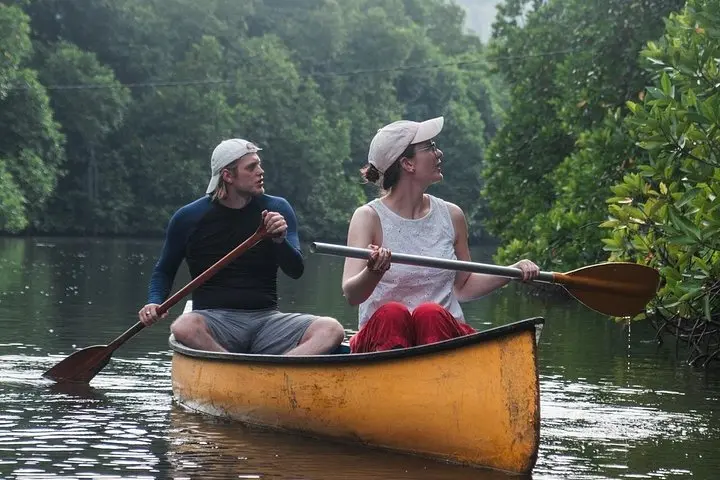
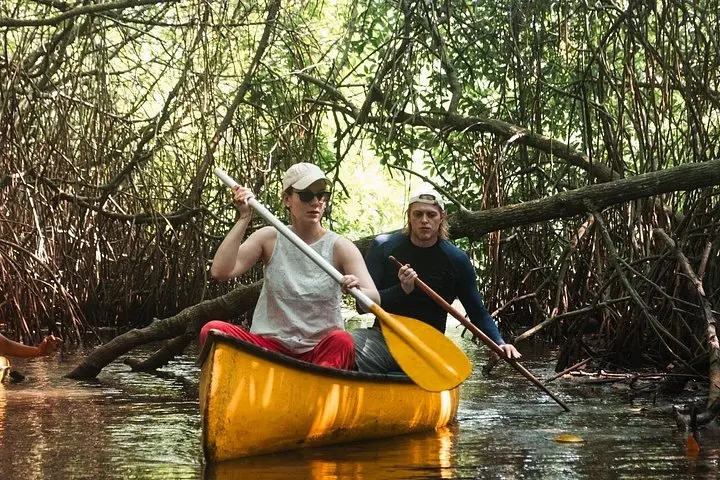
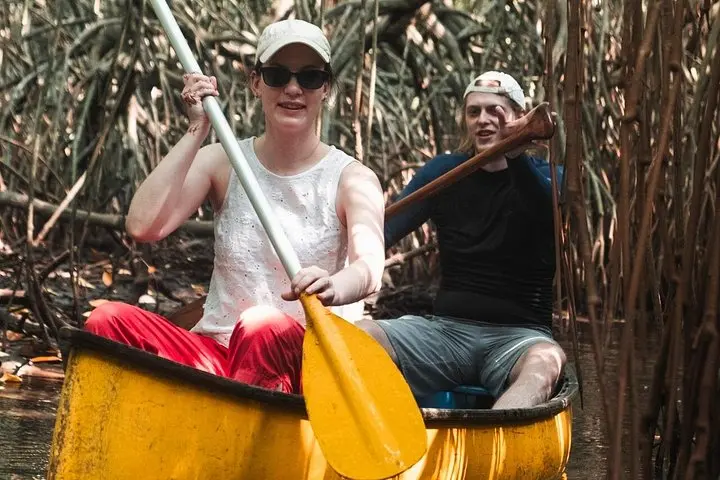
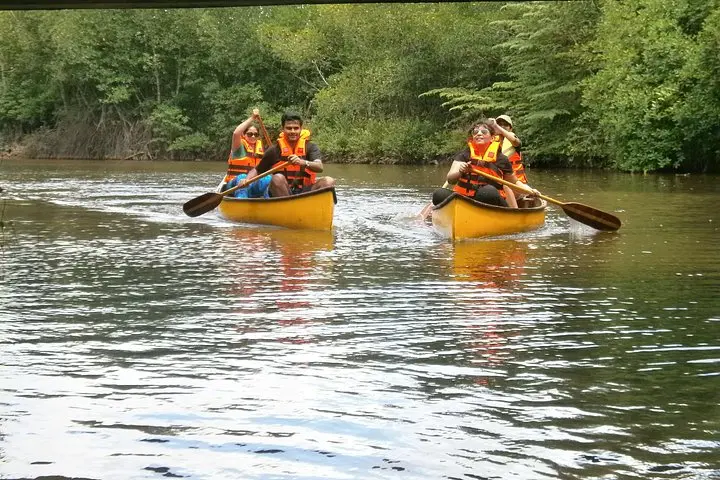
The lagoon opens like a green throat off the coast—mangrove roots arching over narrow waterways while the sea is only a faint line on the horizon. Paddlers push through quiet water, each stroke loosening a rhythm as kingfishers flash and herons lift off from exposed roots.
The lagoon opens like a green throat off the coast—mangrove roots arching over narrow waterways while the sea is only a faint line on the horizon. Paddlers push through quiet water, each stroke loosening a rhythm as kingfishers flash and herons lift off from exposed roots.
This stretch of southern Sri Lanka sits on limestone and coastal sand deposits shaped by seasonal tides and centuries of trade from nearby Galle, a port city with Dutch and Portuguese colonial layers. Local fishing families have long worked these sheltered channels; today small guided tours translate that working knowledge into safe, interpretive paddling.
Geologically the lagoon is tidal and shallow, with silted channels that reveal root systems at low tide. Culturally, the area remains tied to seafood markets and temple festivals in Unawatuna and Galle, so visits often intersect with village life at the lagoon’s edges.
Practically, expect 1–2 hours of paddling in single- or two-person canoes on mostly flat water, with short stretches through narrow mangrove tunnels. Guides provide instruction, life vests, paddles and bottled water; groups are capped at 10 for calm navigation and wildlife viewing.
Plan morning or late-afternoon departures to avoid midday heat; wear sun protection and quick-dry clothing, and use reef-safe sunscreen. Tides and wind can alter the route, so bring insect repellent and a small dry bag for essentials. The trip is low-impact but brings you face-to-face with a fragile coastal ecosystem—move quietly, keep distance from nesting birds, and leave no trace.